
A Travel Guide to Goðafoss Waterfall (2026)
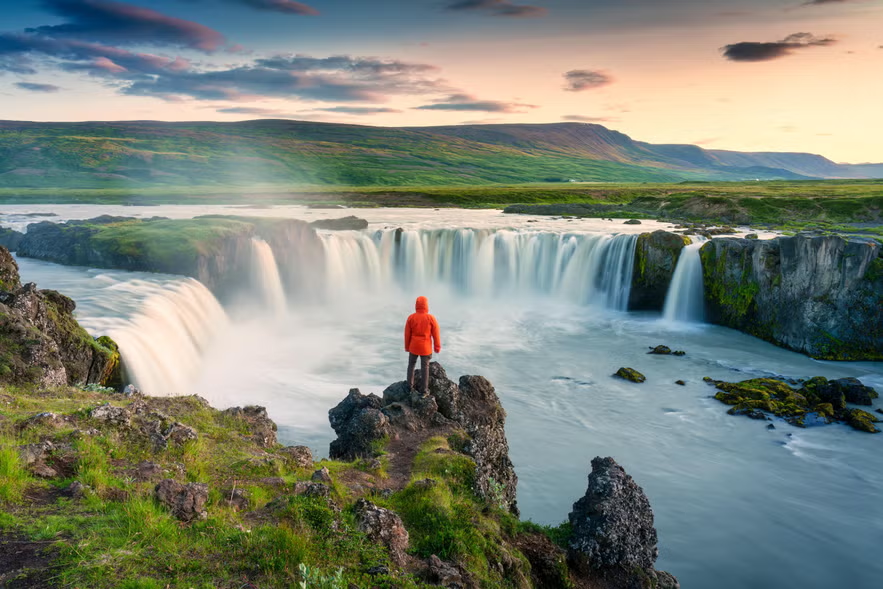
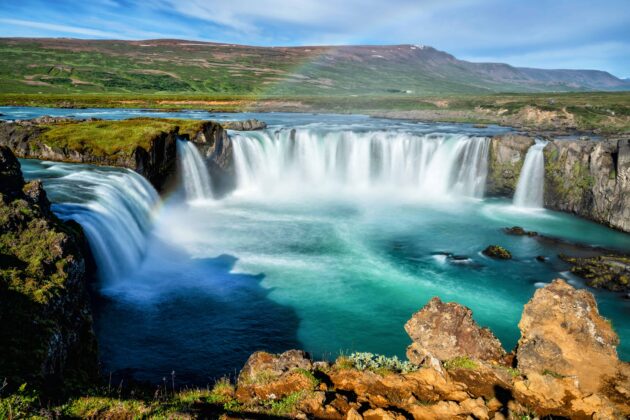
Nestled in the dramatic landscapes of North Iceland, Goðafoss Waterfall—known as the “Waterfall of the Gods”—is a mesmerizing natural wonder that blends breathtaking beauty with profound historical significance. Plunging 12 meters (39 feet) over a 30-meter-wide (98 feet) horseshoe-shaped basalt ledge formed by ancient volcanic activity, the Skjálfandafljót River creates a thundering cascade that contrasts starkly against the surrounding lava fields and green hills. Easily accessible and free to visit, Goðafoss is a highlight on the Diamond Circle route and a must-see for anyone exploring Iceland’s north.
Why Visit Goðafoss Waterfall?
Goðafoss isn’t just a scenic stop—it’s a portal to Iceland’s Viking past. Legend has it that in 1000 AD, chieftain Þorgeir Ljósvetningagoði hurled his pagan idols into the falls to symbolize Iceland’s conversion to Christianity, giving the site its evocative name. Today, it’s one of Iceland’s most iconic waterfalls, drawing over 288,000 visitors annually for its raw power, photogenic views, and serene trails. Part of the UNESCO-listed Diamond Circle, it’s perfect for nature lovers, history buffs, and photographers seeking that quintessential Icelandic adventure. Plus, its proximity to Akureyri and Lake Mývatn makes it an effortless addition to any northern itinerary.
How to Get There
Goðafoss is conveniently located just off Route 1 (the Ring Road), about 50 km (31 miles) east of Akureyri and 30 km (19 miles) west of Lake Mývatn, making it ideal for self-drive or guided trips.
By Rental Car (Recommended): Drive from Reykjavík: About 5–6 hours (450 km/280 miles) via the Ring Road. From Akureyri: A quick 45-minute scenic drive east. Parking is free and plentiful on both sides of the river, with easy access to viewpoints. Rent a 4×4 for winter travel due to potential ice.
By Guided Tour: Join a Diamond Circle day tour from Akureyri (4–8 hours, including Dettifoss and Mývatn; ~$100–150 USD). Many operators like Guide to Iceland or Arctic Adventures include Goðafoss. Cruise ship specials: On select days (May–September 2025), SBA-Norðurleið offers 2.5-hour transfers from Akureyri (~$50 USD).
By Public Bus: Strætó buses run from Akureyri to Mývatn, stopping at Fosshóll (right by the falls). Timetables: Akureyri to Goðafoss (departs ~9 AM, returns ~4 PM); check straeto.is. No direct Reykjavík service—combine with a flight to Akureyri Airport (AES).
By Air: Fly to Akureyri (domestic flights from Reykjavík, ~1 hour, $100–200 USD round-trip via Air Iceland Connect), then drive or bus the rest.
Tip: Download the Vedur.is app for weather and road.is for conditions—winds can close routes unexpectedly.
Best Time to Visit
Iceland’s weather is famously unpredictable, but Goðafoss shines year-round with varying vibes.
Summer (June–August): Peak season with 24-hour daylight, lush greenery, and full river flow. Ideal for hiking and fewer winter hazards, but expect crowds (arrive before 9 AM).
Shoulder Seasons (May/September): Mild temps (5–15°C/41–59°F), golden autumn foliage, and northern lights potential. Less crowded with dramatic lighting for photos.
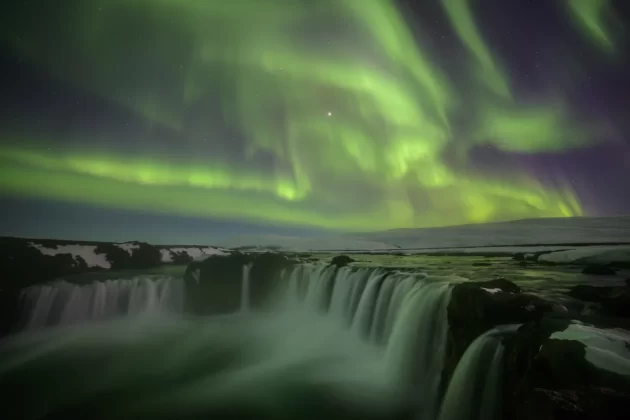
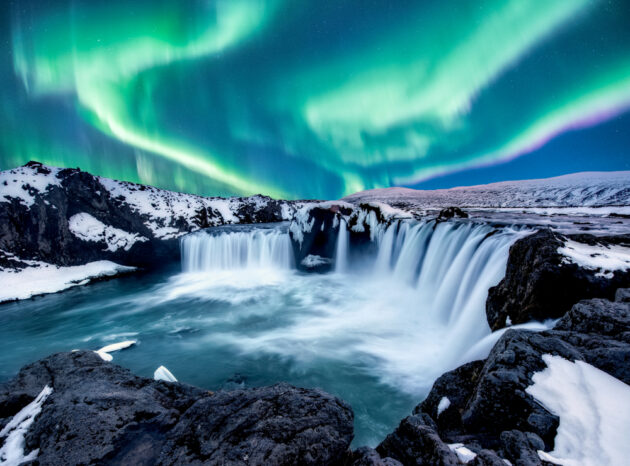
Winter (October–April): Frozen edges create icy artistry and aurora backdrops, but shorter days and slippery paths require caution. Visit mid-morning for light.
Spring (March–May): Thawing waters boost the roar, with blooming surroundings—great for birdwatching.
Avoid mid-October if prone to storms.
Tickets and Opening Hours
Admission: Free—truly a gift from the gods!
Hours: 24/7 access, but daylight varies (midnight sun in summer; polar night limits winter to 9 AM–3 PM).
Facilities: Open year-round. Goðafoss Café/Fosshóll (souvenirs, restrooms, light meals) operates seasonally: Jan–Apr 2025 (10 AM–5 PM), May–Sep (8 AM–6 PM).
No reservations needed, but book tours in advance via TripAdvisor or Guide to Iceland.
What to See and Do
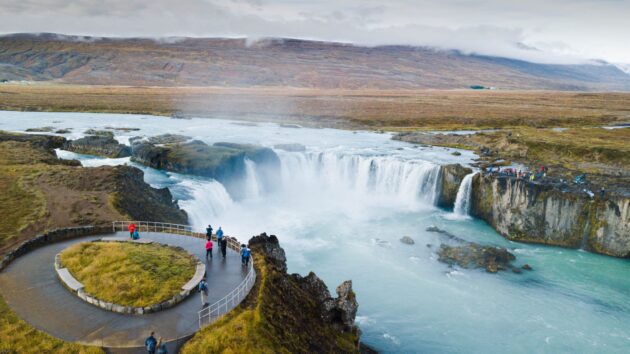
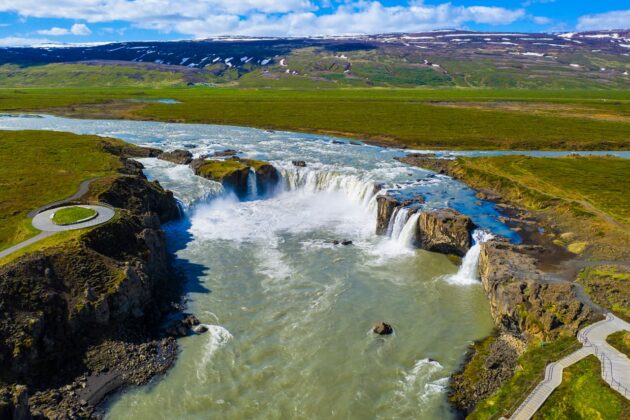
Exploring Goðafoss is straightforward yet immersive, with paths on both riverbanks connected by a pedestrian bridge.
Viewpoints and Trails: East Bank: Wider panoramas and historical plaques—perfect for the full horseshoe shot. West Bank: Closer to the action with misty spray; a short 10–15 minute loop trail offers basalt rock formations and river overlooks. Hike Duration: 30–60 minutes total; easy terrain, but wear grippy shoes.
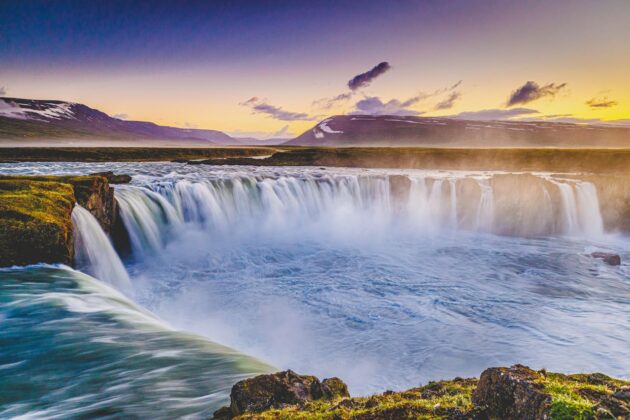
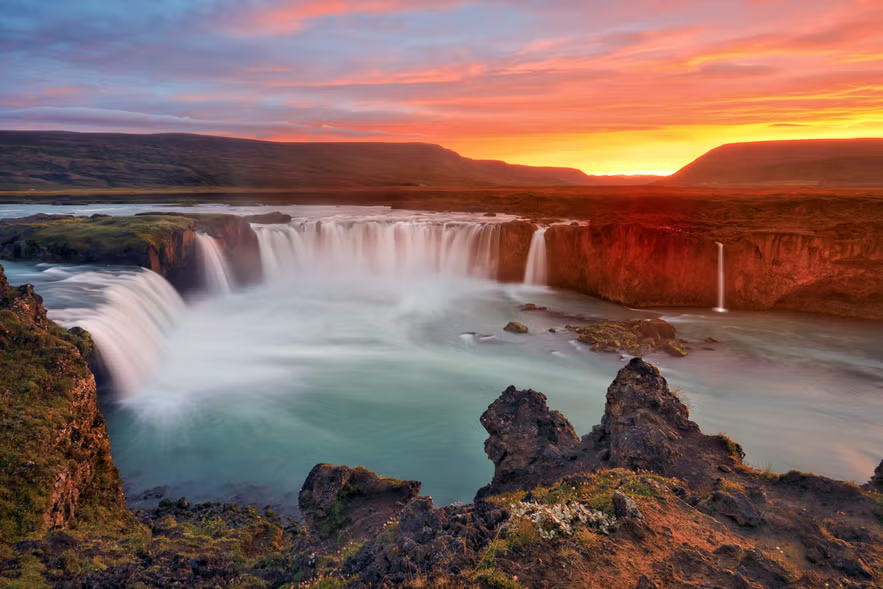
Photography Spots: Sunrise/sunset from the east for golden light on the falls. Use a wide-angle lens to capture the curve; drones require permits.
Historical Immersion: Read on-site signs about the 1000 AD legend. Combine with a visit to Þorgeir’s nearby Þingvellir-inspired sites.
Nearby Adventures: Diamond Circle Loop: Add Dettifoss (Europe’s most powerful waterfall, 1 hour east) or Ásbyrgi Canyon. Whale Watching in Húsavík (45 minutes north, summer tours ~$80 USD).
Accessibility Note: Paths are wheelchair-friendly in parts, but uneven rocks limit full access.
Where to Eat
Options are simple but satisfying—pack a picnic for the best experience amid the views.
On-Site: Goðafoss Café/Fosshóll – Icelandic staples like lamb soup, waffles, and coffee (~$10–20 USD). Open daily in season; grab souvenirs like wool sweaters.
Nearby in Akureyri (45 minutes west): Try Bautinn for fresh seafood or Bláa Kannan for cozy café vibes.
Tip: Bring thermoses for hot drinks—chilly winds amplify the need for warmth.
Where to Stay
Base yourself in Akureyri for convenience, or go remote near the falls.
Akureyri (Budget to Luxury): Hotel Kea (central, ~$150–250 USD/night): Modern rooms with fjord views. Apótek Guesthouse (budget, ~$100 USD): Cozy and walkable to town.
Near Goðafoss: Fosshóll Guesthouse (right by the falls, ~$120–180 USD): Simple rooms with waterfall sounds—book early for summer. Lake Mývatn Area (30 minutes east): Vogafjós Guesthouse (~$140 USD) for farm-fresh dining.
Use Booking.com or Nordic Visitor for deals; aim for places with northern lights wake-up calls in winter.
Tips for a Great Visit
Dress in Layers: Waterproof jacket, sturdy boots, and gloves—mist and wind are constant. Crampons for winter ice.
Safety First: Stay on marked paths; slippery rocks cause slips. No swimming due to strong currents.
Eco-Conscious: Leave no trace—pack out trash to preserve this fragile site.
Crowd Dodge: Early birds (or late owls in summer) beat tour buses. Download offline maps via Maps.me.
Extend Your Trip: Pair with a 3-day North Iceland tour for Mývatn geothermal spas or Húsavík whales.
Updates: Check for cruise ship days (May–Sep) for shuttle perks; road conditions improve post-winter.
Final Thoughts
Goðafoss Waterfall is more than a cascade—it’s a symphony of history, geology, and raw Icelandic spirit that leaves visitors humbled and inspired. Whether you’re tracing Viking legends or simply soaking in the roar, this “Waterfall of the Gods” delivers divine moments without the hassle. Embrace the unpredictability, respect the elements, and let Goðafoss etch itself into your travel memories.
Safe journeys and happy splashing!