
A Travel Guide to the Basilica of Santa Maria Novella (2026)
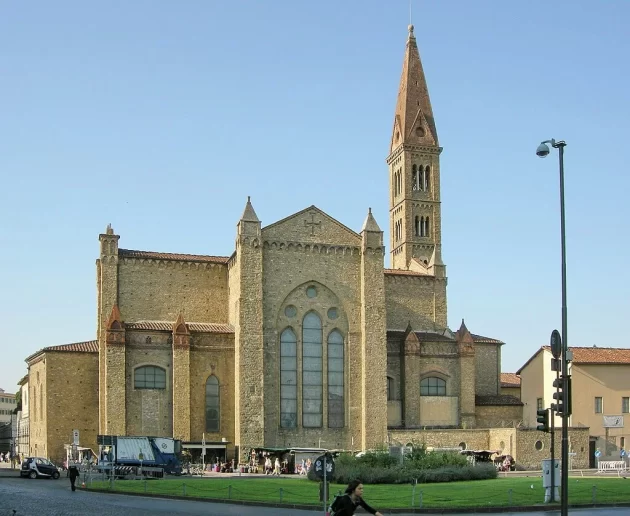
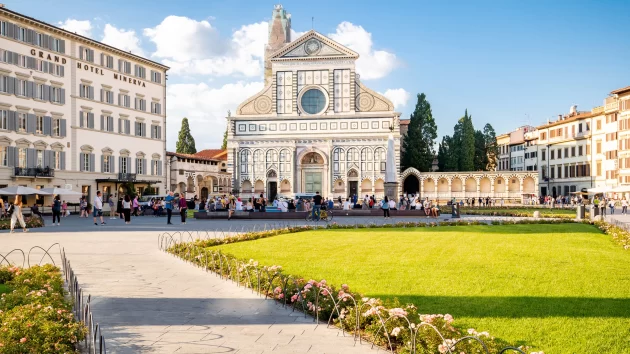
Nestled in the heart of Florence, the Basilica of Santa Maria Novella stands as a masterpiece of Gothic architecture and Renaissance art, making it an essential stop for any visitor to Tuscany’s cultural capital. Built by the Dominican order in the 13th century, this historic complex—comprising the basilica, museum, and cloisters—houses some of the city’s most stunning frescoes and sculptures by luminaries like Masaccio, Giotto, and Ghirlandaio. Less crowded than the Duomo or Uffizi, it offers a serene immersion into Florence’s artistic heritage, blending spirituality with unparalleled beauty.
Why Visit the Basilica of Santa Maria Novella?
This site is a treasure trove for art lovers, showcasing the evolution of Florentine painting from Gothic to Renaissance styles. Highlights include groundbreaking works that pioneered perspective and humanism, set against the backdrop of a Dominican monastery that once influenced figures like Galileo. It’s perfect for a half-day visit, combining architectural grandeur with intimate chapel explorations.
Brief History
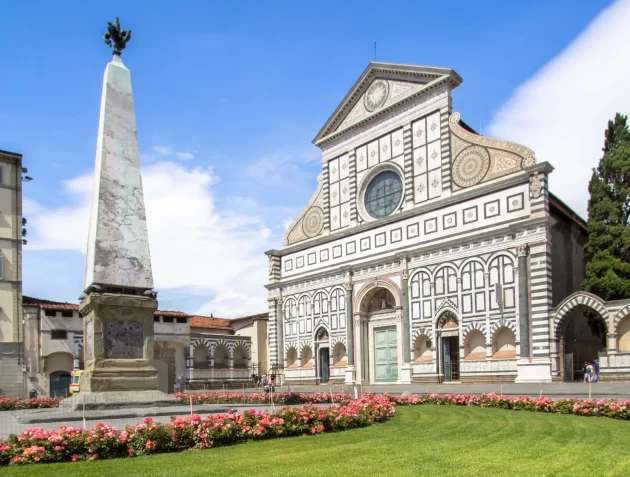
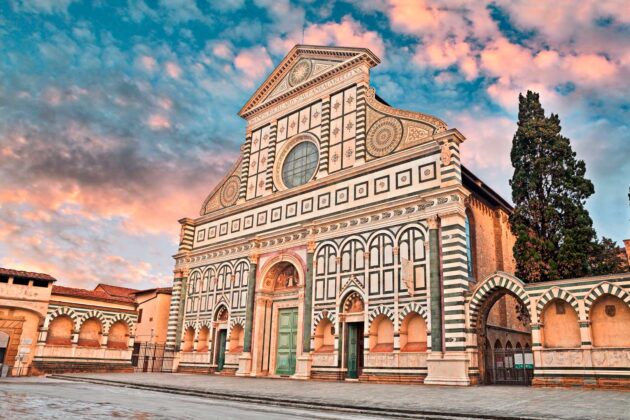
Founded in 1221 by Dominican friars on the site of a small 9th-century church amid vineyards, the basilica was expanded over centuries into a monumental complex. The lower facade dates to 1350 in Romanesque style with white and green marble, while the upper portion was elegantly completed in 1470 by Renaissance polymath Leon Battista Alberti. As Florence’s first Gothic interior, it became a hub for artistic innovation, hosting workshops where young Michelangelo apprenticed under Ghirlandaio. The adjacent cloisters served as a Dominican center for theology and science, underscoring its role in bridging faith and intellect.
How to Get There
The basilica’s prime location makes it incredibly accessible:
By Train: It’s a 2-minute walk from Firenze Santa Maria Novella station, the city’s main rail hub—ideal if arriving from Rome (1.5 hours) or Milan (1.5 hours).
By Air: From Florence Airport (FLR), take the Volainbus shuttle to the station (20 minutes, €6).
By Foot or Public Transport: From the Duomo, it’s a 15-minute stroll west along Via dei Calzaiuoli. Buses like the C1 or C2 stop nearby.
Parking: Use the underground lot at Parcheggio Santa Maria Novella (€2/hour).
Best Time to Visit
Season: Spring (April–June) and fall (September–October) offer mild weather (15–25°C/59–77°F) and fewer crowds. Summer peaks with heat and lines; winter brings festive lights but shorter days.
Daily: Aim for early morning (9–11 a.m.) on weekdays for tranquility, or late afternoon (after 3 p.m.) to catch golden-hour light on the facade. Sundays are busier due to masses—arrive post-1 p.m. if visiting then.
Note: Avoid religious holidays like Easter (March 30–April 6) when it’s limited to prayer only. Check for special exhibits, like potential Uccello fresco restorations.
Opening Hours and Tickets
The entire complex (basilica, museum, and cloisters) is included in one ticket.
Hours (2026): Day Opening Hours Monday–Thursday 9:00 a.m. – 5:30 p.m. Friday & Civil Holidays 11:00 a.m. – 5:30 p.m. Saturday & Eves of Religious Holidays 9:00 a.m. – 5:00 p.m. Sunday & Religious Holidays 1:00 p.m. – 5:00 p.m. Last admission: 1 hour before closing. Closed for visitors on Good Friday and Holy Saturday (open for prayer). Ticket office open all day.
Tickets: Full: €7.50 (adults). Reduced: €5 (ages 11–18, seniors over 65 with ID). Free: Children under 11, Florence residents, disabled visitors +1 companion. Buy on-site (no reservation needed for individuals) or online via ticketsmuseums.comune.fi.it to skip minor queues. Audioguides (€5) available in multiple languages.
What to See: Must-Visit Highlights
Allow 1–2 hours to explore. Start in the basilica, then venture to the cloisters for a full experience.
Masaccio’s Trinity (1425–1426): In the left nave, this fresco revolutionized art with its pioneering use of linear perspective, depicting the Holy Trinity in a dramatic barrel-vaulted illusion. A cornerstone of Renaissance innovation.
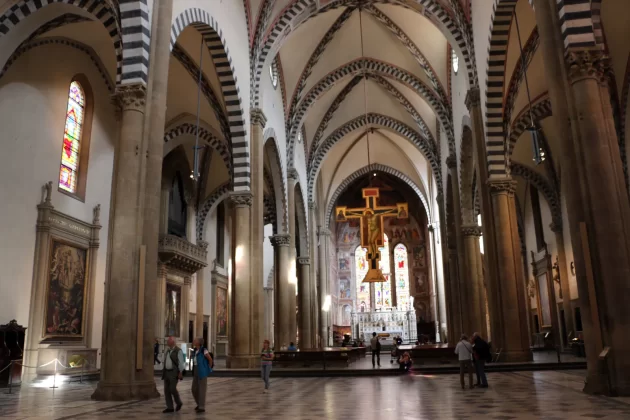
Giotto’s Crucifix (c. 1290): Hanging high in the nave at 4.5 meters, this poignant wooden Christ figure marks Giotto’s early mastery of emotion and realism.
Brunelleschi’s Crucifix (c. 1410): In the Gondi Chapel, Filippo Brunelleschi’s only surviving wooden sculpture—a response to Donatello’s work—showcases anatomical precision and serene divinity.
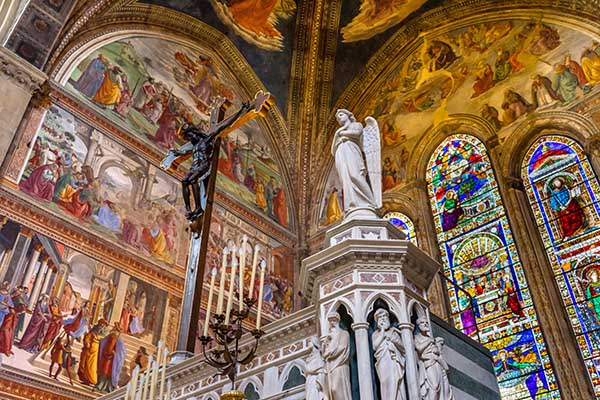
Tornabuoni Chapel Frescoes (1486–1490): Domenico Ghirlandaio’s vibrant cycles of the Virgin and St. John the Baptist’s lives adorn this right transept gem. Spot young Michelangelo’s influence in the detailed portraits of Florentine elite.
Strozzi Chapel Frescoes (c. 1500): Filippino Lippi’s dynamic scenes from St. John the Evangelist’s life burst with color and narrative flair.
Spanish Chapel (Capella degli Spagnoli): Beyond the basilica, Andrea di Bonaiuto’s 14th-century frescoes allegorize the Dominican triumph over heresy, with intricate Dominican motifs.
Green Cloister and Great Cloister: These serene spaces feature 15th-century frescoes by Paolo Uccello and others, depicting paradise and Old Testament scenes. The Refectory displays restored works.
Other gems: Botticelli’s Nativity, Nardo di Cione’s Last Judgment, and the Ubriachi Chapel’s Gothic tombs.
Tours and Experiences
Self-Guided: Rent an audioguide at entry for €5—excellent for in-depth stories.
Guided Tours: Free-flow for individuals; groups (up to 25) need earphones if over 6. Book private tours (€100–200/group) via the official site for 1-hour expert-led walks focusing on fresco techniques.
Special: Look for seasonal vespers concerts or Uccello-themed exhibits—check smn.it for updates.
Practical Tips
Dress Code: Modest attire required (shoulders and knees covered; no hats inside).
Photos: Allowed without flash; tripods prohibited.
Accessibility: Mostly wheelchair-friendly in the basilica (ramps available), but some cloister stairs may require assistance—contact ahead.
Crowds and Etiquette: Whisper in chapels; no large bags (free storage at entry). Visit mid-week for peace.
Combine It: Pair with a stroll to the nearby Farmacia di Santa Maria Novella (perfumery since 1612) or the train station’s rooftop views.
Where to Stay and Eat Nearby
Stay: Budget: Hotel Santa Maria Novella (€100–150/night, steps away). Luxury: Grand Hotel Baglioni (€250+, historic elegance). For immersion, try the adjacent NH Collection Firenze (€200+).
Eat: Pre-visit gelato at nearby Vivoli (est. 1929). Post-tour, dine on Tuscan bistecca at Trattoria Mario (5-minute walk, €20–30). For coffee, historic Gilli in Piazza della Repubblica (10 minutes away).
Final Thoughts
The Basilica of Santa Maria Novella encapsulates Florence’s soul—where faith fueled artistic genius. In a city of masterpieces, its intimate scale and profound works make it unforgettable. Book your ticket, arrive early, and let the frescoes transport you through centuries. Buon viaggio!