
A Travel Guide to Galleria dell’Accademia di Firenze (2026)
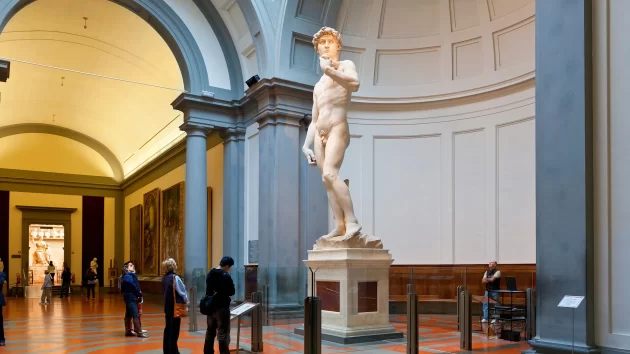
Nestled in the heart of Renaissance Florence, the Galleria dell’Accademia di Firenze (Accademia Gallery) is a treasure trove of art and history that draws millions of visitors annually. Housed in a former academy of fine arts building, this museum is world-renowned as the home of Michelangelo’s iconic statue David—a 17-foot marble masterpiece symbolizing human perfection and Florentine republican ideals. Beyond David, the gallery boasts an impressive collection of Renaissance sculptures, paintings, and rare musical instruments, offering a glimpse into Italy’s artistic golden age.
Why Visit the Galleria dell’Accademia?
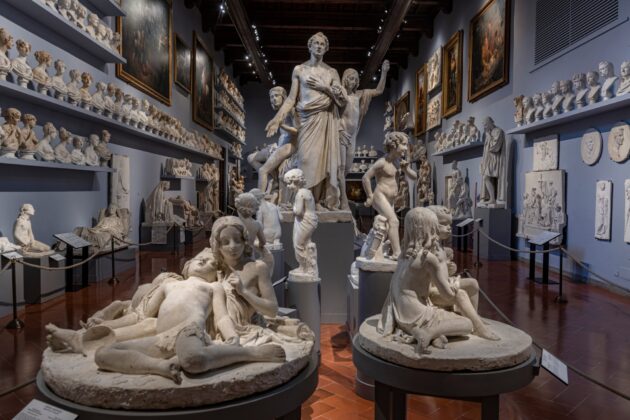
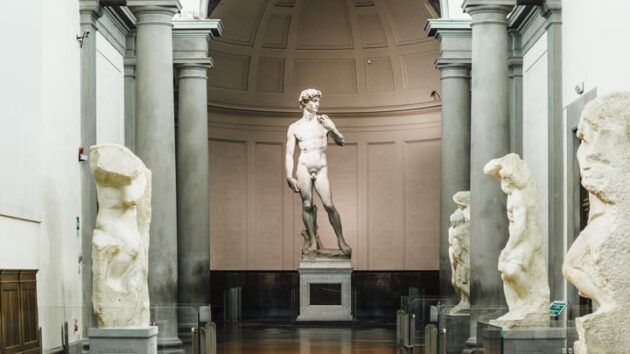
The Accademia stands out for its focus on Michelangelo and Tuscan masters, providing a more intimate alternative to the sprawling Uffizi Gallery nearby. It’s not just about David; the museum’s Tribuna room, designed specifically to showcase the statue, creates a dramatic, almost spiritual atmosphere. Art lovers will appreciate the Gipsoteca (plaster cast gallery) with preparatory models, while history buffs can explore the collection of Stradivari instruments. It’s a perfect half-day stop, blending education, inspiration, and Instagram-worthy moments.
How to Get There
The Accademia is centrally located, making it easy to reach on foot or by public transport from Florence’s main hubs:
From Florence Santa Maria Novella Train Station: A 15-minute walk northeast via Via de’ Panzani and Via Ricasoli. Taxis or rideshares (Uber/Bolt) take about 5 minutes and cost €8–€12.
From Firenze Santa Maria Novella Airport (FLR): Take the T2 tram to the train station (20 minutes, €1.70), then walk or bus as above. For Pisa Airport (PSA), high-speed trains to Florence take 1 hour (€9–€15).
Public Transport: Bus lines C1 or C2 from the Duomo stop at Piazza San Marco (2-minute walk). Bikes via Florence’s sharing system (e.g., Mobike) are fun for short distances—rentals start at €1/hour.
Address: Via Ricasoli, 58/60, 50122 Firenze FI, Italy. Use Google Maps for real-time navigation; the entrance is marked by a grand archway.
Parking is limited—opt for the nearby Parcheggio Sant’Antonio (€2/hour) if driving.
Best Time to Visit
Florence’s peak season (April–October) means crowds, but strategic timing can make all the difference:
Optimal Hours: Arrive right at opening (8:15 AM) for a serene start with minimal lines—David will feel like your private audience. Late afternoon (after 5 PM) is another sweet spot as day-trippers thin out, offering softer light for photos.
By Day/Week: Weekdays beat weekends; avoid Mondays (closed).
Seasonal Tips: Spring (April–June) or fall (September–October) provide mild weather (15–25°C/59–77°F) and fewer tourists. Summers bring heat—pack water and visit evenings if available. Check for free entry days (first Sunday of the month), but expect epic queues.
Opening Hours and Tickets
Plan ahead—reservations are essential to skip the infamous lines, which can exceed 2 hours in peak times.
Hours: Tuesday–Sunday, 8:15 AM–6:50 PM (last entry 6:20 PM). Closed Mondays, January 1, and December 25. Special Tuesday evening extensions in summer (until 10 PM—confirm via official site).
Ticket Prices: Type Price (€) Details Full Adult 16 Includes statutory fees; valid for one entry. Reduced (EU 18–25) 2 EU citizens aged 18–25; show ID. Free 0 Under 18s, disabled visitors +1 companion, teachers/students in art/architecture fields (with proof), ICOM members. Reservation Fee 4 Added for online/phone bookings. Book via the official website (galleriaaccademiafirenze.it) or Firenze Musei hotline (+39 055 294883). Guided tours (€25–€40) via Viator or GetYourGuide add context but aren’t necessary for short visits.
No refunds for no-shows, and audio guides (€6) are available at entry.
What to See: Top Highlights
The museum is compact (allow 1–1.5 hours), so prioritize these:
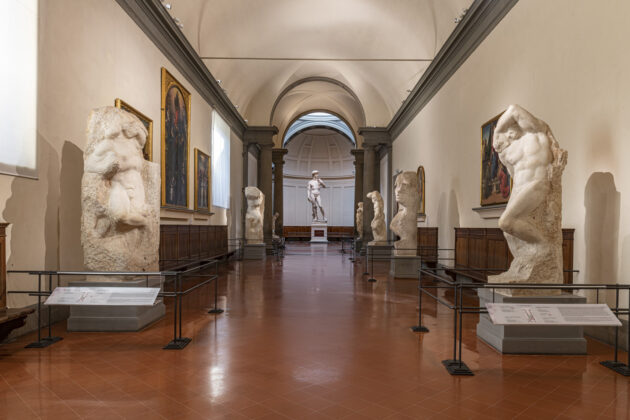
Michelangelo’s David (1501–1504): The star attraction in the Tribuna—a colossal nude symbolizing strength and beauty. Marvel at the veins, eyes, and sling details; it’s even more imposing in person.
Michelangelo’s Prisoners (Slaves): Four unfinished marble giants in the same hall, illustrating his “non-finito” technique—figures emerging from stone like souls from bodies.
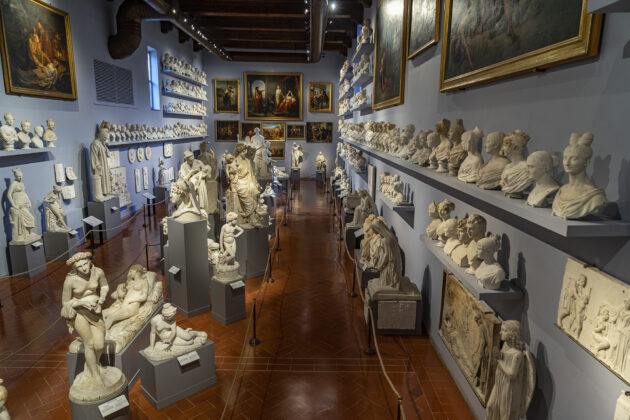
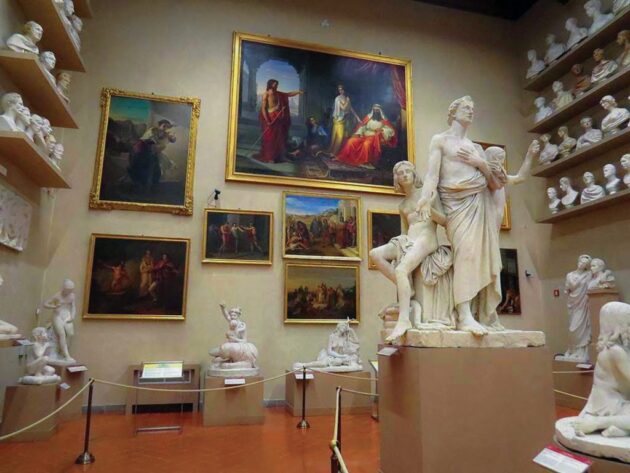
The Gipsoteca Bartolini: Over 200 plaster casts of 19th-century sculptures by Lorenzo Bartolini, showcasing neoclassical elegance.
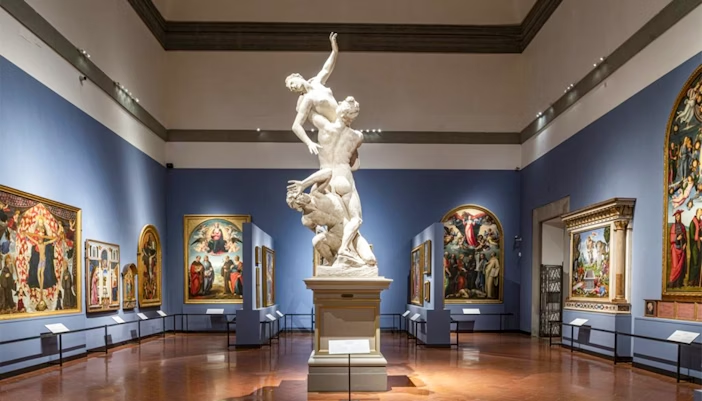
Renaissance Paintings: Works by Botticelli, Ghirlandaio, and Orcagna in the pre-Michelangelo rooms, tracing Florentine art evolution.
Museum of Musical Instruments: Stradivari violins and Amati cellos on the ground floor— a hidden gem for music lovers (note: access restricted after 6:40 PM).
Check for temporary exhibits on Tuscan sculpture—none major announced yet, but the official site updates frequently.
Tips for a Great Visit
Crowd Hack: Book the earliest slot and head straight to David via the dedicated path. No large bags (free cloakroom provided).
What to Bring: Comfortable shoes (cobblestones outside), ID for tickets, and earbuds for the free app audio tour. Photography allowed without flash.
Accessibility: Wheelchair-friendly with ramps and elevators; request assistance at info desk. Audio descriptions for visually impaired.
Sustainability: Use reusable water bottles—refill stations inside. Support by donating to restoration funds.
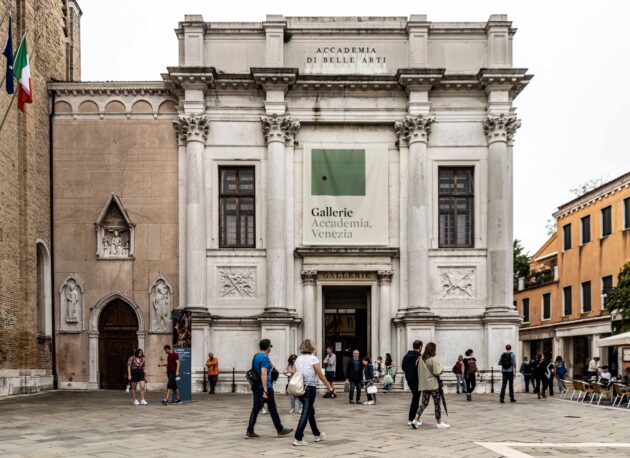
Common Pitfalls: Don’t confuse with the Accademia in Venice. If lines are long, pivot to nearby San Marco Museum.
Nearby Attractions and Practicalities
Within 10 Minutes’ Walk: Duomo Cathedral (climb the dome), Bargello Museum (Donatello sculptures), and gelato at Vivoli.
Where to Eat: Pre-visit brunch at La Ménagère (Via de’ Ginori 8; €15 salads). Post-tour aperitivo at Negroni Bar (Piazza degli Antinori).
Where to Stay: Budget: Hotel Cimabue (€100/night, 5-min walk). Luxury: Grand Hotel Baglioni (€300+, views of Michelangelo’s works).
Getting Around Florence: Buy a Firenze Card (€85, 72 hours) for skip-the-line access to multiple sites, including Accademia.
The Galleria dell’Accademia isn’t just a museum—it’s a portal to the Renaissance soul of Florence. With smart planning, you’ll leave inspired by David‘s gaze. Buon viaggio!