
A Travel Guide to the Basilica of Sant’Ambrogio (2026)
Nestled in the heart of Milan’s historic Ticinese district, the Basilica of Sant’Ambrogio stands as a timeless testament to the city’s ancient Christian roots. Dedicated to Saint Ambrose, Milan’s fourth-century bishop and patron saint, this Romanesque masterpiece is one of the oldest churches in the city and a cornerstone of Ambrosian heritage. Founded in the late 4th century, it draws pilgrims, history buffs, and architecture enthusiasts alike with its blend of early Christian simplicity and medieval grandeur.
A Brief History
The basilica’s story begins in 379–386 AD, when Saint Ambrose commissioned its construction on the site of a Christian burial ground known as Hortus Philipphi. Originally called the Basilica Martyrum (Basilica of the Martyrs), it was built to house the relics of martyrs Saints Gervasius and Protasius, discovered by Ambrose himself. Rebuilt in the 11th–12th centuries in the Romanesque style after fires and invasions, it became a pilgrimage hub and the cradle of the Ambrosian Rite—a unique liturgical tradition still used in the Milanese diocese. Beneath its altar lie the remains of Ambrose, Gervasius, and Protasius, making it a site of deep spiritual significance.
How to Get There
The basilica is conveniently located at Piazza Sant’Ambrogio 15, in the vibrant Navigli-adjacent neighborhood, about 2 km southwest of the Duomo.
By Public Transport: Take Metro Line M2 (green) or M4 (blue) to Sant’Ambrogio station—it’s a 5-minute walk from the exit. Trams 16 or 19 stop at Corso Magenta via Nirone, and buses 58 or 94 serve the area.
By Foot or Bike: From the Duomo, it’s a pleasant 25-minute stroll through historic streets; bike-sharing services like BikeMi make it even easier.
By Car/Taxi: Parking is limited; use nearby lots like Parcheggio Sant’Ambrogio. Taxis from Milan Centrale take about 10 minutes.
Best Time to Visit
Seasonal Sweet Spot: Spring (April–June) and fall (September–October) offer mild weather and fewer crowds, perfect for lingering in the atrium. Summers can be hot and busy with tourists, while winters bring a magical chill, enhanced by holiday lights during Milan’s Sant’Ambrogio Fair (December 7).
Daily Timing: Arrive early morning (after 7:30 AM) for quiet reflection or late afternoon (post-2:30 PM) to avoid peak service times. Sundays are busier due to masses, but the extended evening hours allow for a peaceful close.
Pro Tip: Check the official website for updates, as hours may shift for special events like the saint’s feast day on December 7.
What to See and Do
Step into a living museum of faith and art. Entry is free, and self-guided visits take 45–60 minutes, though guided tours (bookable via Viator or GetYourGuide) add fascinating context.
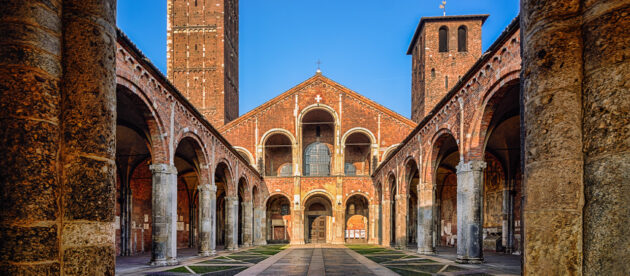
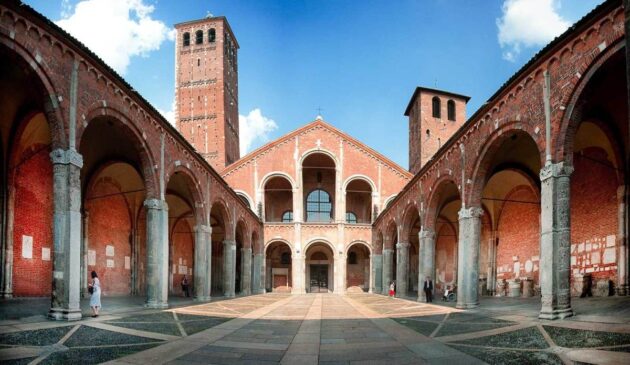
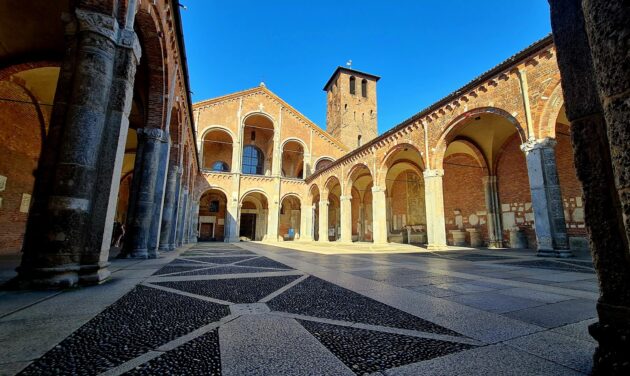
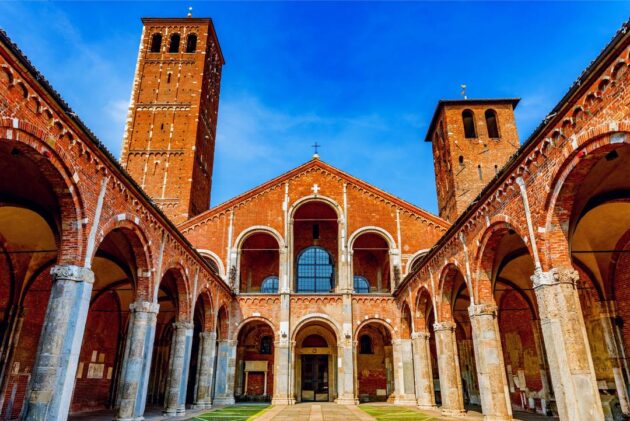
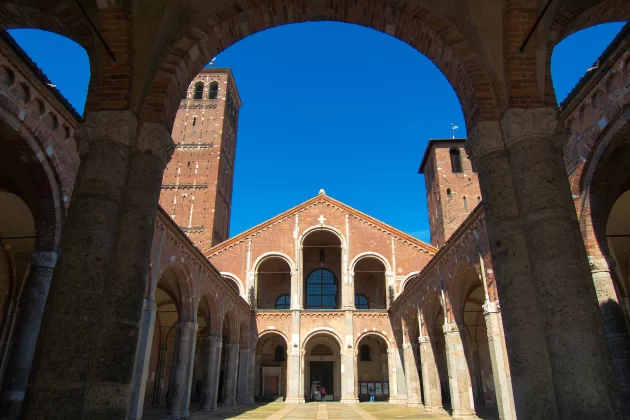
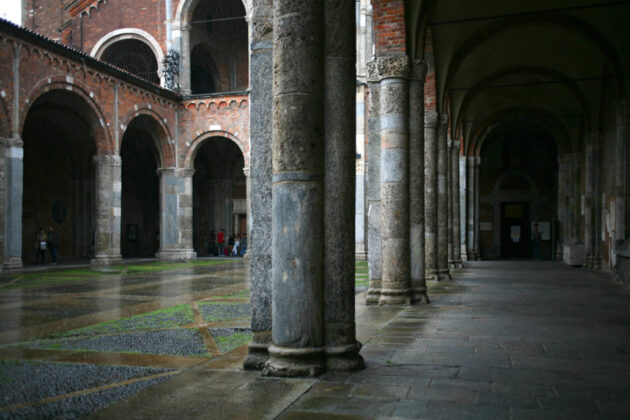
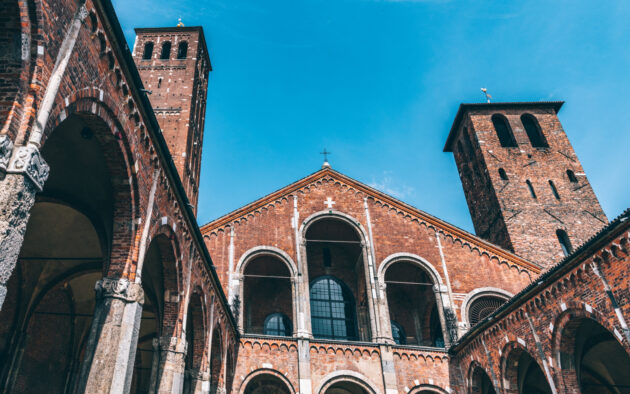
The Atrium and Facade: Enter through the serene courtyard, lined with ancient tombs and plaques. Notice the “Devil’s Column”—a pillar etched with mysterious holes, legend says from Ambrose’s battle with Satan.
The Golden Altar (Altare d’Oro): Crafted in 835 AD by goldsmith Vuolvinus, this jewel-encrusted masterpiece in the presbytery features intricate enamels depicting Christ’s life on one side and Ambrose’s on the other. It’s a highlight of Carolingian metalwork.
Chapel of San Vittore in Ciel d’Oro: This trapezoidal gem, dating to the 5th century, boasts Milan’s oldest mosaic of Saint Ambrose—realistically portrayed as a bearded bishop. The vaulted ceiling shimmers with golden tesserae (hence “Golden Sky”), and a bust of Saint Victor crowns the dome.
The Crypt and Relics: Descend to the underground crypt for a glimpse of the saints’ sarcophagi, including the late-Roman one of general Stilicho. The apse mosaic above the high altar shows Christ flanked by Gervasius and Protasius.
Other Treasures: Spot the bronze serpent coiled around an Elba porphyry column in the nave—believed to heal ailments and destined to “come alive” on Judgment Day, per legend. The pulpit and frescoes add layers of medieval artistry.
For an immersive experience, attend a mass in the Ambrosian Rite or join a 2-hour private tour covering the basilica and nearby old town highlights.
Practical Information
Opening Hours: Monday–Saturday: 7:30 AM–12:30 PM and 2:30 PM–7:00 PM; Sunday: 8:00 AM–1:00 PM and 3:00 PM–8:00 PM. Variations occur during services; confirm via +39 02 8645 0895 or segreteria@basilicasantambrogio.it.
Tickets: Free admission; donations appreciated. Guided tours cost €15–€30 per person.
Accessibility: Wheelchair-friendly with ramps and elevators to the crypt; contact ahead for assistance.
Facilities: Restrooms available; no large bags—use nearby lockers if needed.
Visitor Tips
Dress Code: Modest attire required (cover shoulders and knees); remove hats inside.
Photography: Allowed without flash; respect worshippers by staying quiet.
Crowd Avoidance: Weekdays are ideal; pair your visit with the adjacent Sant’Ambrogio Museum for artifacts.
Legends and Lore: Ask guides about the serpent’s “healing bites” or the devil’s column for added intrigue—visitors rave about these stories bringing the site alive.
Sustainability: Opt for public transport to keep your visit eco-friendly in car-congested Milan.
Nearby Attractions
Columns of San Lorenzo Basilica (10-minute walk): Another ancient church with 16 Corinthian columns from a Roman temple.
Navigli Canals (15-minute walk): Stroll the historic waterways for aperitivo and street art.
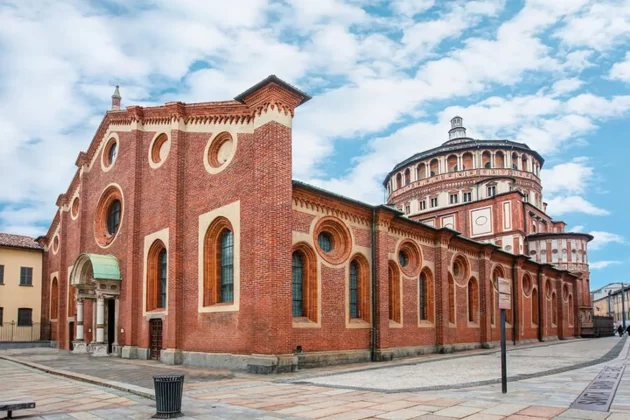
Santa Maria delle Grazie (20-minute metro): Home to Leonardo da Vinci’s The Last Supper—book tickets months ahead.
Where to Stay and Eat
Stay: Base yourself in Ticinese for charm—try the eco-friendly Magna Pars Hotel (€200+/night) or budget-friendly B&B Hotel Milano (€100+/night). For luxury, the nearby NH Collection Milano President offers Duomo views.
Eat: Post-visit, grab panzerotti at historic Luini (nearby) or authentic Lombard risotto at Trattoria Milanese. For a saintly treat, sample saffron-infused gelato at the fair in December.
Final Thoughts
The Basilica of Sant’Ambrogio isn’t just a church—it’s a portal to Milan’s soul, where 1,600 years of history whisper through golden mosaics and hallowed stones. As Milan buzzes with design weeks and cultural festivals, this understated gem offers a grounding contrast to the flashier Duomo. Take your time here; let the legends linger, and leave with a deeper appreciation for the city’s sacred undercurrents. Buona visita!