
A Travel Guide to the Royal Alcázar of Seville (2026)
Nestled in the heart of Seville’s historic Jewish Quarter (Barrio Santa Cruz), the Royal Alcázar—known locally as the Real Alcázar de Sevilla—is a breathtaking testament to Spain’s layered history. This UNESCO World Heritage Site, blending Mudéjar (Moorish-Christian) architecture with lush gardens, has served as a royal residence for over seven centuries. Famous as a filming location for Game of Thrones (as the Water Gardens of Dorne), it attracts over 2 million visitors annually. Whether you’re a history buff, architecture enthusiast, or simply seeking a serene escape amid Seville’s vibrant energy, the Alcázar offers an enchanting blend of opulence, tranquility, and cultural fusion.
Brief History
The Alcázar’s origins trace back to an Islamic fortress built in the 10th century during the Abbadid dynasty. Following the Christian Reconquista in 1248, King Ferdinand III transformed it into a royal palace. Its golden age came under Peter I of Castile in the 14th century, who commissioned the stunning Mudéjar palace with intricate Islamic-inspired designs. Later additions, like the Gothic Palace by the Catholic Monarchs and Renaissance elements under Charles V, reflect evolving European influences. Today, it remains an official residence for the Spanish royal family, with the upper apartments still in use.
How to Get There
The Alcázar is centrally located in Seville, making it easily accessible:
By Foot: From Seville Cathedral or Plaza de España, it’s a 10-15 minute walk through charming cobblestone streets.
Public Transport: Take bus lines C1, C2, C3, C4, or C5 to the Archivo de Indias stop, or the T1 tram to Puerta Jerez.
From Seville Airport: A 20-minute taxi ride (€25-30) or 30-minute bus (EA line to Plaza de Armas, then walk or transfer).
Parking: Limited; use nearby garages like Parking Cano y Cueto (€20-25/day).
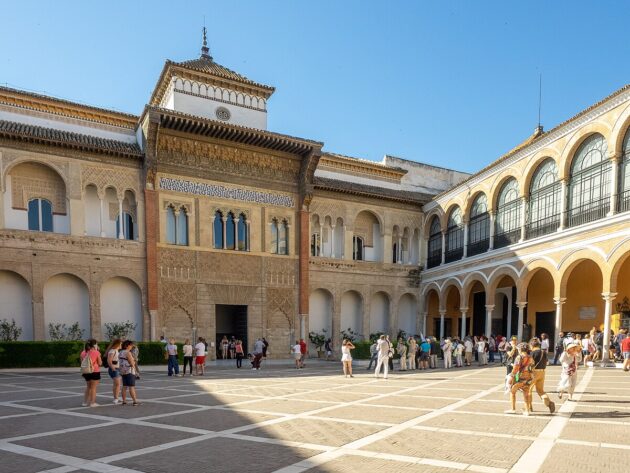
Enter via the Puerta del León (Lion Gate) on Patio de Banderas—your ticketed entry point.
Opening Hours and Tickets
Hours: October 1–March 31: 9:30 a.m.–5:00 p.m. (last entry 3:00 p.m.); April 1–September 30: 9:30 a.m.–7:00 p.m. (last entry 5:00 p.m.); Closed on January 1, January 6, Good Friday, and December 25.
Tickets: €12.50 for adults (includes audio guide). Free for children under 14, EU citizens over 65, disabled visitors (with proof), and Seville residents (ID required). Royal Apartments access is an additional €5 (limited availability; book separately).
Booking: Tickets sell out weeks or months in advance, especially in peak season—reserve online via the official website (alcazarsevilla.org) as soon as slots open (up to 3 months ahead). Third-party sites like GetYourGuide offer skip-the-line options with tours (€20-40). Free Monday slots (4-5 p.m. winter; 6-7 p.m. summer) require advance reservation but exclude the apartments. Arrive 15 minutes early for your timed slot.
Best Time to Visit
Season: Spring (March-May) and fall (September-November) for mild weather (15-25°C/59-77°F) and fewer crowds. Summer (June-August) is hot (up to 40°C/104°F) but features evening events like Noches en los Jardines concerts.
Day/Time: Early morning (first slots at 9:30 a.m.) for crowd-free exploration and soft light. Avoid midday peaks; late afternoon offers cooler gardens.
Duration: Allocate 2-3 hours: 1 hour for palaces, 1-2 for gardens.
What to See: Top Highlights
The Alcázar unfolds like a fairy tale, with interconnected patios, halls, and gardens. Start in the lower palaces and end in the expansive grounds:
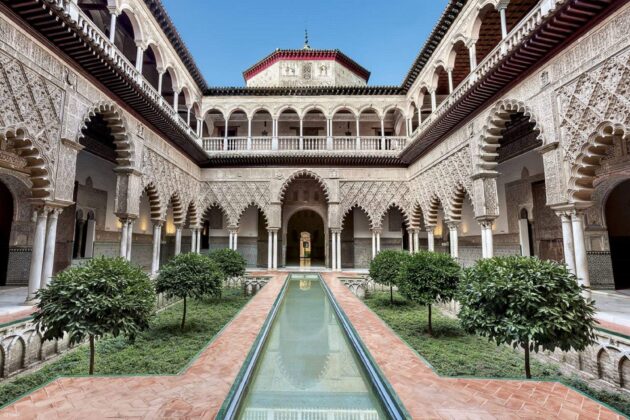
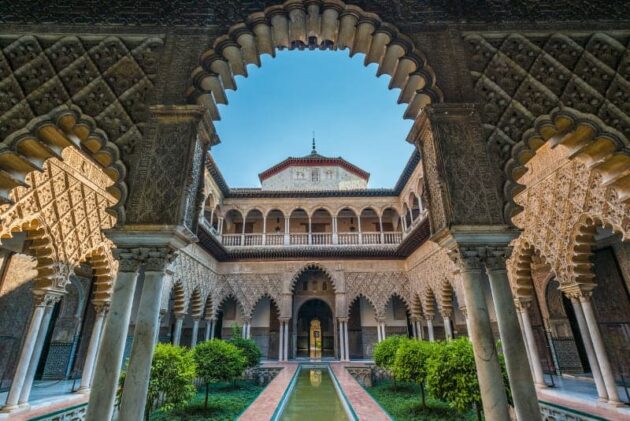
Patio de las Doncellas (Courtyard of the Maidens): A serene central courtyard with a reflective pool, arched galleries, and vibrant azulejo tiles—iconic Game of Thrones spot.
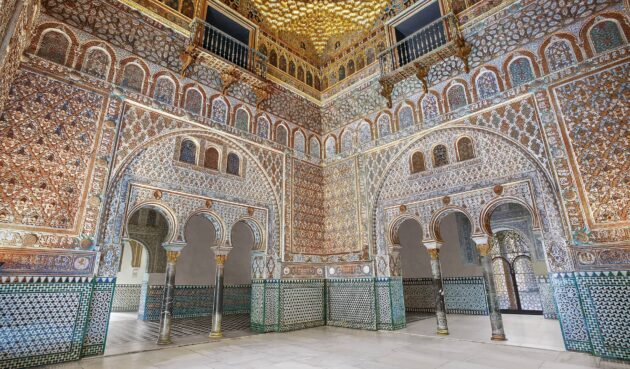
Salón de los Embajadores (Ambassadors’ Hall): The grand throne room with a stunning muqarnas (honeycomb) cedar ceiling, gold-leaf details, and historical tapestries.
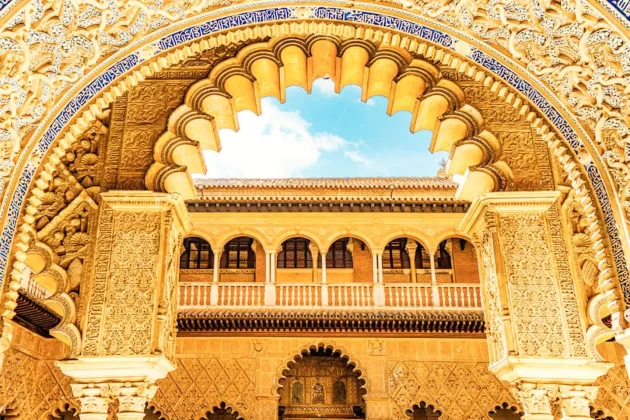
Patio de las Muñecas (Courtyard of the Dolls): Named for tiny carved faces on its arches; features delicate lace-like plasterwork.
Gothic Palace: Added in the 16th century, showcasing Renaissance frescoes and views over Seville.
Royal Apartments (Cuarto Real Alto): Intimate upper-level rooms with 19th-century decor, antiques, and royal portraits (no photos allowed).
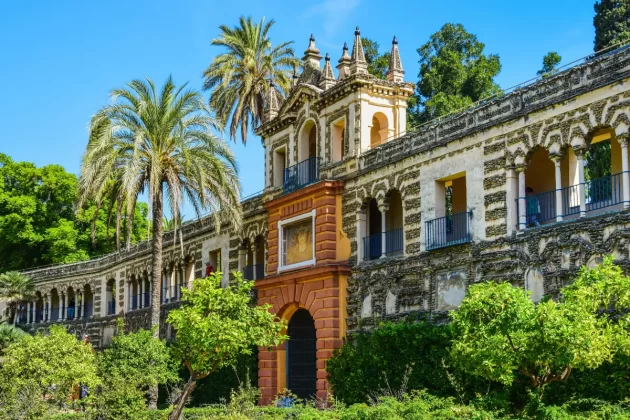
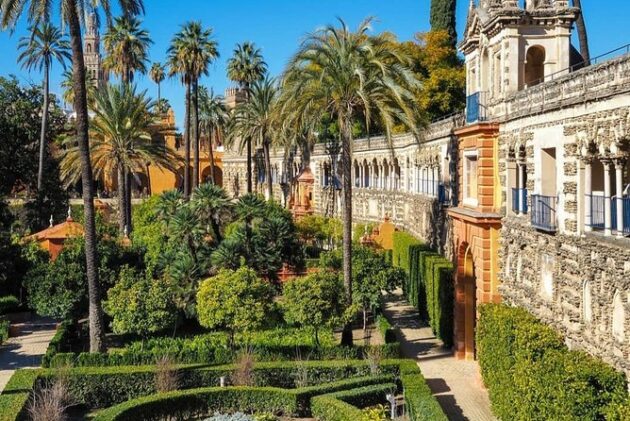
Gardens: 7 hectares of manicured paradise with citrus groves, pavilions, fountains (including the rare organ fountain that “plays” hourly), peacocks, and shaded galleries. Don’t miss the Galería del Grutesco with its grotto-like arches.
Audio guides (included) or guided tours provide rich context on the site’s Islamic roots and royal lore.
Visitor Tips
Crowd Avoidance: Opt for early-access tours (e.g., Walks of Italy’s exclusive entry before public opening) or visit off-peak. Deeper garden paths are quieter.
Essentials: Wear comfortable shoes for uneven stone paths; bring water (refill stations available), sunscreen/hat in summer, and a light jacket for shaded interiors. Small bags OK; no large backpacks or tripods.
Enhance Your Visit: Rent an audio guide or join a small-group tour (€25-50) for stories on hidden symbols. For Game of Thrones fans, spot Dorne sets.
Practicalities: Toilets and a café are inside; photography allowed except in apartments. Expect security checks.
Accessibility
The site is partially accessible: Wheelchair users can navigate main patios and gardens via ramps, but some upper levels and narrow paths require assistance. Free entry for disabled visitors +1 companion. Audio guides have visual descriptions; request wheelchairs at entry (€5 deposit). For full details, contact ahead via the official site.
Nearby Attractions
Seville Cathedral & Giralda Tower (5-min walk): World’s largest Gothic cathedral (€11 combo ticket).
Plaza de España (15-min walk): Iconic tiled semicircle from 1929 Expo.
Barrio Santa Cruz: Wander narrow alleys for tapas and flamenco.
Where to Stay and Eat
Stay: In Santa Cruz for immersion—try Hotel Las Casas de la Judería (historic charm, €150-250/night) or budget-friendly Airbnb cortijos.
Eat Nearby: Post-visit, savor Andalusian fare at Las Teresas (jamón ibérico, €15-25) or Bar Santa Cruz for tostadas (€5-10). For veggie options, Casa Plácido’s spinach and chickpeas.
The Royal Alcázar isn’t just a palace—it’s a living mosaic of cultures, where every arch whispers tales of kings, conquests, and gardens that bloom eternal. Book early, wander slowly, and let Seville’s magic unfold. ¡Buen viaje!