
A Travel Guide to Hagia Sophia Grand Mosque (2026)
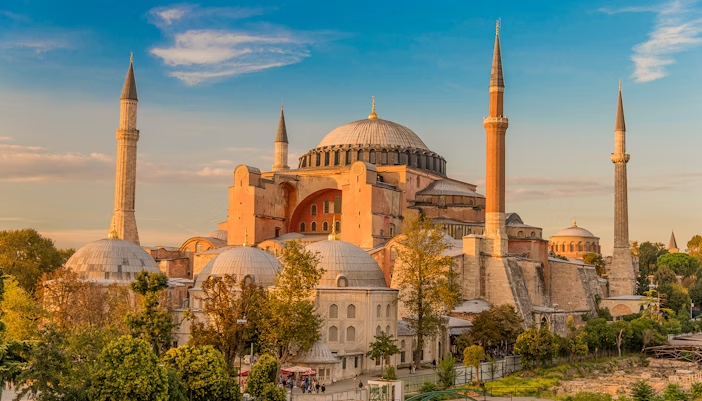
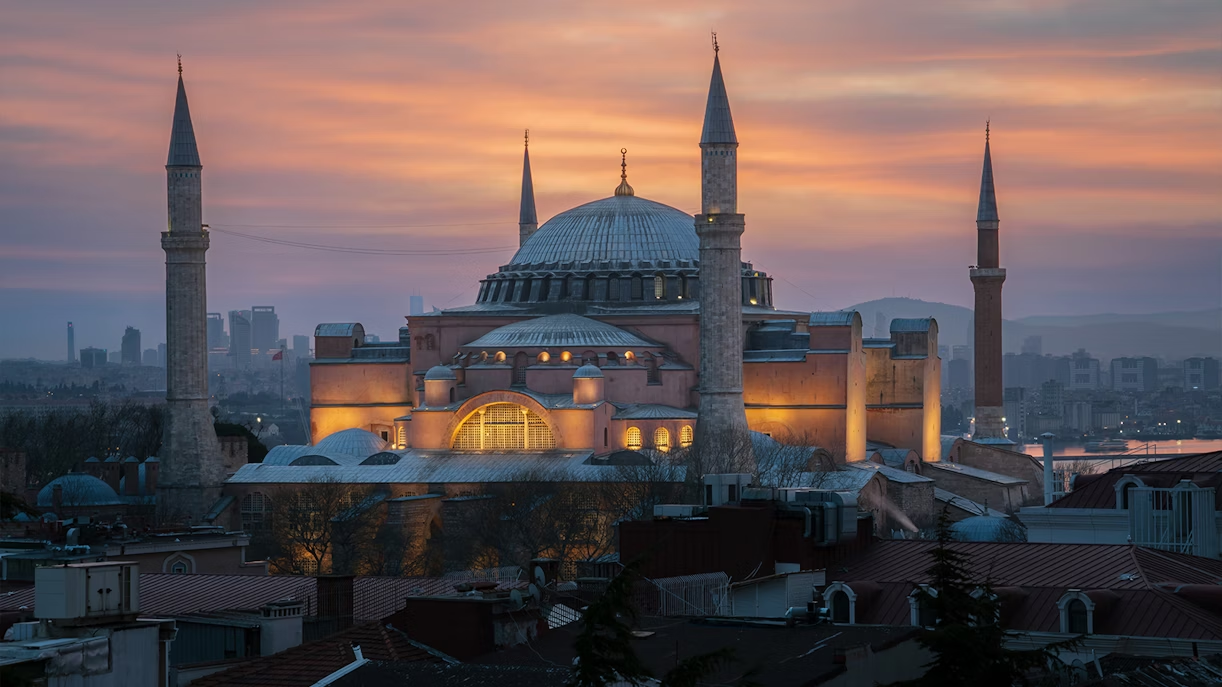
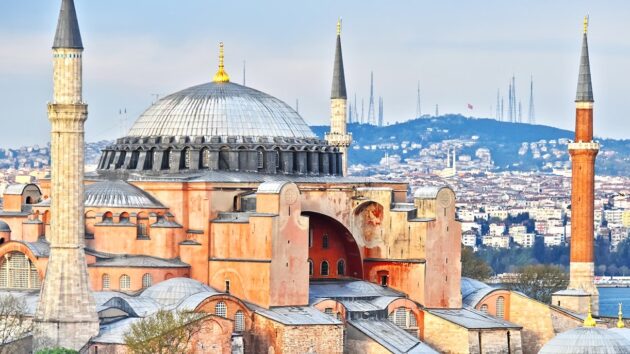
Nestled in the heart of Istanbul’s historic Sultanahmet district, the Hagia Sophia Grand Mosque (Ayasofya-i Kebir Cami-i Şerifi) stands as one of the world’s most iconic architectural marvels. Originally built as a cathedral in 537 AD under Emperor Justinian I, it served as the center of Eastern Orthodox Christianity for nearly a millennium before being converted into a mosque by the Ottomans in 1453, a museum in 1935, and back to a mosque in 2020.
This UNESCO World Heritage Site symbolizes the city’s layered history—Byzantine, Ottoman, and modern Turkish—and draws over 3 million visitors annually. Whether you’re drawn to its soaring dome, glittering mosaics, or spiritual ambiance, a visit here is an unforgettable journey through time.
Why Visit Hagia Sophia Grand Mosque?
At 1,488 years old, Hagia Sophia embodies Istanbul’s role as a bridge between East and West. Its innovative engineering—the massive central dome spans 31 meters (102 feet) and appears to “float” on light—revolutionized architecture and influenced structures from the Taj Mahal to St. Peter’s Basilica. As a functioning mosque, it offers a living connection to Islamic worship, while preserving Christian mosaics and pagan elements.
How to Get There
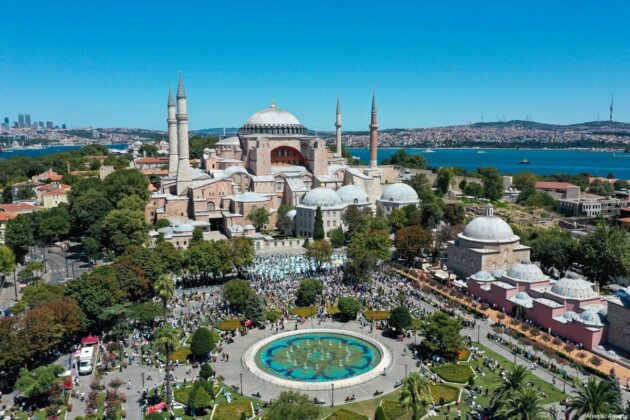
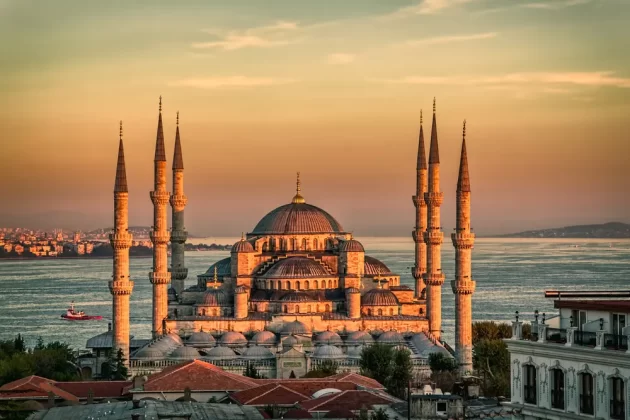
Hagia Sophia is centrally located in the Fatih district, making it easy to reach from anywhere in Istanbul. The nearest landmark is Sultanahmet Square, shared with the Blue Mosque.
From Istanbul Airport (IST, ~50 km away): Public Transport: Take the M11 metro to Gayrettepe, transfer to M2 to Vezneciler, then walk or tram to Sultanahmet (total ~1 hour 16 minutes, ~₺50/$1.50). HAVAIST Shuttle Bus: Direct lines like HAVAIST-12 to Aksaray, then T1 tram to Sultanahmet (~60-90 minutes, ₺100-150/$3-5). Taxi/Rideshare: ~45-60 minutes, ₺800-1,000 ($25-30) or Uber ~€35-40; best for groups or with luggage. From Sabiha Gökçen Airport (SAW, ~45 km away): Similar options via bus to Kadıköy, then ferry/tram (~1.5-2 hours).
Within Istanbul: Tram (T1 Line): Stop at Sultanahmet (7-minute walk). Metro (M2 Line): Sultanahmet station (7-minute walk). Bus: Lines like 36 or 92B to Çatladıkapı stop (13-minute walk). On Foot: From the Blue Mosque or Topkapı Palace, it’s a 5-10 minute stroll.
Best Time to Visit
Hagia Sophia welcomes visitors year-round, but timing matters for crowds, weather, and lighting (which enhances the mosaics’ glow).
Season: Spring (April-May) or autumn (September-October) for mild weather (15-25°C/59-77°F) and fewer tourists. Summers (June-August) are hot (up to 35°C/95°F) and peak-season crowded; winters (November-March) are cooler and quieter but rainy.
Daily: Arrive early (9-10:30 AM on Tuesdays/Wednesdays) for minimal crowds and soft morning light, or late afternoon (after 5 PM) as tour groups thin out. Avoid Fridays (12:30-2:30 PM worshippers-only) and prayer times (five daily calls; check apps like Muslim Pro).
Pro Tip: Midweek visits are serene; weekends see more locals.
Opening Hours: Daily 9:00 AM – 7:30 PM (last entry 7:00 PM). Closed to non-worshippers during prayers.
Tickets and Entry
Price: €25 (~$27) for tourists (introduced in 2024; includes access to main areas and upper gallery). Free for Muslim worshippers via a separate entrance.
How to Book: Purchase on-site at the west entrance (queues can form) or online via official sites/apps for skip-the-line guided audio tours (€30-50). No advance booking required, but tours add context (1-hour duration).
Duration: 35-60 minutes self-guided; longer with a tour.
What to See and Do
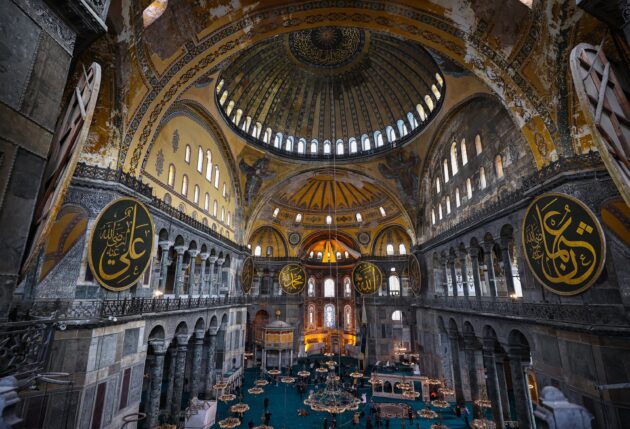
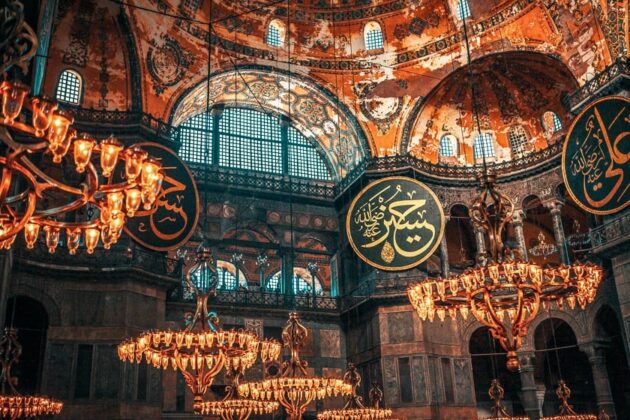
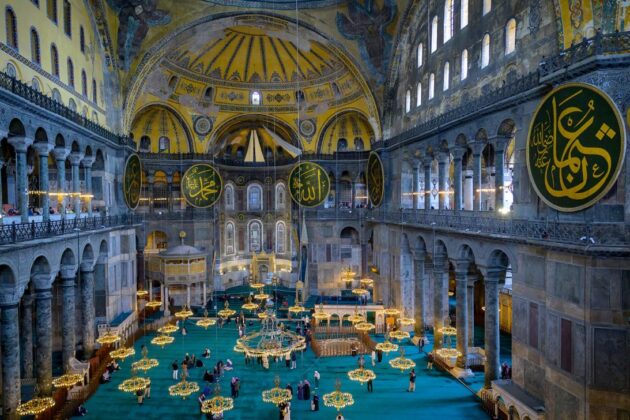
Wander the vast interior (capacity: 8,000 worshippers) and climb to the upper gallery for panoramic views. Highlights include a fusion of Byzantine grandeur and Ottoman elegance. Here’s a curated list of the top 11 must-sees:
The Dome: At 55 meters high, this engineering feat (rebuilt in the 6th century) creates an illusion of heaven on earth, with light filtering through 40 windows.
Mosaic of the Virgin and Child (Apse): A 9th-century golden masterpiece depicting Mary and baby Jesus, flanked by archangels— a rare surviving Byzantine icon.
Mosaic of Virgin Mary, Justinian, and Constantine (Vestibule): 10th-century artwork showing emperors offering gifts to the Virgin, symbolizing imperial devotion.
Mosaic of Jesus, Constantine IX, and Empress Zoe (Southern Gallery): An 11th-century piece with “recycled” elements, revealing layers of history.
Imperial Gate: Towering 7-meter oak doors reserved for emperors; legend ties the wood to Noah’s Ark.
Wishing Column (Northwest): Rub your thumb in the hole of this marble pillar for good luck—it’s worn smooth from centuries of wishes.
Monolithic Columns: 104 colorful marble pillars from Egypt, Greece, and beyond, adding vibrant texture to the nave.
Sultan’s Tombs: Separate entrance for ornate 16th-17th century mausoleums of Ottoman sultans like Selim II, featuring intricate tiles.
Omphalion (Floor Mosaic): A geometric marble inlay possibly used for Byzantine coronations—step on it for a regal feel.
Four Minarets: Ottoman additions of varying heights and styles, framing the skyline and calling the faithful to prayer.
Norse Graffiti (Upper Gallery): 9th-century Viking runes carved by Varangian guards, a quirky nod to Byzantine mercenaries.
Opt for a guided tour to uncover hidden stories, or join a prayer if respectful (tourists allowed during services here, unlike other mosques).
Practical Tips
Dress Code: Modest attire mandatory—cover shoulders, arms, knees, and tattoos; loose clothing preferred. Women: Headscarves provided free at entry. Remove shoes (slippers optional for hygiene).
Crowd Avoidance: Download the Istanbulkart for seamless public transport. Use apps like Moovit for routes.
Accessibility: Ground floor wheelchair-friendly with ramps/elevators; upper gallery challenging (steep stairs, cobblestones). Prams OK; no on-site rentals.
Rules: No food/drink inside; photography OK (no flash or during prayers). No large bags—store at nearby Sirkeci station.
Combine Visits: Pair with the Blue Mosque (free, 5-minute walk) or Topkapı Palace (€30 combo ticket). Evening sound-and-light shows at Sultanahmet add magic.
Health/Safety: Tap water unsafe—buy bottled. Istanbul’s tourism is booming; petty theft is low but watch valuables.
Where to Stay and Eat Nearby
Stay in Sultanahmet for immersion: Luxury: Four Seasons Hotel Istanbul at Sultanahmet (~€500/night) or Hagia Sophia Mansions Kuran Kursu (~€300). Mid-Range: Hilton Istanbul Bomonti (~€150) or White House Hotel (~€100). Budget: The And Hotel (~€50) or hostels in the area.
Dine on Turkish delights: Mihri Restaurant for kebabs, Sophia Pita Cafe for quick bites, or Matbah for Ottoman fusion (~₺200-400/$6-12 per person). Rooftop spots like Hagia Sophia Terrace offer views with tea.
Final Thoughts
Hagia Sophia isn’t just a monument—it’s a living testament to resilience and cultural fusion, where prayers echo under a dome that has witnessed empires rise and fall. With its €25 entry ensuring sustainability, it’s more magical than ever. Arrive with respect, leave inspired. Safe travels to the Queen of Cities!