
A Travel Guide to the Mosque-Madrasa of Sultan Hassan (2026)
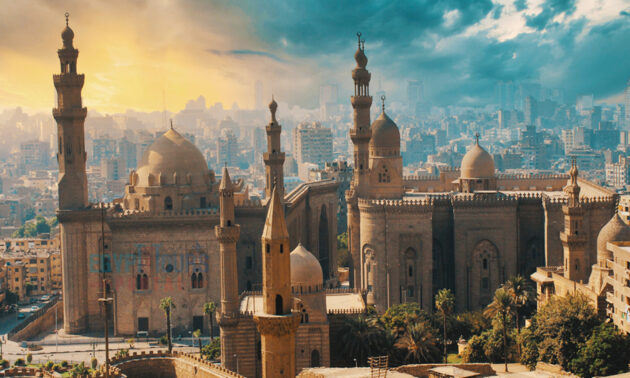
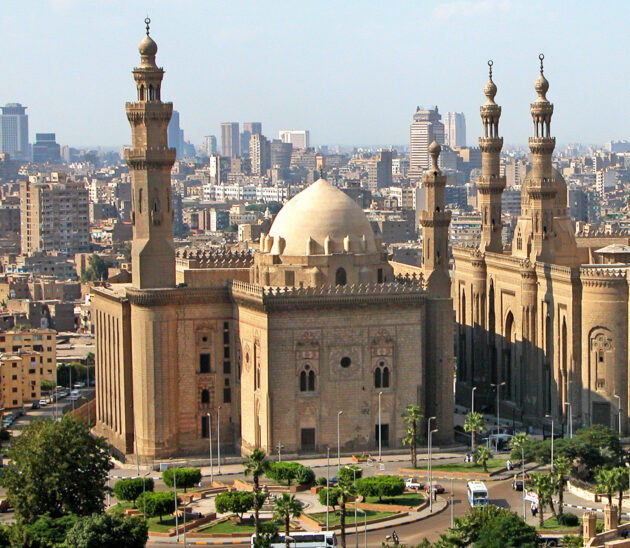
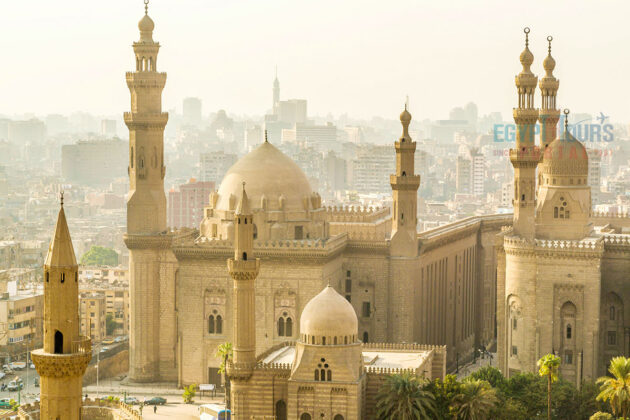
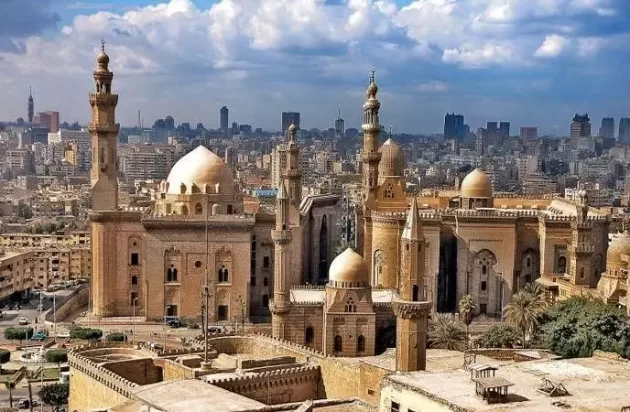
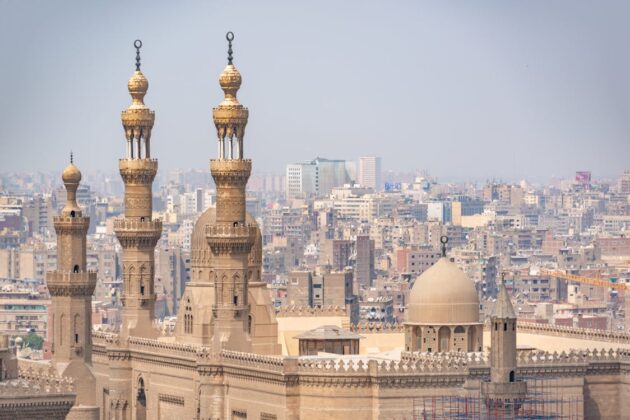
Nestled in the heart of Cairo’s historic Islamic quarter, the Mosque-Madrasa of Sultan Hassan stands as a towering testament to Mamluk architectural grandeur. Commissioned in 1356 AD by Sultan an-Nasir Hasan and completed just seven years later, this sprawling complex served as both a grand mosque for worship and a prestigious madrasa (Islamic school) dedicated to the four major Sunni schools of jurisprudence. Spanning over 7,900 square meters with walls soaring up to 38 meters high and minarets reaching 84 meters, it’s one of the largest and most impressive surviving Mamluk monuments in the world. A UNESCO World Heritage site within Historic Cairo, it’s a must-visit for history buffs, architecture enthusiasts, and anyone seeking to immerse in Egypt’s medieval Islamic heritage. Whether you’re wandering its vast courtyard or admiring intricate marble carvings, the site evokes the opulence and intellectual vibrancy of 14th-century Cairo.
Why Visit the Mosque-Madrasa of Sultan Hassan?
This isn’t just a mosque—it’s a masterpiece of Mamluk design that blends spiritual serenity with scholarly ambition. Built at immense cost (nearly bankrupting the treasury and using stones from the Giza Pyramids), it symbolizes the peak of Bahri Mamluk power. Highlights include its innovative layout with four towering iwans (vaulted halls) facing a central courtyard, an ornate mihrab (prayer niche) adorned with gilded inscriptions, and a mausoleum intended for the sultan (though he was assassinated before its completion, leaving it symbolically empty). The site’s profound acoustics and geometric patterns create a sense of timeless awe, making it a highlight of any Cairo itinerary.
How to Get There
The mosque is located in Salah al-Din Square, just outside the Citadel of Saladin in southern Cairo—about 20-30 minutes from downtown Tahrir Square.
From Cairo International Airport (CAI): Take a pre-booked Uber or Careem (Egypt’s ride-hailing apps) for a 45-60 minute ride (EGP 300-500, or $10-15 USD). Taxis are cheaper (EGP 200-300) but negotiate fares upfront. Avoid unofficial airport taxis to prevent overcharging.
From Downtown Cairo: Uber/Careem: 20-30 minutes, EGP 100-200. Metro: Ride Line 1 to Mar Girgis, then transfer to a taxi (total ~45 minutes). No direct metro to the site, so taxis are easiest. Walking/Tuk-tuk: From nearby sites like the Ibn Tulun Mosque (15-minute walk), but not recommended from downtown due to traffic.
Public buses exist but are crowded and less tourist-friendly. For ease, join a guided tour that includes transport.
Best Time to Visit
Season: October to April is ideal, with mild temperatures (15-25°C/59-77°F) and lower humidity. Summers (May-September) are scorching (up to 40°C/104°F), so visit early morning to beat the heat. Expect busier crowds during Ramadan (March-April) due to evening prayers, but the site’s glow under floodlights is magical.
Daily: Arrive at opening (9 a.m.) for fewer crowds and cooler temps. Avoid midday prayer times (noon, 3 p.m.) if you prefer quieter exploration. Sunset visits offer stunning views from the square.
What to Do and See
Plan for 1-2 hours to fully appreciate the site. Entry includes access to the adjacent Al-Rifai Mosque, creating a seamless twin-mosque experience.
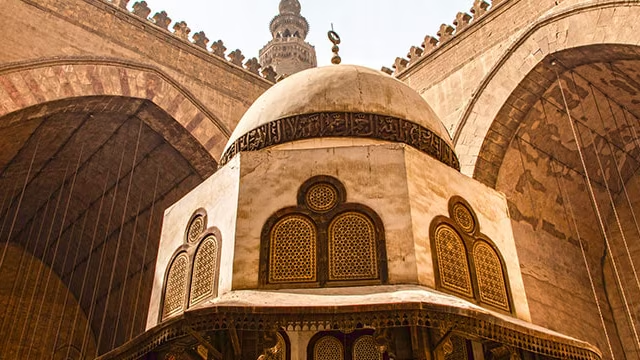
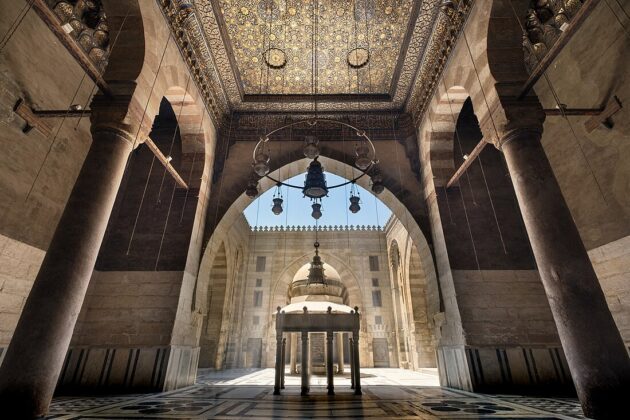
Explore the Courtyard and Iwans: Enter through the massive recessed portal (one of Cairo’s tallest) into the open-air sahn (courtyard) with its Ottoman-era ablutions fountain. Gaze up at the four iwans—each a 25-meter-high vaulted hall leading to a madrasa wing for one Sunni school. Marvel at the muqarnas (honeycomb vaulting) and stucco arabesques.
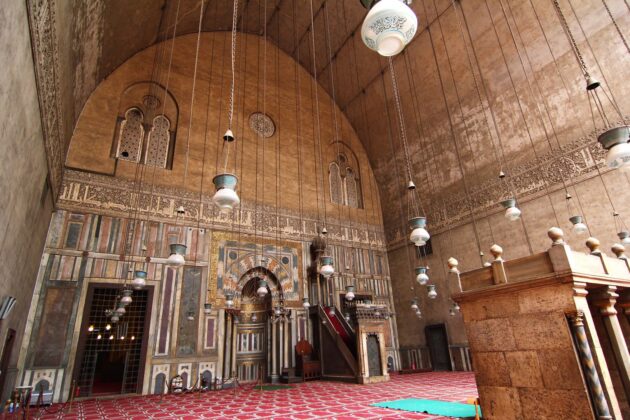
Visit the Prayer Hall and Mihrab: Step into the qibla iwan for the mihrab, a jewel of marble mosaics, Kufic calligraphy, and geometric tiles—one of Egypt’s most beautiful. Don’t miss the bronze minbar (pulpit) with gold and silver inlays.
The Mausoleum: Behind the qibla wall (unusually placed for Mamluks), enter the domed chamber via bronze doors. Admire the multicolored marble and empty sarcophagus, evoking the sultan’s tragic fate.
Climb a Minaret (If Open): The southeastern minaret offers panoramic views of Cairo (stairs are steep; not always accessible—check on-site).
Guided tours (EGP 200-500 extra) from operators like Viator or local Egyptologists provide deeper insights into Mamluk history.
Visiting Hours and Entry Fees
Hours: Open daily 9 a.m. to 5 p.m. (last entry 4:30 p.m.). Closed during major holidays? Unlikely, but confirm via Egypt’s Ministry of Tourism app.
Fees: EGP 220 (~$4 USD) for foreign adults; EGP 110 for students (with ID). Children under 6 free. Combo ticket covers Al-Rifai Mosque. Photography is allowed without flash.
Dress Code and Etiquette
As an active mosque, respect Islamic customs:
Dress: Modest attire—cover shoulders, chest, and knees (long pants/skirts, long sleeves). Women: Headscarf provided at entry if needed; avoid tight clothing. Men: No shorts.
Behavior: Remove shoes before entering prayer areas. Silence phones, no loud talking during prayers. Non-Muslims can visit but stay out of worship zones during salat (five daily prayers). Touch nothing; follow signs.
What to Bring
Comfortable walking shoes (uneven stone floors).
Water bottle, hat, and sunscreen (even in winter).
Small change for fees/tips (guides expect EGP 50-100).
Camera (but respect no-flash rule). Leave large bags at your hotel.
Where to Stay
Base yourself in central Cairo for easy access:
Downtown (Tahrir Square): Budget-friendly like the Cairo Marriott (luxury) or hostels (~$50-150/night).
Islamic Cairo (near Khan el-Khalili): Atmospheric spots like the Al-Masry House (~$80/night) for an authentic vibe.
Zamalek Island: Upscale, quieter—Sofitel El Gezirah (~$200/night). All are 20-40 minutes by taxi.
Tips for a Great Experience
Combine Sites: Pair with the Citadel of Saladin (next door, EGP 400 entry) or a half-day Islamic Cairo tour including Ibn Tulun Mosque (15-min walk) and Al-Rifai (adjacent). Book via GetYourGuide for deals.
Safety: Cairo’s tourist areas are well-policed; stick to licensed taxis and daytime visits. Women: Travel in groups if solo.
Guides: Essential for context—free Ministry guides are available, or hire private (EGP 500/day).
Crowds and Heat: Early visits beat tour buses; hydrate and rest in shaded iwans.
Sustainability: No littering; support local by buying from nearby vendors ethically.
Nearby Attractions
Al-Rifai Mosque (0 min): Neo-Mamluk twin with royal tombs and stunning acoustics.
Citadel of Saladin (5-min walk): 12th-century fortress with Muhammad Ali Mosque views.
Ibn Tulun Mosque (15-min walk): Egypt’s oldest intact mosque, with a serene spiral minaret.
Khan el-Khalili Bazaar (10-min drive): Souk for spices, lanterns, and haggling.
Egyptian Museum (20-min drive): Tutankhamun’s treasures (or the new Grand Egyptian Museum).
Final Thoughts
The Mosque-Madrasa of Sultan Hassan isn’t merely a relic—it’s a living portal to Cairo’s soul, where echoes of Mamluk scholars mingle with modern prayers. As Egypt enhances its heritage sites with better signage and apps, your visit promises deeper connection. Embrace the site’s quiet majesty, haggle for a falafel nearby, and let this architectural symphony inspire your Egyptian adventure. Safe travels—ma’a salama!