
A Travel Guide to Luxor Temple (2026)
Nestled on the east bank of the Nile River in the heart of ancient Thebes (modern-day Luxor), Luxor Temple stands as a testament to Egypt’s pharaonic grandeur. Built primarily during the New Kingdom (c. 1400 BC), this majestic complex was a hub for royal rituals and festivals, symbolizing the rejuvenation of kingship.
Unlike many temples dedicated solely to deities, Luxor Temple honored the pharaoh’s divine rebirth, making it a unique blend of political and religious architecture. As one of Egypt’s most accessible and photogenic sites, it’s a must-visit for history buffs, photographers, and anyone seeking an immersive dive into ancient Egyptian life.
Why Visit Luxor Temple?
Luxor Temple isn’t just ruins—it’s a living canvas of Egypt’s past, layered with contributions from pharaohs like Amenhotep III and Ramses II, as well as later influences from Alexander the Great, Romans, Christians, and even a medieval mosque. Imagine the chaos and splendor of the annual Opet Festival, where sacred barques carrying statues of Amun, Mut, and Khonsu paraded along the Avenue of Sphinxes from nearby Karnak Temple.
Today, the site’s colossal statues, intricate hieroglyphs, and atmospheric lighting create an otherworldly experience, perfect for evoking the mystique of ancient rituals. It’s compact enough for a 1-2 hour visit yet profound enough to linger, and its central location makes it ideal for combining with Nile cruises or city strolls.
Brief History
Construction began under Amenhotep III in the 14th century BC as a sanctuary for the Theban Triad (Amun, his consort Mut, and son Khonsu), but it evolved into a celebration of pharaonic renewal. Ramses II added grand courtyards and pylons in the 13th century BC, while Tutankhamun contributed sphinxes along the processional avenue. Over millennia, it served as a Roman military camp, a Coptic Christian basilica, and the site of the Abu el-Haggag Mosque (still in use today). This palimpsest of civilizations—from pagan to Islamic—highlights Egypt’s enduring cultural fusion.
How to Get There
Luxor Temple is conveniently located in downtown Luxor on the East Bank, just 1 km (0.6 miles) from the Luxor Railway Station and a short walk from the Nile Corniche promenade.
From Cairo: Fly into Luxor International Airport (LXR, 45-minute flight, ~$50–$100 USD one-way) or take an overnight sleeper train (9–12 hours, ~$60–$120 USD). Budget travelers can opt for a 10-hour bus via Go Bus (~$15 USD).
Within Luxor: Walk from most East Bank hotels (10–15 minutes), hail a taxi (~20–50 EGP, or $1–$2 USD), or ride a colorful horse-drawn calèche. From the West Bank (e.g., Valley of the Kings), cross via the Luxor Bridge by taxi or ferry (~30–45 minutes, $5–$10 USD).
Nile Cruise: Many 3–7 day cruises from Aswan or Cairo dock right nearby, with temple shuttles included.
Renting a bike or e-scooter is a fun, eco-friendly option for exploring the area.
Best Time to Visit
Luxor’s subtropical climate means hot summers (up to 40°C/104°F) and mild winters (15–25°C/59–77°F). Shoulder seasons—February to April and September to November—offer the sweet spot: comfortable temps, fewer crowds, and vibrant festivals like Ramadan illuminations in spring. Avoid peak summer (June–August) due to intense heat, which can make the stone surfaces scorching.
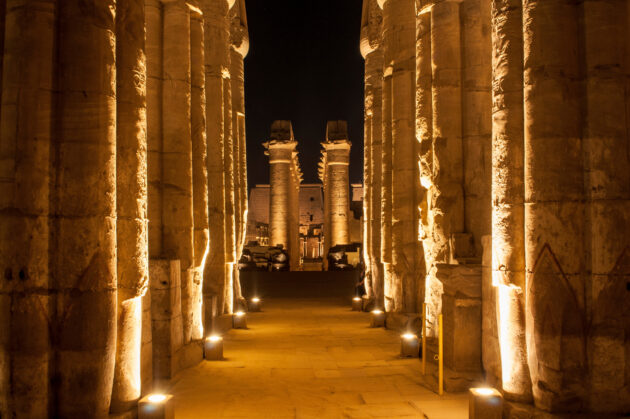
Daily Timing: Arrive at opening (6 AM) for cool mornings and golden light on reliefs, or after sunset (around 6–7 PM) for the magical floodlit glow that casts dramatic shadows. Night visits transform the temple into a serene, starlit stage—less humid and more romantic, though slightly busier in high season.
Expect enhanced lighting from recent restorations, making evenings even more spectacular.
Opening Hours and Tickets
Hours: Daily from 6 AM to 10 PM (last entry 9 PM). Night entry (after 5 PM) may require a separate ticket in some cases—confirm on-site.
Tickets: Adults: 160 EGP (~$3.30 USD); Students: 80 EGP (~$1.65 USD) with ID. Children under 6 free. Photography is allowed without flash (no extra fee), but drones are prohibited.
Passes: The Luxor Pass (5-day: 1,300 EGP/~$27 USD; 3-day: 900 EGP/~$18.50 USD) grants unlimited entry to Luxor Temple, Karnak, and West Bank sites—ideal for multi-day itineraries. Buy at major ticket offices (e.g., Luxor Temple entrance) or online via the Egyptian Ministry of Tourism.
High security (scanners, guards) ensures a safe visit.
Highlights: What to See
Allocate 1–2 hours to wander this compact wonder. A suggested route starts at the entrance and spirals inward:
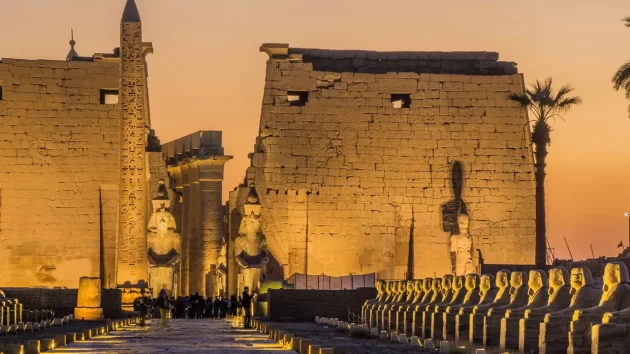
Avenue of Sphinxes: The 2.5 km (1.5 mile) processional path lined with 1,350 restored human-headed sphinxes—walk a section to Karnak for the full festival vibe (opened fully in 2021).
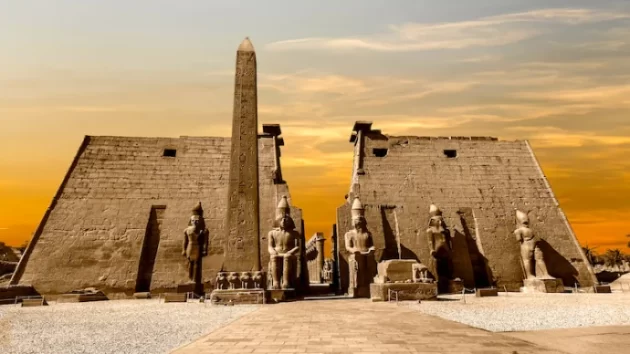
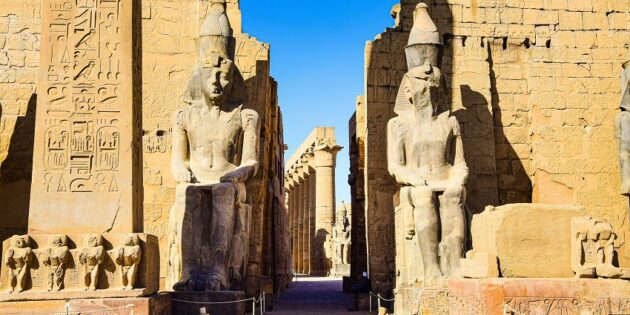
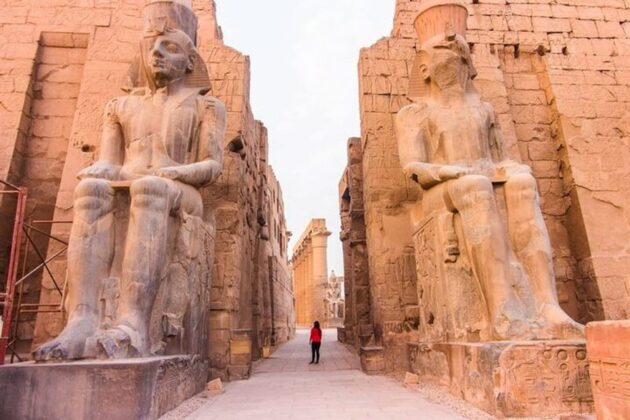
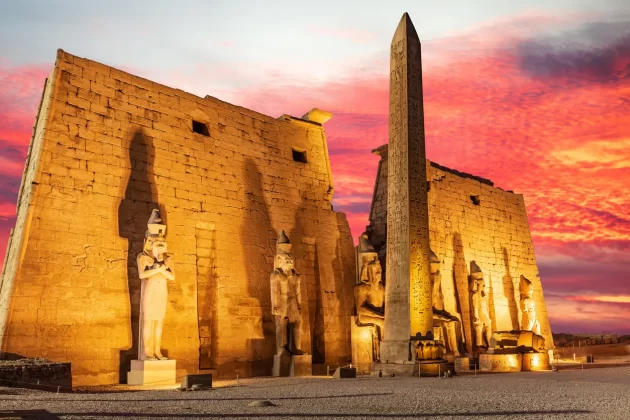
First Pylon and Colossi of Ramses II: Towering gateway with massive seated statues (up to 14m/46ft tall) guarding the entrance; reliefs depict Ramses’ victories.
Courtyard of Ramses II: Papyrus-bundle columns and obelisks (one remains; its twin graces Paris’ Place de la Concorde).
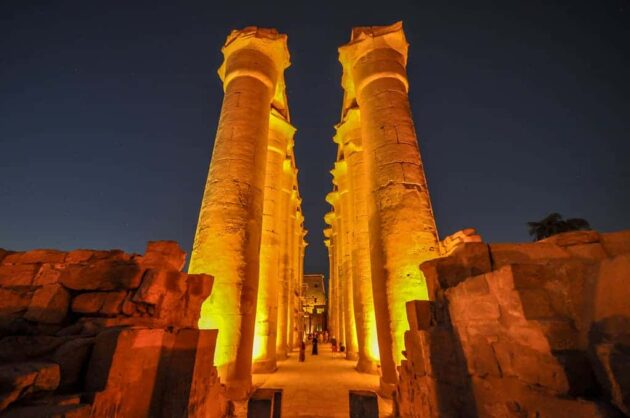
Colonnade of Amenhotep III: 14 soaring pillars etched with Opet Festival scenes— a highlight for their symmetry and storytelling.
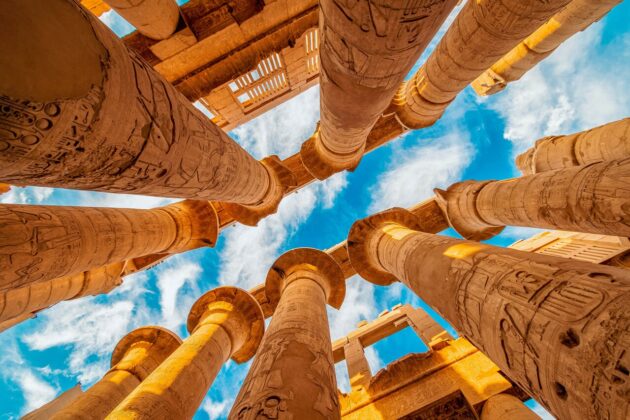
Hypostyle Hall and Inner Sanctuaries: A “petrified forest” of columns leading to chapels for Amun, Mut, and Khonsu; don’t miss Alexander the Great’s barque shrine and the Birth Room, celebrating pharaonic divinity.
Abu el-Haggag Mosque: Climb for panoramic views and a glimpse of Islamic overlay on ancient stone.
Wall carvings burst with color under morning light, revealing gods, pharaohs, and cosmic battles.
Practical Tips
What to Bring: Comfortable shoes (uneven terrain), hat/sunscreen (day), light jacket (evening chill), water bottle, and modest clothing (shoulders/knees covered, especially near the mosque). Download an offline map or audio guide app.
Guided Tours: Opt for a 1-hour Egyptologist-led tour (~$20–$40 USD) to decode hieroglyphs—book via Viator or on-site. Private tours include transport.
Photography Pro Tips: Shoot RAW for high-contrast night shots; frame colonnades for leading lines; early mornings yield crisp relief details without crowds.
Etiquette and Safety: No touching artifacts (to prevent erosion); tip guards sparingly (10–20 EGP). Luxor is tourist-friendly with 24/7 police presence—solo travelers report feeling safe, but stick to lit paths at night.
Accessibility: Mostly flat, but some ramps; wheelchairs available on request. Families: Kid-friendly with interactive storytelling tours.
Combine with a felucca sail at sunset for the ultimate Nile backdrop.
Where to Stay and Eat
Base yourself on the East Bank for proximity:
Budget: Bob Marley House (~$20/night, backpacker vibe near the temple).
Mid-Range: Steigenberger Nile Palace (~$100/night, Nile views and pool).
Luxury: Sofitel Winter Palace (~$250/night, colonial elegance with gardens).
Dine on the Corniche: Try koshari (street food staple) at local spots or upscale Nile fish at 9 Pyramids Lounge. For authenticity, join a souk food tour in Luxor Market.
Nearby Attractions
Luxor is ancient Egypt’s epicenter—don’t miss:
Karnak Temple Complex (1 km north): World’s largest religious site, linked by the Sphinx Avenue.
Valley of the Kings (West Bank, 10 km): Tombs of Tutankhamun and Ramses (ferry across, ~$5 USD).
Temple of Hatshepsut (West Bank): Dramatic terraced architecture.
Luxor Museum (500m away): Compact exhibits with royal mummies.
A 3-day itinerary: Day 1 East Bank (Karnak + Luxor Temple); Day 2 West Bank tombs; Day 3 hot air balloon over the Nile.
Final Thoughts
Luxor Temple captures the soul of pharaonic Egypt in a single, spellbinding site—where shadows of gods and kings still dance under the stars. With improved accessibility and lighting, it’s more inviting than ever. Whether you’re chasing history’s whispers or Instagram gold, this temple delivers timeless magic. Book ahead for passes and tours, embrace the chaos of the Nile, and let Luxor’s ancient heartbeat transport you. Safe travels—ma’a salama!