
A Travel Guide to the Colossi of Memnon (2026)
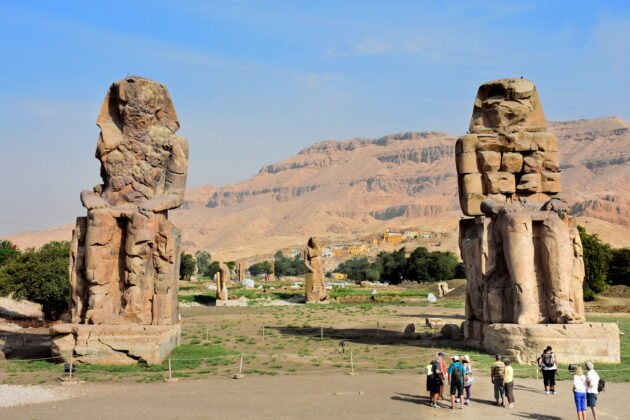
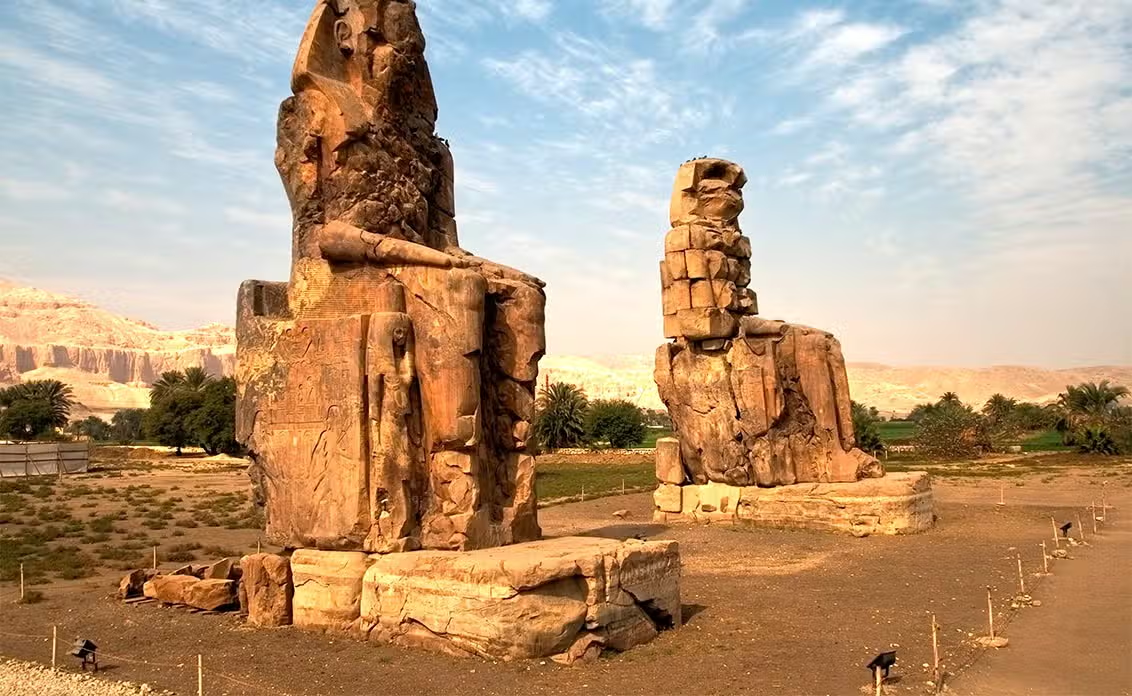
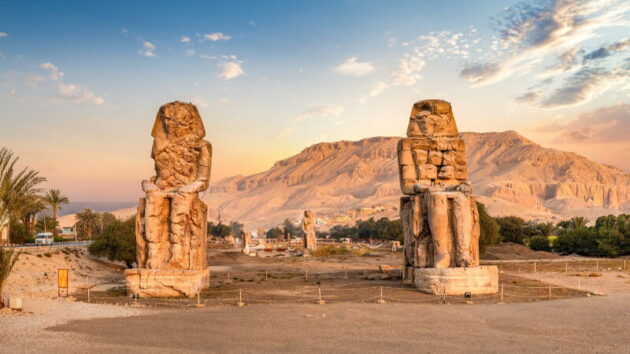
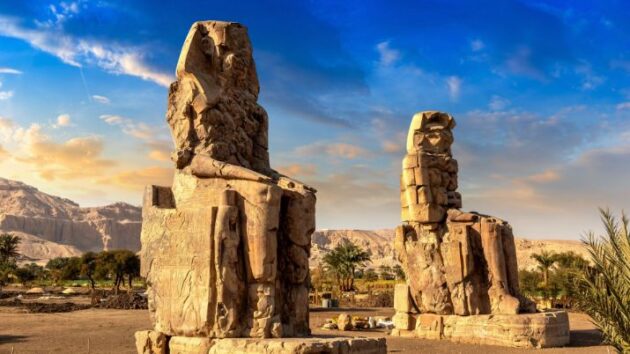
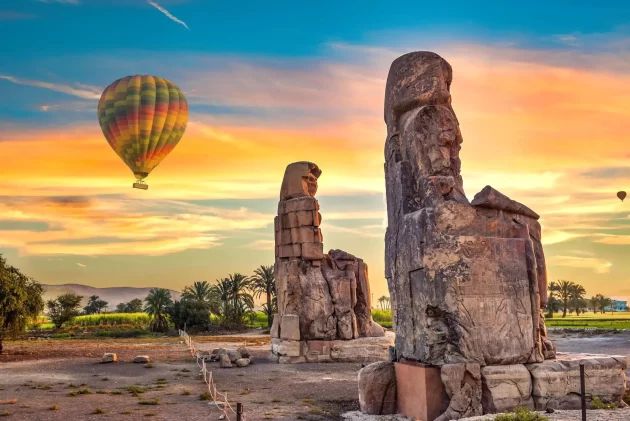
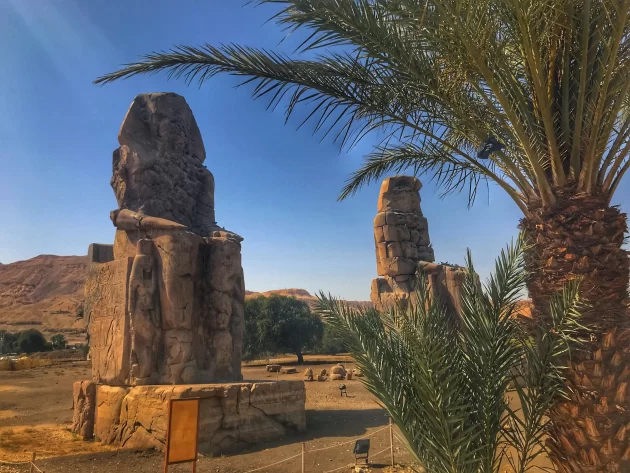
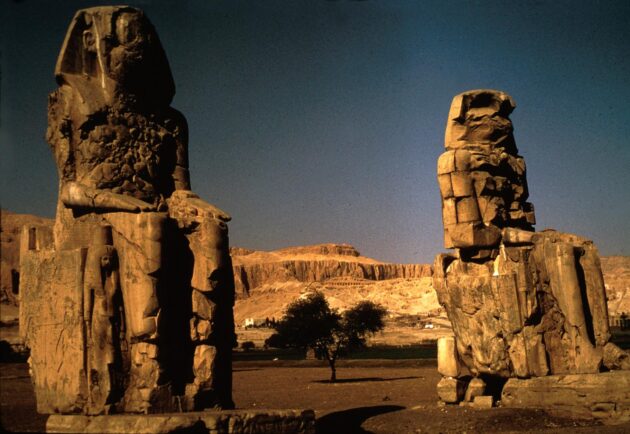
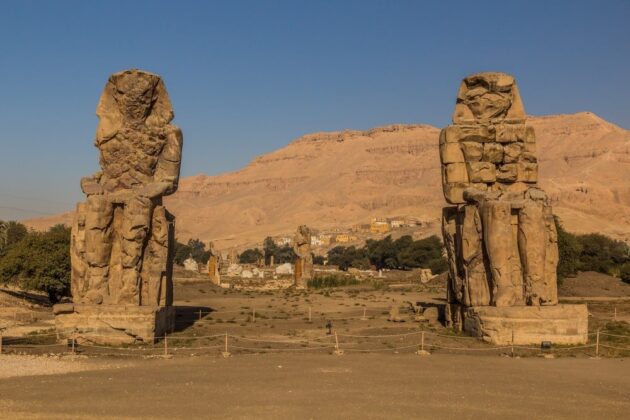
Nestled on the sun-baked West Bank of the Nile in Luxor, the Colossi of Memnon stand as silent sentinels of ancient Egypt’s grandeur. These two towering quartzite sandstone statues, each over 18 meters (60 feet) tall and weighing around 750 tons, depict Pharaoh Amenhotep III seated on his throne, gazing eastward toward the rising sun. Carved around 1350 BCE during the 18th Dynasty, they once guarded the entrance to what was the largest and most opulent mortuary temple in Thebes—now mostly eroded away by floods and earthquakes. Though their “singing” phenomenon—a eerie dawn whistle caused by thermal cracks—ended after Roman repairs in the 2nd century CE, the Colossi remain a mesmerizing introduction to Luxor’s archaeological wonders. Part of the UNESCO-listed Ancient Thebes site since 1979, they offer a poignant glimpse into Egypt’s pharaonic past amid vast wheat fields and palm groves.
Why Visit the Colossi of Memnon?
In a land overflowing with pyramids and temples, the Colossi stand out for their raw, unfinished majesty—cracked faces and all—evoking a sense of timeless tragedy and resilience. They’re not just relics; they’re a poetic gateway to the West Bank’s treasures like the Valley of the Kings and Hatshepsut’s Temple, perfect for history buffs, photographers, and those seeking a quieter, more reflective ancient site. The site’s free access and proximity to other attractions make it an effortless highlight, blending myth (Greek tales of the hero Memnon) with scientific intrigue (the lost “song” explained by wind and stone).
A Brief History
Erected as guardians for Amenhotep III’s mortuary temple—the pharaoh was deified in his lifetime—the statues were quarried from Cairo’s Gebel el-Silsila and floated down the Nile on barges. Originally gilded and jeweled, they towered at 21 meters with smaller figures of Amenhotep’s wife Tiye and mother Mutemwiya at the throne’s base. A devastating 27 BCE earthquake toppled one and cracked the other, creating the legendary “singing” sound that drew Roman pilgrims who inscribed graffiti honoring the mythical Memnon. The temple behind them, once rivaling Karnak in scale, succumbed to Nile floods over centuries, leaving only foundations and column bases today.
How to Get There
The Colossi are a short hop from central Luxor on the West Bank, about 30 minutes from the East Bank by car or taxi.
From Luxor Airport (LXR): Fly in from Cairo (1-hour flight, ~$50 USD). Taxis to the site cost 200–300 EGP (~$6–10 USD).
From Cairo: Take an overnight sleeper train (9–12 hours, ~$100 USD) or a budget bus (13 hours, ~$20 USD) to Luxor Station, then cross the Nile via public ferry (5 EGP, ~$0.15 USD) or private felucca (~$5 USD).
On Foot or Bike: For an adventurous twist, rent a bike (~$5 USD/day) on the East Bank, ferry across, and cycle through lush fields—ideal for avoiding traffic.
Tours: Join a guided West Bank excursion (from $30 USD), which bundles the Colossi with Valley of the Kings and often includes transport and a licensed Egyptologist.
Best Time to Visit
Luxor’s scorching summers make timing key. The optimal window is October to April, when temperatures hover at 20–30°C (68–86°F), avoiding the June–September heat (up to 45°C/113°F). Aim for early morning (6–8 AM) or late afternoon (4–5 PM) to beat crowds, catch golden-hour light for photos, and mimic the ancient “singing” dawn vibe—though the sound is long gone. The site is open daily from 6 AM to 5 PM (or 8 AM to 5 PM per some sources; confirm locally), closing early at 1 PM on Fridays for prayers.
Entry Fees and Practical Info
Entry: Free for all visitors—no tickets needed, making it a budget-friendly gem.
Other Costs: Expect 50–100 EGP (~$1.50–3 USD) for parking or small donations. Guided tours add $10–20 USD.
Accessibility: Flat terrain but uneven paths; moderate fitness required. Wheelchair-friendly in parts, but call ahead for assistance.
What to See and Do
Your visit lasts 15–30 minutes, but it’s packed with awe:
The Statues Themselves: Marvel at the colossal scale—stand between their massive feet for perspective photos. Note the hieroglyphs on the legs detailing Amenhotep’s triumphs and the faded smaller figures of his family.
Temple Ruins: Wander behind to explore the vast, flattened site—foundations, column bases, and ongoing digs reveal the temple’s former glory.
Inscriptions and Museum: Read Roman and Greek graffiti on the northern statue, then peek into the small on-site display of pottery, jewelry, and coins from excavations.
Surroundings: Soak in the Nile views, birdlife, and local farmers in nearby fields. For immersion, hire an Egyptologist (~$15 USD/hour) to decode the myths.
Combine with a full West Bank itinerary: Valley of the Kings (extra 400 EGP entry) or a hot air balloon ride at dawn (~$100 USD).
Tips for a Memorable Visit
Dress and Prep: Lightweight, modest clothing (long sleeves/pants for sun and respect), sturdy shoes, hat, sunscreen, and 2–3 liters of water—heat exhaustion is real. Bug spray for evenings.
Crowd Dodge: Go off-peak; tour groups peak 10 AM–2 PM.
Safety and Etiquette: Luxor is safe for tourists, but stick to marked paths to avoid loose stones. No climbing or touching—fines apply. Bargain with vendors but tip guides generously (20–50 EGP).
Sustainability: Support conservation by avoiding single-use plastics; the site’s fragility demands care.
Photo Ops: Dawn light casts ethereal shadows—perfect for that iconic shot.
Where to Stay Nearby
Base yourself on the West Bank for serenity or East Bank for buzz:
Budget: El Mesala Villa (~$20 USD/night) or local guesthouses with Nile balconies (~$1–5 USD, basic but charming).
Mid-Range: Steigenberger Nile Palace (~$100 USD) on the East Bank, with pools and temple views.
Luxury: Sofitel Winter Palace (~$200+ USD), colonial elegance steps from ferries.
Dine on koshari or ful medames at roadside spots (~$5 USD), or splurge on Nile cruises.
Final Thoughts
The Colossi of Memnon aren’t just stone giants—they’re a whisper from Egypt’s golden age, reminding us of empires lost to time yet enduring in spirit. With excavations breathing new life into the site, it’s an unmissable stop for any Luxor adventurer. Embrace the heat, the history, and the hush—your journey through ancient Thebes starts here.
Safe travels and wonder-filled wanderings!