
A Travel Guide to Central Market Hall (2026)
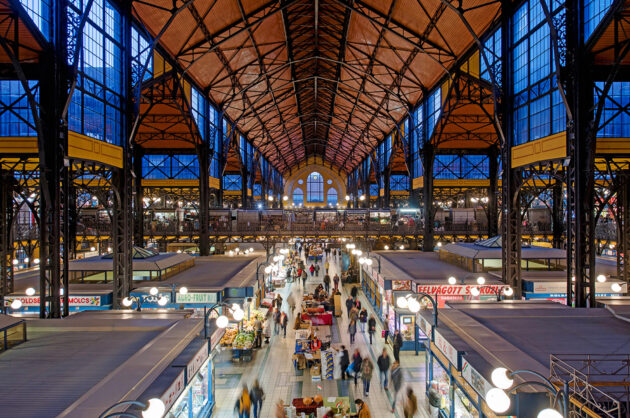
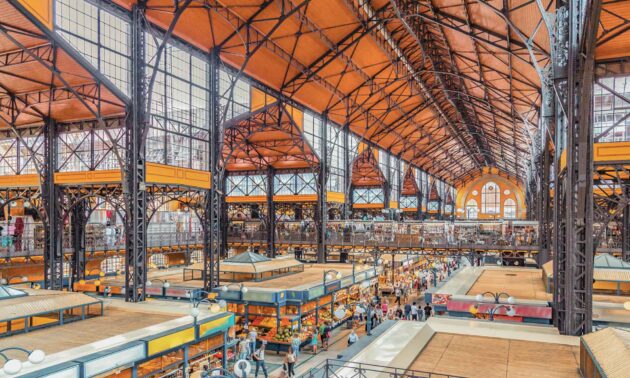
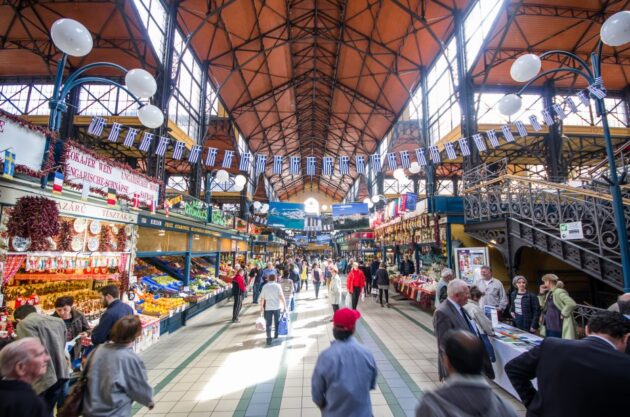
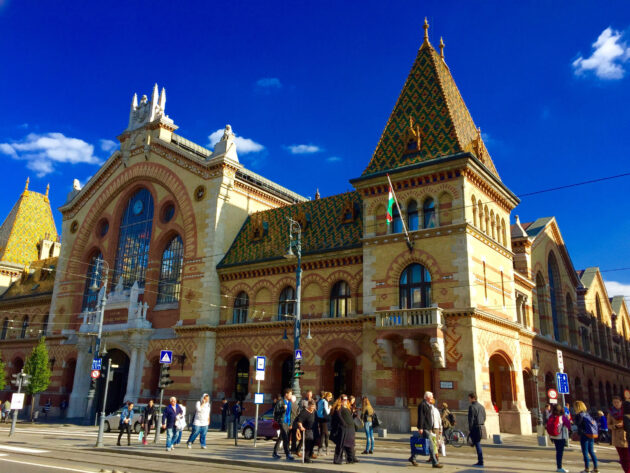
Nestled at the foot of the iconic Liberty Bridge on the Pest side of the Danube River, the Central Market Hall—also known as the Great Market Hall or Nagycsarnok—is Budapest’s crown jewel of culinary and cultural immersion. Opened in 1897, this sprawling neo-Gothic iron-and-glass masterpiece spans three levels and has been a vibrant hub for locals and visitors alike for over 125 years. With its colorful stalls brimming with fresh produce, artisanal cheeses, and Hungarian specialties, it’s more than just a market—it’s a sensory feast that captures the heart of Budapest’s food scene and folk traditions. Whether you’re a foodie hunting for paprika or a history buff admiring the architecture, a visit here is an essential stop on any Budapest itinerary.
Why Visit Central Market Hall?
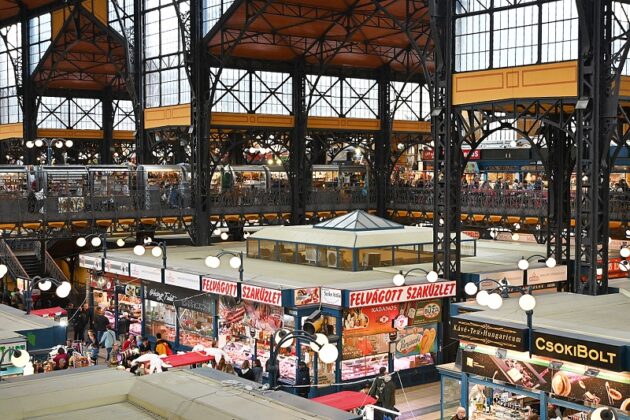
This isn’t your average supermarket; it’s a living museum of Hungarian life. The ground floor buzzes with vendors selling farm-fresh fruits, vegetables, and meats, while the upper balcony overflows with souvenirs and ready-to-eat delights. The basement offers a more utilitarian vibe with spices, wines, and pantry staples. It’s perfect for:
Sampling authentic Hungarian flavors like lángos (fried dough with toppings) or chimney cake (kürtőskalács).
Picking up unique gifts, from embroidered linens to handmade jewelry.
People-watching amid the market’s lively atmosphere, where locals haggle and tourists snap photos of the stunning Zsolnay tile roof.
How to Get There
Central Market Hall is conveniently located at Vámház krt. 1-3, in Budapest’s IX district, right at the Pest end of Szabadság Bridge (Liberty Bridge). It’s an easy 20-minute walk from the city center along Váci utca, Budapest’s famous pedestrian shopping street.
Public Transport: Metro: M4 (green line) to Fővám tér station (direct exit to the market). Tram: Lines 2, 47, 48, or 49 stop nearby at Vámház körút. Bus: Trolley bus 83 from the Buda side.
By Foot or Bike: Ideal from landmarks like the Gellért Spa or the Danube Promenade. Rent a Mol Bubi bike for a scenic ride.
Driving: Parking is limited; use nearby paid lots or apps like Parkl app for spots.
The market is free to enter and wheelchair-accessible on the main floors, though the upper balcony requires stairs or a lift.
Best Time to Visit
Aim for early morning to beat the crowds—especially in peak tourist season (June–August). The hall opens daily, but hours are:
Monday–Friday: 6 a.m.–6 p.m. Saturday: 6 a.m.–4 p.m. Sunday: 10 a.m.–4 p.m. (less crowded, but fewer vendors).
Winter visits (December–February) offer a cozy, festive vibe with holiday lights and mulled wine stalls, while summer brings outdoor extensions. Avoid midday rushes (11 a.m.–2 p.m.) when tour groups swarm. For a quieter experience, go on weekdays before noon.
What to See and Do
Allocate 1–2 hours to explore this 10,000-square-meter wonder. Start on the ground floor for the essentials, then ascend to the balcony for eats and trinkets.
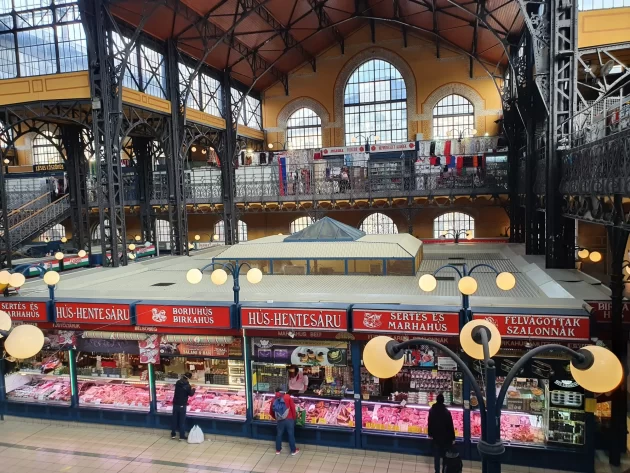
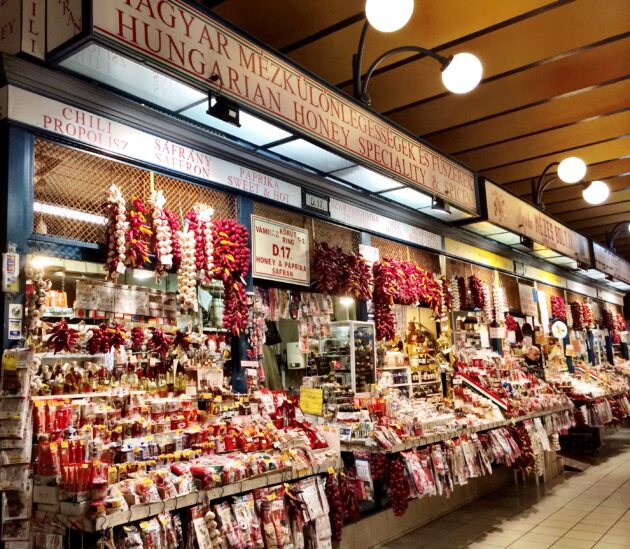
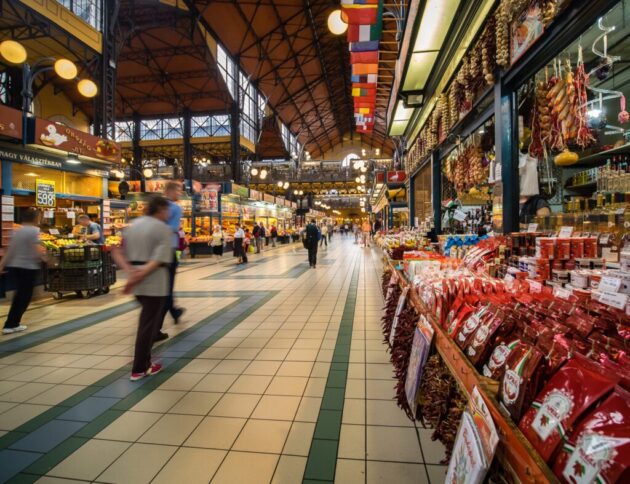
Ground Floor – Fresh Goods Galore: Wander aisles of ruby-red paprika, golden honey, and seasonal produce like cherries or pumpkins. Check out the butcher counters for salami tastings and the fish section for Danube River catches.
Upper Balcony – Food and Souvenirs: Indulge in street food: Try goulash soup, stuffed cabbage (töltött káposzta), or fresh langos from vendors like those in the central food court. Browse crafts: Hungarian embroidery, Herend porcelain, and pálinka (fruit brandy) bottles make great souvenirs.
Basement – Pantry Essentials: Stock up on spices, Hungarian wines (like Tokaji), and pickled goods. It’s less touristy and great for picnic provisions.
Guided Options: Join a 90-minute food tour with tastings for €20–30 (book via GetYourGuide), or a self-guided audio tour via the market’s app.
Where to Eat
The upper floor’s food stalls are the star—affordable, authentic, and diverse. Must-tries:
Lángos Stand: Crispy fried dough topped with sour cream and cheese (€3–5). Goulash or Lecsó: Hearty stews at sit-down spots like the market’s central eatery (€6–8). Sweet Treats: Chimney cake or strudel from bakery stalls.
For a full meal, head to nearby riverside cafés. Pro tip: Eat standing at counters to soak in the buzz—tables fill fast.
Shopping Tips
Bargain Smart: Haggle politely on the balcony for crafts (aim for 10–20% off), but fixed prices rule on the ground floor.
Avoid Tourist Traps: Skip overpriced “authentic” souvenirs on the upper level; head downstairs for better deals on spices and honey.
What to Buy: Paprika (sweet or spicy), salami, embroidered tablecloths, or Unicum liqueur. Pack in checked luggage to avoid spills.
Cash is king for small vendors (HUF or euros accepted), but cards work at larger stalls.
Practical Tips
Crowd Management: Weekday mornings are best; download the market’s map app for navigation.
What to Bring: Comfortable shoes (cobblestones abound), a reusable bag for shopping, and an empty stomach.
Accessibility: Elevators available; English signage is widespread.
Nearby Attractions: After, stroll across Liberty Bridge to Gellért Hill or explore the Jewish Quarter (10-minute walk).
Sustainability: Opt for local, seasonal produce to support vendors and reduce waste.
If you’re short on time, pair it with a Danube cruise starting nearby.
Final Thoughts
Central Market Hall is Budapest distilled into one unforgettable space—vibrant, flavorful, and full of soul. It’s not just about shopping or snacking; it’s a portal to Hungary’s rich heritage, where every stall tells a story. With its timeless appeal and modern twists, it’s more inviting than ever. Dive in early, savor the sights and smells, and leave with a taste of Budapest you’ll carry home.
Safe travels and selamat (bon appétit)!