
A Travel Guide to the Okavango Delta (2026)
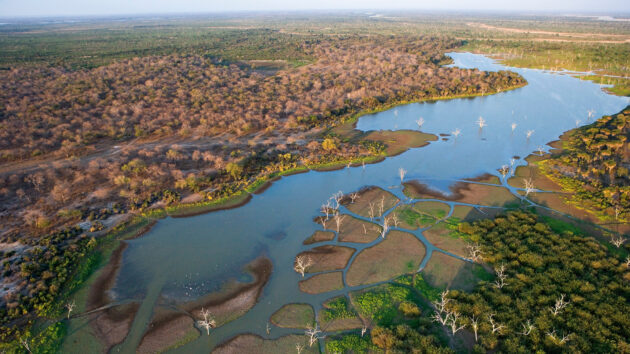
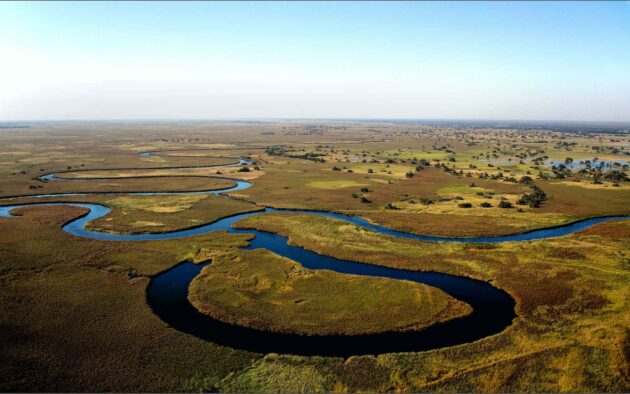
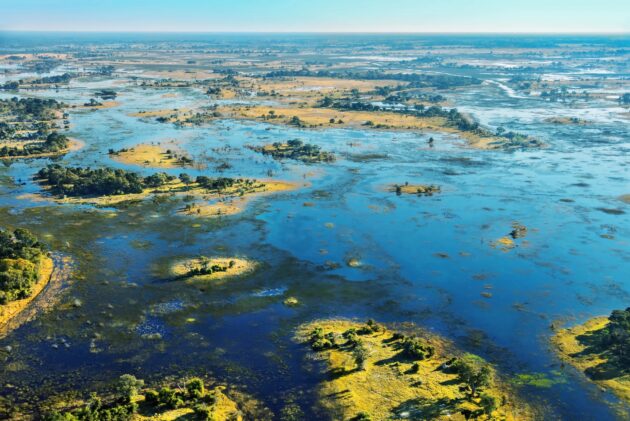
The Okavango Delta is one of the world’s most extraordinary natural wonders — the largest inland delta on Earth and a UNESCO World Heritage Site. Unlike most river deltas that flow into the sea, the Okavango River fans out into a vast, shimmering wetland in the heart of the arid Kalahari Desert, creating a lush oasis teeming with wildlife. This unique ecosystem supports over 200,000 large mammals and nearly 500 bird species, offering one of Africa’s premier safari experiences.
Why Visit the Okavango Delta?
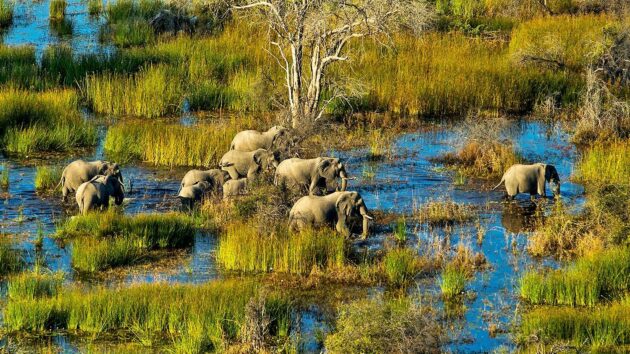
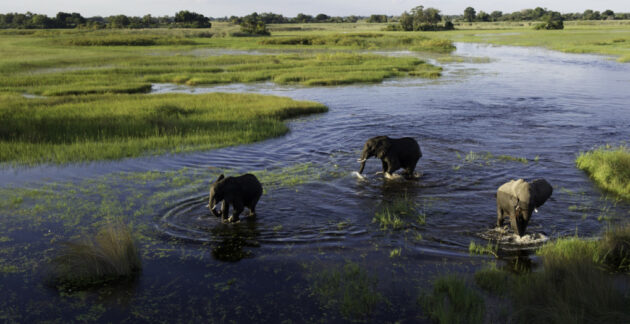
The Delta is famous for its pristine wilderness, incredible biodiversity, and the magical contrast between permanent wetlands and seasonal floodplains. Expect to see elephants wading through lily-covered channels, lions lounging on islands, leopards in the trees, and vast herds of buffalo, zebra, and antelope. The Delta offers a mix of water-based and land-based safaris, making it unlike any other African destination.
Best Time to Visit
The Delta is a year-round destination, but the experience changes dramatically with the seasons.
Peak Dry Season (June–October) — Best overall time: Floodwaters from Angola arrive, creating high water levels (peak in July–August). Wildlife concentrates around water sources → excellent game viewing. Clear skies, mild days (25–30°C / 77–86°F), cool nights. Prime for mokoro (dugout canoe) trips and game drives. High season: book early; prices are highest.
Shoulder Seasons: May–June & November — Good balance of water levels, fewer crowds, slightly lower prices. September–October — Excellent for predator sightings and the dramatic “barbel run” (catfish feeding frenzy).
Green/Wet Season (November–April): Lush landscapes, baby animals, spectacular birdwatching (migratory birds arrive). Afternoon thunderstorms possible, some roads become muddy. Lower prices and fewer visitors — ideal for budget travelers or bird enthusiasts.
Recommendation: June–October for first-time visitors; November–April for birding and greener scenery.
How to Get There
Access is mainly by air — the Delta is remote with very few roads.
Fly to Maun: Maun International Airport (MUB) is the main gateway, known as the “capital of the Delta.” Direct or connecting flights from Johannesburg (JNB), Cape Town (CPT), or Gaborone (GBE). Airlines: Airlink, Air Botswana, and others.
From Maun to the Delta: Most lodges arrange shared charter flights (light aircraft) from Maun. Flight time: 15–45 minutes depending on camp location. Operators: Mack Air, Wilderness Air, etc. Arrive in Maun by early afternoon to connect same-day; delays after ~3 pm may require an overnight stay.
Tip: Book international flights to arrive in Maun early enough for the same-day charter connection.
What to Do in the Okavango Delta
Activities vary by camp location (permanent water vs. seasonal areas) and water levels.
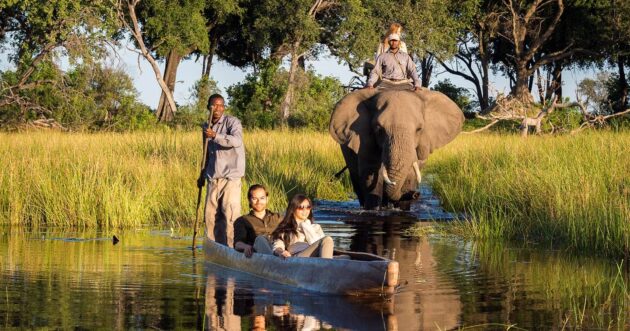
Mokoro (dugout canoe) excursions — Iconic, silent gliding through lily pads and narrow channels; excellent for birding and close wildlife views.
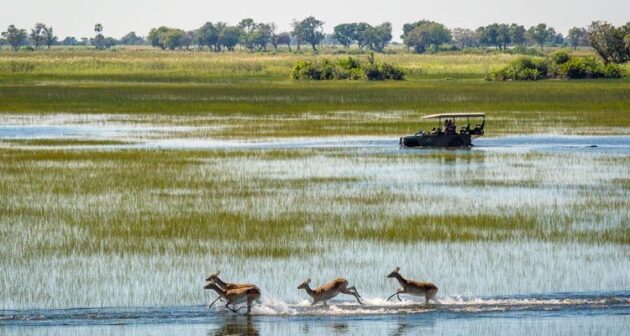
Game drives — Morning, afternoon, and night drives in open 4×4 vehicles; best for big cats, elephants, and buffalo.
Guided walking safaris — Stalk wildlife on foot with expert guides (age restrictions often apply).
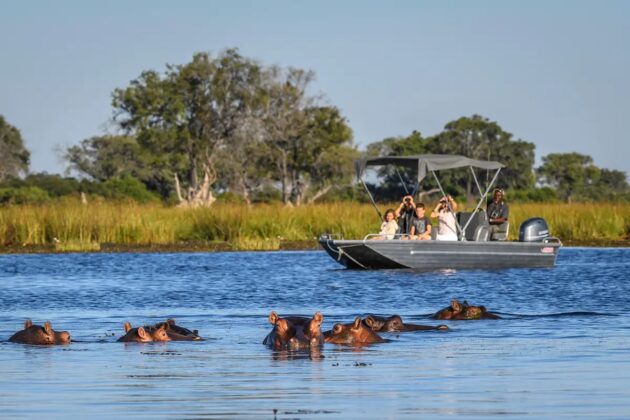
Boat safaris / motorboat trips — Available in permanent water areas.
Scenic helicopter flights — Aerial views of the Delta’s channels and wildlife (extra cost).
Birdwatching — Over 480 species, from African fish eagles to Pel’s fishing owl.
Note: Night drives and off-road tracking are only allowed in private concessions (not in Moremi Game Reserve).
Where to Stay
Accommodation is almost exclusively in luxury tented camps or lodges, mostly all-inclusive (meals + activities).
Luxury / High-End: Singita, &Beyond, Wilderness Safaris, Belmond Eagle Island Lodge, Xigera Safari Lodge. Rates: $1,000–$2,500+ per person per night (all-inclusive).
Mid-Range / Classic: Many excellent camps in the $600–$1,200 range per person per night.
Budget / Mobile Camps: Some mobile tented safaris or camps in Moremi — around $400–$700 per person per night.
Most visitors stay 3–7 nights, often splitting time between 2–3 camps in different areas (e.g., one water-focused, one land-focused).
Popular Areas: Moremi Game Reserve — Excellent land & water mix. Private concessions (e.g., Kwara, Duba Plains, Vumbura) — Fewer vehicles, night drives. Permanent swamp areas — Year-round mokoro.
What to Pack
Neutral-colored clothing (long sleeves/pants for evenings).
Layers — cool mornings/evenings (even in dry season).
Hat, sunglasses, sunscreen, insect repellent (malaria area).
Binoculars, good camera.
Reusable water bottle, small daypack.
Light rain jacket (especially Nov–Apr).
Practical Tips
Budget: Botswana is one of Africa’s most expensive safari destinations. Expect $650–$1,500+ per person per day (all-inclusive) for mid-to-luxury experiences.
Malaria: Present — consult a doctor for prophylaxis.
Visa: Most nationalities get visa on arrival or visa-free for short stays.
Currency: Botswana Pula (BWP); USD widely accepted at lodges.
Sustainability: Choose eco-conscious operators; the Delta is fragile.
Combine your trip: Add Chobe National Park (for boat safaris and elephants) or Victoria Falls (Zimbabwe/Zambia).
Final Thoughts
The Okavango Delta is not just a safari destination — it’s a once-in-a-lifetime immersion into one of Earth’s last great wildernesses. Whether gliding silently in a mokoro at sunrise, watching lions cross a floodplain, or listening to the calls of hippos under a star-filled sky, the Delta delivers magic few places can match.
Plan well, book early (especially peak season), and prepare to be transformed by one of Africa’s greatest treasures.
Safe travels and enjoy the Delta!