


A Travel Guide to Vienna (2026)
Vienna, the elegant capital of Austria, is a city where imperial grandeur meets artistic innovation, coffeehouse culture, and world-class music. Often called the “City of Music” and the “City of Dreams,” Vienna boasts stunning Baroque architecture, lush gardens, and a vibrant scene for classical concerts, museums, and seasonal festivals. Whether you’re a history buff, a foodie, or a culture enthusiast, Vienna offers an unforgettable blend of old-world charm and modern flair.
Why Visit Vienna?
Vienna consistently ranks among the world’s most livable cities, thanks to its safety, efficient public transport, and cultural depth. The city celebrates the 200th anniversary of waltz king Johann Strauss with a year-long program of music, dance, and exhibitions, making it an ideal time for classical music lovers. Beyond that, expect iconic sights like palaces and cathedrals, plus seasonal events from Christmas markets to summer open-air films.
How to Get There
Vienna is well-connected to Europe and beyond:
By Air: Vienna International Airport (VIE) is the main hub, with direct flights from major cities worldwide. Airlines like Austrian Airlines and Ryanair offer affordable options. From the airport, take the City Airport Train (CAT) to Wien Mitte station (16 minutes, €12) or the S-Bahn (25 minutes, €4.20).
By Train: High-speed Railjet trains connect Vienna to Budapest (2.5 hours), Munich (4 hours), and Prague (4 hours). The Hauptbahnhof station is central and user-friendly.
By Car: The A1 and A2 motorways lead to Vienna, but parking is limited in the city center—opt for public transport instead.
Best Time to Visit
Spring (March–May): Mild weather (10–20°C/50–68°F) and blooming gardens; fewer crowds than summer.
Summer (June–August): Warm (20–30°C/68–86°F) with outdoor festivals, but busier and pricier.
Fall (September–November): Crisp air, harvest season, and events like the Vienna Wine Festival; ideal for sightseeing.
Winter (December–February): Magical with Christmas markets and New Year’s concerts, but cold (0–5°C/32–41°F) and possible snow.
Aim for May–June to catch the Johann Strauss celebrations and the Vienna Ball Season, or August for open-air films and the Klimt exhibition.
Top Attractions
Schönbrunn Palace
Schönbrunn Palace (Schloss Schönbrunn), a sprawling Baroque masterpiece and former summer residence of the Habsburg monarchs, is one of Vienna’s crown jewels and a UNESCO World Heritage Site. Built in the 18th century under Empress Maria Theresa, this opulent estate spans over 1,400 rooms, manicured gardens, and attractions like the world’s oldest zoo.


Hofburg
Nestled in the heart of Vienna’s historic Innere Stadt (Inner City), the Hofburg is one of the world’s largest palace complexes and a living testament to the grandeur of the Habsburg dynasty. Spanning over 600 years as the winter residence of Austrian emperors—from the 13th century when it began as a modest fortress to its expansion into a sprawling Baroque masterpiece—the Hofburg served as the political, administrative, and cultural epicenter of the Holy Roman Empire and later the Austro-Hungarian Empire.


Vienna City Hall
Vienna City Hall, known locally as the Rathaus, is one of the city’s most iconic landmarks and a masterpiece of 19th-century Neo-Gothic architecture. Perched on the grand Ringstrasse boulevard, this imposing structure serves as the administrative heart of Vienna, housing the mayor’s office, municipal council, and various city institutions. With its towering spire crowned by the legendary Rathausmann statue—an armored knight symbolizing the city’s resilience—it’s not just a government building but a vibrant hub for cultural events, markets, and public gatherings.


Kunsthistorisches Museum Wien
Nestled in the heart of Vienna’s historic Ringstrasse, the Kunsthistorisches Museum (KHM) stands as a testament to imperial grandeur and artistic excellence. Opened in 1891, this palatial museum was purpose-built to house the vast art collections amassed by the Habsburg dynasty over centuries. Crowned by a majestic octagonal dome, its opulent interiors—adorned with frescoes, marble staircases, and gilded details—rival the treasures they contain.


Albertina
Nestled in the heart of Vienna’s historic Innere Stadt (1st District), the Albertina Museum is a crown jewel of Austrian culture, blending imperial grandeur with world-class art. Housed in a sprawling Habsburg palace—once the largest residential palace in the empire—this institution is renowned for its unparalleled graphic arts collection, one of the world’s largest, alongside masterpieces of modern and contemporary art.


St. Charles’s Church
Nestled in the heart of Vienna’s vibrant Karlsplatz, St. Charles’s Church—known locally as Karlskirche—is a breathtaking Baroque masterpiece that stands as one of the city’s most iconic landmarks. Commissioned by Emperor Charles VI in 1716 as a votive offering to end a devastating plague, this architectural gem was designed by Johann Bernhard Fischer von Erlach and completed by his son in 1737.


St. Stephen’s Cathedral
Nestled in the heart of Vienna’s historic center, St. Stephen’s Cathedral (Stephansdom) is an architectural masterpiece and the undisputed symbol of the city. This Gothic gem, with its intricate spire soaring 136 meters (446 feet) high and iconic multicolored tiled roof featuring over 230,000 enamel tiles, has stood as a witness to centuries of Habsburg history, wars, and cultural triumphs.


Austrian Gallery Belvedere
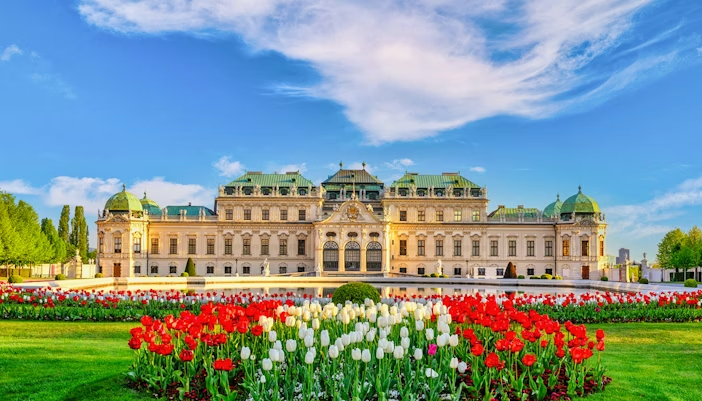
Nestled in the heart of Vienna, the Belvedere Museum—often referred to as the Austrian Gallery Belvedere—is a Baroque masterpiece that doubles as one of Europe’s premier art institutions. Commissioned in the early 18th century by Prince Eugene of Savoy, a celebrated military leader, the complex comprises the opulent Upper and Lower Belvedere palaces, connected by meticulously landscaped gardens.



Vienna State Opera
Nestled in the heart of Vienna’s historic Innere Stadt district, the Vienna State Opera (Wiener Staatsoper) is a crown jewel of the city’s cultural heritage and one of the world’s premier opera houses. Renowned for its exceptional acoustics, world-class orchestra, and stellar performers, it hosts around 300 performances a year, blending opulent architecture with timeless artistry.


Vienna Museum of Science & Technology
Nestled in the vibrant city of Vienna, the Technisches Museum Wien (Vienna Museum of Science & Technology) is Austria’s largest technical museum, spanning 22,000 square meters of interactive exhibits that blend historical artifacts with cutting-edge innovations. Opened in 1918, it explores the evolution of technology across sectors like mobility, energy, and materials science, making complex concepts accessible and fun for all ages.


Museum of Natural History Vienna
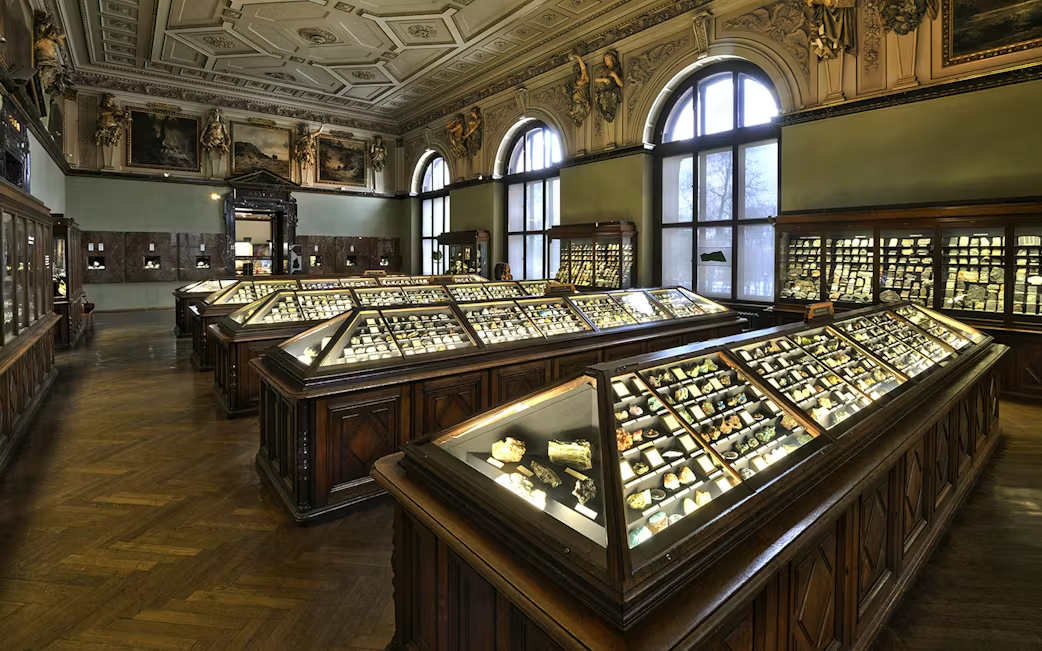
Nestled in the heart of Vienna’s opulent Maria-Theresien-Platz, the Museum of Natural History Vienna—known locally as the Naturhistorisches Museum Wien—stands as a majestic testament to Austria’s scientific heritage. Housed in a stunning Neo-Renaissance building constructed in the late 19th century, this world-class institution boasts over 25 million specimens, making it one of the most significant natural history museums globally.




Use the Vienna Pass (€89 for 2 days) for free entry to 60+ attractions and unlimited public transport.
Where to Stay
Vienna’s neighborhoods suit different vibes:
Innere Stadt (District 1): Historic center; luxurious like Hotel Sacher (€300+/night) or boutique Airbnbs (€150).
Leopoldstadt (District 2): Trendy, near Prater; hip hostels like Wombats (€50–€100).
Neubau (District 7): Artsy with cafes; mid-range spots like 25hours Hotel (€200).
Budget: €50–€100/night in hostels; luxury: €250+. Book early for events.
Food and Drink
Vienna’s culinary scene shines with hearty classics and coffee culture:
Must-Tries: Wiener Schnitzel (veal cutlet) at Figlmüller (€20), Sachertorte (chocolate cake) at Hotel Sacher (€10), and Apfelstrudel.
Coffeehouses: UNESCO-listed spots like Café Central for Einspänner (espresso with whipped cream) and pastries (€5–€10).
Markets: Naschmarkt for street food from falafel to cheeses (open daily).
Wine Taverns (Heurigers): In Grinzing for local wines and platters (€20–€30).
Getting Around
Vienna’s transport is efficient and eco-friendly:
Public Transport: U-Bahn, trams, and buses run 5am–midnight (later on weekends). A 72-hour pass costs €17.20.
Walking/Biking: The center is pedestrian-friendly; rent City Bikes (€1/unlock).
Taxis/Rideshares: Uber and Bolt are available; fares start at €5.
Download the WienMobil app for real-time info.
Practical Tips
Vienna City Card: €17–€29 for 24–72 hours; includes discounts on attractions and free transport.
Language: German is official, but English is widely spoken in tourist areas.
Currency: Euro (€); cards accepted everywhere, but carry cash for markets.
Etiquette: Tip 10% in restaurants; queue orderly; no photos in some museums without permission.
Safety: Very safe, but watch for pickpockets in crowds.
Sustainability: Use reusable bottles—fountains provide drinkable water.
Vienna rewards slow exploration—linger in a cafe, attend a concert, and let the city’s rhythm sweep you away. For more, visit wien.info. Safe travels!