
Why Visit Varanasi?
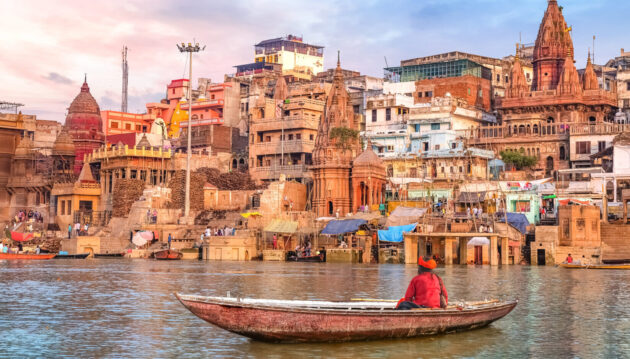
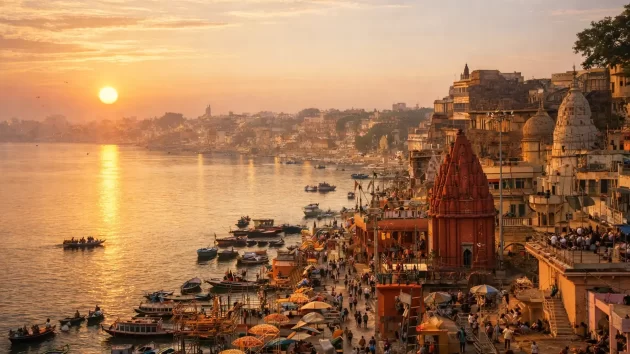
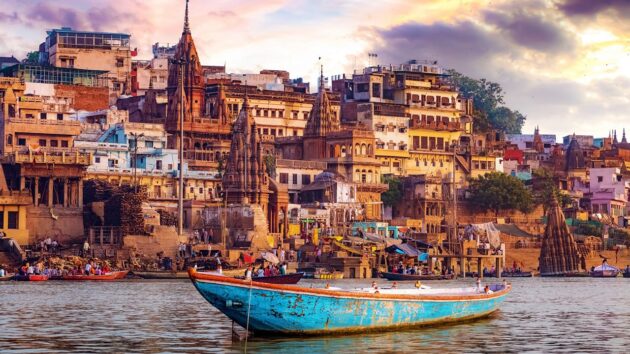
Varanasi is the spiritual heart of India, located on the banks of the sacred Ganges River. Believed to be one of the oldest continuously inhabited cities in the world, it attracts pilgrims, seekers, and travelers who come to witness life, death, and rebirth rituals along the ghats. The city blends intense chaos with profound serenity: vibrant temples, narrow winding alleys (galis), evening fire ceremonies, and sunrise boat rides that feel timeless.
It is a place where Hinduism’s holiest traditions come alive daily, making it a must-visit for anyone interested in Indian culture, spirituality, or raw human experience.
How to Get There
By Air: Lal Bahadur Shastri International Airport (VNS) is well-connected with direct flights from Delhi, Mumbai, Kolkata, and other major Indian cities. International connections often route through Delhi.
By Train: Varanasi Junction (BSB) or Varanasi Cantt (BCY) are major railway hubs with excellent connectivity across India. Trains from Delhi take about 12–15 hours.
By Road: Accessible by bus or taxi from nearby cities like Allahabad (Prayagraj), Lucknow, or even Kathmandu (for overland travelers).
Once in the city, the old town (near the ghats) is best explored on foot or by cycle rickshaw. Auto-rickshaws and taxis are available but can struggle in the narrow lanes.
Best Time to Visit
The ideal time is October to March (cooler winter months), when temperatures range from 15–30°C (59–86°F). This period offers pleasant weather for walking the ghats and enjoying boat rides.
Peak Season: November–February — clear skies and major festivals.
Festivals to Catch: Dev Deepavali (November, with thousands of lamps on the ghats), Mahashivaratri (February), and sometimes Diwali or Holi overlaps.
Avoid April–June (extreme heat) and July–September (monsoon rains and potential flooding).
Top Things to Do
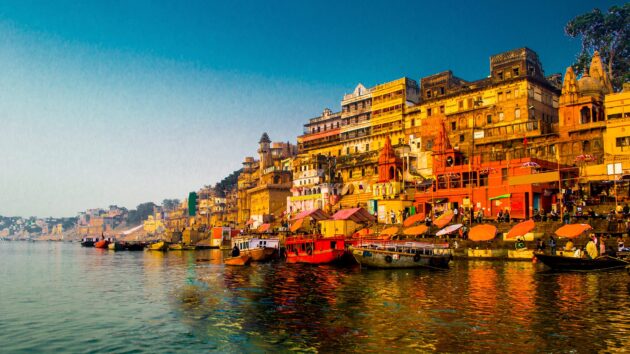
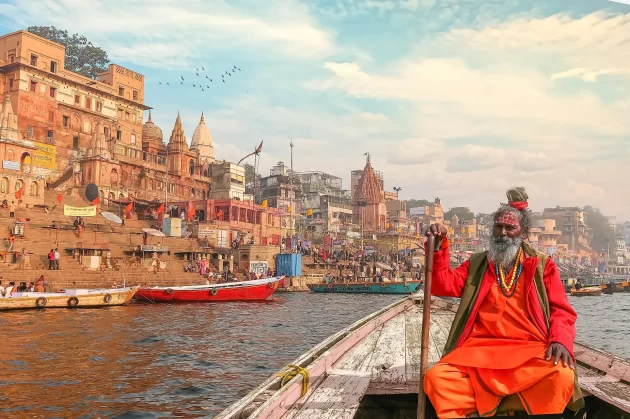
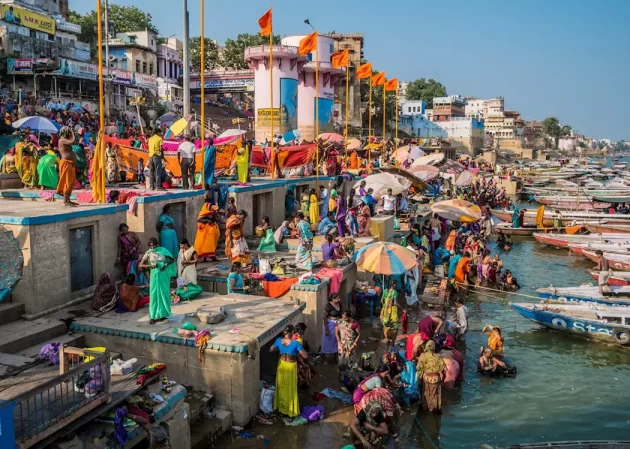
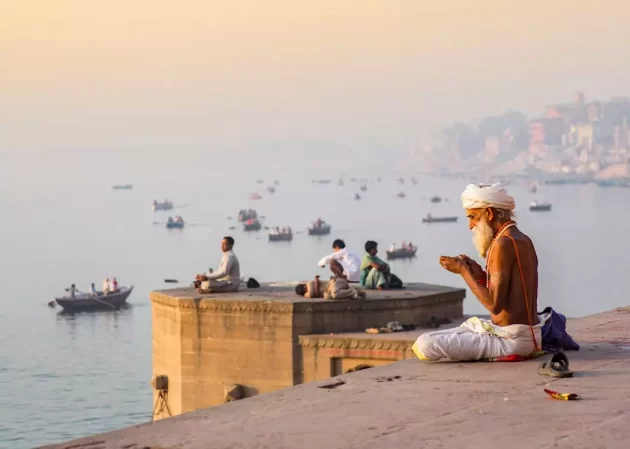
Sunrise Boat Ride on the Ganges: The absolute highlight. Glide past over 80 ghats as the sun rises, watching pilgrims bathe, perform rituals, and yogis practice. Boats typically depart from Dashashwamedh Ghat or Assi Ghat around 5:00–6:00 AM. Shared or private rowboats are available; haggle politely or book through your hotel.
Ganga Aarti (Evening Fire Ceremony): Witness the spectacular evening aarti at Dashashwamedh Ghat (around 6:00–7:00 PM). Priests perform synchronized rituals with fire, bells, and chants. View it from the steps or better yet, from a boat on the river for a magical perspective. A smaller, beautiful version also occurs at Assi Ghat (Subah-e-Banaras in the morning).
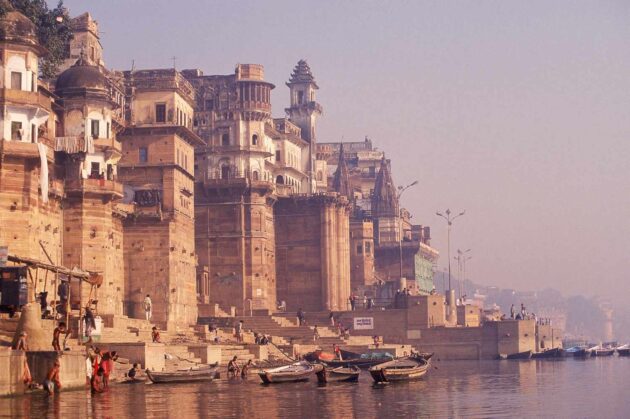
Explore the Ghats: Walk or boat along the riverfront steps. Key ones include: Dashashwamedh Ghat — busiest and most vibrant. Manikarnika Ghat — the main cremation ghat (profound but respectful observation only; photography often restricted). Assi Ghat — southern end, good for morning aarti and a more relaxed vibe. Others: Kedar Ghat, Shivala Ghat, and Scindia Ghat.
Visit Kashi Vishwanath Temple (Golden Temple): One of the holiest Shiva temples. Security is tight; expect queues and modest dress. Nearby alleys are filled with shops selling flowers, sweets, and puja items.
Wander the Old City Galis: Lose yourself (intentionally) in the maze of narrow lanes behind the ghats. Discover hidden temples, silk saree shops, and street food stalls.
Day Trip to Sarnath: Just 10 km away, this is where Buddha gave his first sermon. Visit the Dhamek Stupa, monasteries, and museum for a peaceful contrast to Varanasi’s intensity.
Where to Stay
Best Area: Near the ghats in the old city (Dashashwamedh or Assi Ghat) for atmosphere and easy access to rituals. Be prepared for narrow access and noise.
Luxury Options: BrijRama Palace (heritage property on the river), Taj Ganges, or Nadesar Palace (palatial with gardens).
Mid-range/Boutique: Palace on Ganges, Suryauday Haveli, or Banaras Haveli — many offer river views.
Budget/Guesthouses: Ganpati Guest House, Alka Hotel, or simple riverside options. Many provide rooftop terraces for aarti viewing.
Book in advance during festivals.
What to Eat
Varanasi is a vegetarian paradise with flavorful street food:
Try kashi ki chaat, litti chokha, jalebi with rabri, banarasi paan, and thandai.
Popular spots: Near Dashashwamedh for street eats; Blue Lassi Shop for creamy lassis; or hotel restaurants for safer hygiene.
Tip: Stick to freshly cooked hot food and bottled/mineral water. Avoid raw salads or unpeeled fruits to prevent stomach issues.
Practical Tips
Dress Code: Modest clothing (cover shoulders and knees). Remove shoes before entering temples.
Photography: Respectful at ghats, especially near cremations — ask permission or avoid.
Getting Around: Hire a local guide for the first day to navigate the chaos. Cycle rickshaws are fun for short distances.
Health & Safety: Varanasi is generally safe for tourists but intense. Exercise normal precautions: watch for scams (overpriced boats/silk), don’t swim or bathe in the Ganges (polluted water), and use hand sanitizer frequently. Traveler’s diarrhea is common — carry medications. Solo female travelers should be cautious in alleys after dark.
No Photos/Videos Rule: At certain sensitive spots like Manikarnika Ghat.
Final Thoughts
Varanasi is not for everyone — it is overwhelming, sensory-rich, and deeply moving. Embrace the chaos, wake up before dawn, and let the city’s ancient rhythm wash over you. Spend at least 2–3 full days (longer if possible) to truly absorb its essence.
Whether you come for spiritual awakening, cultural immersion, or simply to witness one of humanity’s most profound places, Varanasi leaves an indelible mark.
Safe travels and Namaste!