


A Travel Guide to Rome (2026)
Rome, the Eternal City, is a living museum where ancient history intertwines with vibrant modern life. As the capital of Italy and once the heart of a vast empire, Rome boasts iconic landmarks like the Colosseum and the Vatican, alongside world-class cuisine, baroque fountains, and lively piazzas. Whether you’re a history buff, foodie, or art lover, Rome offers an unforgettable blend of the past and present. This guide will help you navigate its wonders, from must-see sites to insider tips, for a seamless trip.
Why Visit Rome?
Rome is more than just ruins—it’s a sensory feast. Wander cobblestone streets echoing with 2,000 years of stories, savor carbonara in a trattoria, or toss a coin into the Trevi Fountain for good luck. Highlights include UNESCO-listed sites, gelato on every corner, and a Mediterranean climate perfect for al fresco dining. It’s compact enough for a weekend getaway but layered for weeks of exploration.
How to Get There
Rome is well-connected to the world:
By Air: Leonardo da Vinci–Fiumicino Airport (FCO) is the main international hub, 30 km southwest of the city center. Budget carriers like Ryanair use Ciampino Airport (CIA) for intra-Europe flights. From FCO, take the Leonardo Express train (14 euros, 32 minutes) to Roma Termini station, or a taxi/Uber (50–60 euros, 45 minutes).
By Train: High-speed Frecciarossa trains from Milan (3 hours) or Florence (1.5 hours) arrive at Roma Termini. Book via Trenitalia for deals as low as 20 euros.
By Bus or Car: From Naples (2 hours) or other Italian cities, FlixBus is affordable. Driving into Rome is discouraged due to ZTL (limited traffic zones) and parking woes—opt for public transport instead.
Once there, get an ATAC Roma Pass for unlimited metro, bus, and tram rides (24/48/72-hour options: 13–32 euros).
Best Time to Visit
Spring (March–May) or Fall (September–November): Mild weather (15–25°C/59–77°F), fewer crowds, and blooming gardens. Late October 2025 offers crisp air and harvest festivals.
Summer (June–August): Hot (up to 35°C/95°F) and packed—avoid if you hate heat or lines. Book tickets early for sites.
Winter (December–February): Cooler (5–12°C/41–54°F), magical Christmas markets, and short lines, but rainy days possible.
Pro tip: Check for events like the Rome Film Festival (October) or Carnevale (February).
Must-see Attractions
Colosseum
The Colosseum, also known as the Flavian Amphitheatre, stands as one of the most iconic symbols of ancient Rome and a UNESCO World Heritage Site. Built between 70–80 AD under emperors Vespasian and Titus, this colossal elliptical structure once hosted gladiatorial contests, wild animal hunts, and public spectacles for up to 80,000 spectators.


Roman Forum
Nestled in the heart of ancient Rome, the Roman Forum (Foro Romano) is the sprawling archaeological heart of the Eternal City, once the bustling epicenter of public life in the Roman Republic and Empire. This vast complex of ruins—temples, basilicas, arches, and columns—offers a tangible glimpse into the grandeur of Rome’s classical past, from Julius Caesar’s triumphs to the empire’s daily commerce and politics.


Papal Basilica of Saint Mary Major
Nestled on the Esquiline Hill in the heart of Rome, the Papal Basilica of Saint Mary Major—known locally as Santa Maria Maggiore—is one of the city’s four major papal basilicas and a UNESCO World Heritage site. Dedicated to the Virgin Mary, this 5th-century marvel is the largest church in Rome devoted to her and boasts some of the finest examples of early Christian art, Baroque splendor, and Renaissance treasures.


Pantheon
The Pantheon, one of Rome’s most iconic ancient landmarks, stands as a testament to the engineering genius of the Roman Empire. Originally built as a temple to all the gods around 126 AD under Emperor Hadrian, it was later converted into a Christian church in the 7th century. Its massive dome—the largest unreinforced concrete dome in the world—remains a marvel of architecture, featuring a central oculus that floods the interior with light.


Trevi Fountain
The Trevi Fountain (Fontana di Trevi) is one of Rome’s most iconic landmarks, a masterpiece of Baroque architecture that draws millions of visitors annually. Nestled in the heart of the Eternal City’s historic center, this grand fountain isn’t just a water feature—it’s a symbol of romance, legend, and artistic triumph. Completed in 1762, it stands as the largest Baroque fountain in Rome, measuring nearly 50 meters wide and 26 meters tall.


Saint Peter’s Basilica
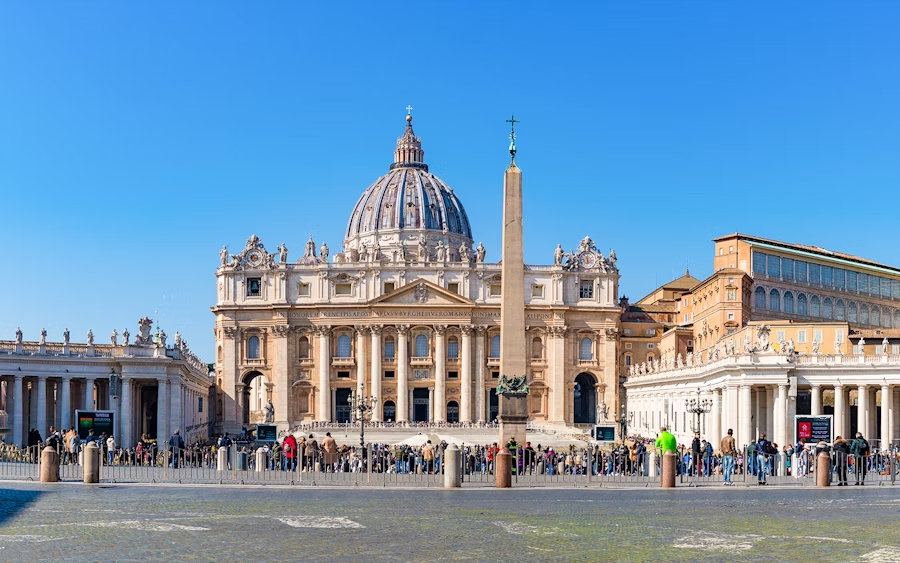
Saint Peter’s Basilica, located in Vatican City, is one of the most iconic religious and architectural landmarks in the world. As the largest church in the world and the heart of the Catholic Church, it serves as the burial site of Saint Peter, one of Jesus’ apostles and the first Pope. Built over 1,200 years, it blends Renaissance and Baroque masterpieces, drawing over 10 million visitors annually.




Vatican Museums
Nestled within the sovereign city-state of Vatican City, the Vatican Museums (Musei Vaticani) represent one of the world’s greatest repositories of art and history. Housing over 70,000 works—spanning ancient Egyptian artifacts to Renaissance masterpieces—this sprawling complex is a testament to the Catholic Church’s patronage of the arts.


Castel Sant’Angelo
Nestled along the banks of the Tiber River in the heart of Rome, Castel Sant’Angelo stands as a majestic testament to the city’s layered history. Originally conceived as a grand mausoleum for Emperor Hadrian, this cylindrical fortress has evolved over two millennia into a papal refuge, prison, and now a captivating museum. Crowned by a bronze statue of the Archangel Michael, it offers sweeping panoramic views of Rome’s skyline, making it an unmissable stop for history buffs, architecture enthusiasts, and casual sightseers alike.


Piazza Navona
Piazza Navona is one of Rome’s most iconic and lively public squares, a Baroque jewel that embodies the Eternal City’s blend of ancient history, artistic grandeur, and vibrant street life. Shaped like an elongated stadium and built atop the ruins of Emperor Domitian’s ancient racetrack from 80 AD, this pedestrian-only piazza is a magnet for visitors, featuring stunning fountains, elegant churches, and a constant buzz of performers, artists, and cafes.


Baths of Caracalla
The Baths of Caracalla (Terme di Caracalla), one of ancient Rome’s grandest architectural marvels, stand as a testament to the opulence of the Roman Empire. Constructed between 212 and 217 AD under Emperor Septimius Severus and completed by his son Caracalla, this sprawling thermal complex once accommodated up to 1,600 bathers daily with hot and cold pools, libraries, gyms, and lush gardens.


Galleria Borghese
Nestled within the lush Villa Borghese gardens on the northern edge of central Rome, the Galleria Borghese is a jewel of Renaissance and Baroque art, housed in a stunning 17th-century villa built for Cardinal Scipione Borghese. This compact yet world-class museum boasts an extraordinary collection of sculptures, paintings, and decorative arts amassed by the Borghese family, making it a must-visit for art lovers.


Villa d’Este
Nestled in the historic town of Tivoli, just 30 kilometers east of Rome, Villa d’Este is a masterpiece of Renaissance architecture and landscape design. Commissioned in the 16th century by Cardinal Ippolito II d’Este, this UNESCO World Heritage Site transformed the ruins of a Benedictine convent into a palatial residence celebrated for its opulent interiors and terraced gardens adorned with over 500 fountains.


Food and Drink
Rome’s cuisine is simple, seasonal, and soulful—forget tourist traps; seek family-run spots.
Must-Tries: Cacio e pepe (pasta with cheese & pepper), supplì (fried rice balls), artichokes alla romana. Gelato: Giolitti or Fatamorgana (pistachio heaven).
Where to Eat: Trastevere for casual (e.g., Da Teo), Campo de’ Fiori market for picnic supplies, or Michelin-starred like La Pergola (tasting menu 250 euros).
Wine & Aperitivo: House reds (20 euros/bottle), spritz in piazzas. Nonna-style cooking classes via EatWith (40 euros).
Vegetarian/vegan options abound; apps like The Fork for reservations and deals.
Where to Stay
Rome’s neighborhoods suit different vibes—book 3–6 months ahead for peak season.
Centro Storico (Historic Center): Central, walkable to sights. Hotel Artemide (luxury, rooftop bar; 250 euros/night) or Singer Palace (boutique; 200 euros).
Trastevere: Charming, lively nights. VOI Donna Camilla Savelli (converted convent; 180 euros) or Airbnbs (100 euros).
Near Termini: Budget-friendly for transport. The Hive Hotel (modern, 120 euros) or hostels like YellowSquare (40 euros/dorm).
Prati (Vatican Area): Quiet, upscale. Hotel Locarno (rooftop pool; 220 euros).
Average cost: 100–300 euros/night. Use Booking.com for free cancellation.
Practical Tips
Getting Around: Walk or use the efficient metro (A/B lines). Taxis via FREE NOW app; avoid unlicensed ones.
Money & Cards: Euros; cards widely accepted, but carry cash for small vendors. Roma Pass (32 euros/48 hours) covers transport + 1–2 site entries.
Safety: Watch for pickpockets in crowds (use anti-theft bags). Women: Dress modestly for churches (knees/shoulders covered).
Health & Sustainability: Tap water is safe; refill at nasoni fountains. Use reusable bottles—Rome’s eco-push includes bike shares (Bikemi).
Language: English is common in tourist areas; learn “buongiorno” (good morning) for charm.
Budget: 100–200 euros/day (mid-range: food 30, sights 20, transport 10).
Updates: The Jubilee’s legacy includes enhanced pilgrim paths and new apps like “Rome Pass” for digital tickets—check VisitRome.it.
Final Thoughts
Rome isn’t conquered in a day—it’s savored. Let the city’s chaos and beauty wash over you, from dawn at the Forum to dusk aperitivi. As Virgil said, “Time flies irreparably”—so linger, laugh, and let the Eternal City change you.
Buon viaggio! (Happy travels!)