


A Travel Guide to The Hague (2026)
Nestled on the North Sea coast, The Hague (known locally as Den Haag) is the political heart of the Netherlands, home to the Dutch government, the International Court of Justice, and a vibrant international community. Often overshadowed by Amsterdam and Rotterdam, this elegant city blends stately architecture, world-class museums, sandy beaches, and a cosmopolitan vibe. With its tree-lined boulevards, historic squares, and commitment to peace and justice, The Hague offers a more refined, less crowded alternative for travelers.
Why Visit The Hague?
The Hague stands out for its unique mix of history and modernity. It’s the only major European city with a working royal palace, a miniature Netherlands park, and direct access to the beach—all within easy reach. The city hosts high-profile events like the NATO Summit (June 24-25), drawing global attention, alongside cultural festivals such as the Just Peace Festival (June 12-26). It’s ideal for art lovers (think Vermeer’s Girl with a Pearl Earring), history buffs, and families, with a walkable center and excellent public transport. Plus, it’s just a short train ride from Amsterdam, making it perfect for a day trip or multi-city itinerary.
How to Get There
The Hague is well-connected, with two main train stations: Den Haag Centraal (central, close to the city center) and Den Haag HS (Hollands Spoor, better for southbound connections).
From Amsterdam: High-speed trains take 45-60 minutes (from €15-25 one way via NS.nl). Direct services run every 15-30 minutes.
From Rotterdam: Just 20-30 minutes by train (€6-10).
From Schiphol Airport: 30-40 minutes by train (€6-12).
By Air: Rotterdam The Hague Airport (RTM) is 20 minutes away by bus or taxi, with flights from the UK and Germany. For international arrivals, fly into Amsterdam Schiphol and connect by train.
By Car: From Amsterdam, it’s a 45-minute drive via the A4/A44 highways. Parking is pricey (€4-6/hour in the center); use Park & Ride lots on the outskirts (€5-10/day + public transport).
Once there, get an OV-chipkaart (reloadable transit card, €7.50 initial cost) for trams, buses, and trains. Trams are efficient—Tram 1 goes to the beach, Tram 8 to the center.
Best Time to Visit
The Hague enjoys a mild maritime climate, but plan around weather and crowds:
Spring (April-June): Blooming tulips in nearby Keukenhof (a 30-minute drive) and pleasant 10-18°C (50-65°F) days. Ideal for outdoor walks.
Summer (July-August): Peak season with beach weather (20-25°C/68-77°F), festivals, and longer days. Book ahead.
Fall (September-October): Fewer crowds, golden foliage, and events like the Dutch Design Week spillover.
Winter (November-March): Cozy indoor attractions, Christmas markets (mid-November to January), and fewer tourists. Temperatures hover at 2-7°C (35-45°F); pack layers.
Avoid January-February for potential rain. June is buzzing with the NATO Summit and Just Peace Festival, but expect security measures.
Top Things to Do
The Hague’s compact size makes it easy to explore on foot or by bike (rentals from €8.50/day via Donkey Republic app). Here’s a curated list of must-sees:
Mauritshuis
The Mauritshuis, located in The Hague, Netherlands, is a renowned art museum housed in a 17th-century Dutch Classicist palace. It features the Royal Cabinet of Paintings, a world-famous collection focusing on Dutch and Flemish masterpieces from the Golden Age. Visitors can admire iconic works by artists such as Johannes Vermeer – including the Girl with a Pearl Earring – Rembrandt van Rijn, and Jan Steen.


Peace Palace
The Peace Palace in The Hague, Netherlands, is an iconic international law building and a symbol of global peace and justice. Completed in 1913, it serves as the seat of the International Court of Justice (the principal judicial organ of the UN) and the Permanent Court of Arbitration. Housing the world’s largest library of international law, its grand architecture reflects its profound mission: the peaceful settlement of international disputes.


Escher in the Palace
Escher in The Palace is a museum in The Hague, Netherlands, dedicated to the world-famous graphical artist M.C. Escher. Housed in the former Winter Palace of Queen Emma, the museum features over 120 of Escher’s prints, including his renowned works like “Waterfall” and “Drawing Hands”. Visitors can explore his optical illusions and mathematical masterpieces across several floors, which also include interactive displays and the impressive seven-meter-long “Metamorphosis III”.


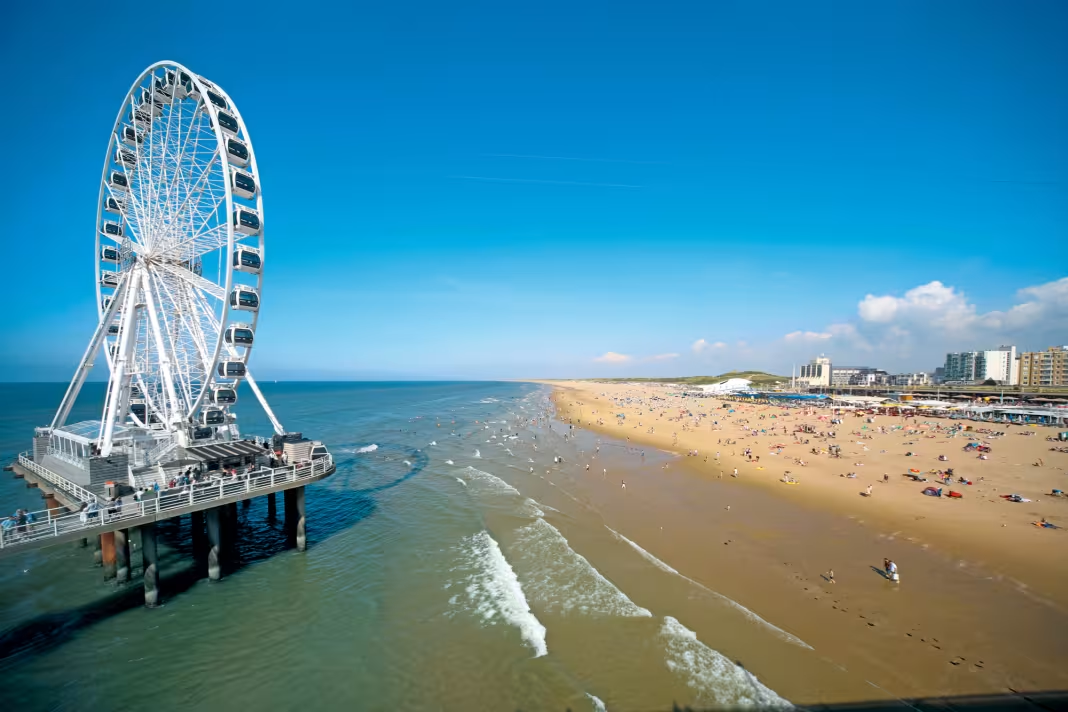
Scheveningen Beach
Scheveningen Beach, the vibrant coastal gem of The Hague (Den Haag), transforms a historic fishing village into one of the Netherlands’ premier seaside destinations. Stretching over a kilometer of soft, golden sands along the North Sea, it’s a perfect blend of relaxation, adventure, and urban energy—just a short hop from the city’s cultural heart.




Madurodam
Nestled in the vibrant city of The Hague, Madurodam is a captivating miniature park that brings the essence of the Netherlands to life in exquisite detail. Opened in 1952, this 1:25 scale model of Dutch landmarks, cities, and cultural icons spans over 2 hectares and offers a whimsical journey through the country’s history, innovation, and beauty.


Panorama Mesdag
Panorama Mesdag in The Hague, Netherlands, is a monumental cylindrical painting from 1881, created by Hendrik Willem Mesdag. It immerses viewers in a breathtaking 360-degree vista of the nearby fishing village of Scheveningen, the sea, dunes, and The Hague. Renowned for its exceptional realism and skillful use of perspective, enhanced by a foreground of real objects, it stands as one of the oldest surviving panoramas in the world.


Kunstmuseum The Hague
The Kunstmuseum Den Haag is a prominent art museum in The Hague, Netherlands, renowned for housing the world’s largest collection of works by Piet Mondrian, including his final piece, Victory Boogie Woogie. Housed in an iconic building designed by architect H.P. Berlage and completed in 1935, the museum boasts a vast collection of approximately 165,000 art objects.


Louwman Museum
Nestled in the elegant city of The Hague, the Louwman Museum stands as a testament to the evolution of mobility, housing the world’s oldest private automobile collection. Opened in 2012, this architectural gem—designed with a modern glass facade overlooking manicured gardens—showcases over 275 meticulously preserved vehicles spanning more than 130 years of automotive history.


Suggested One-Day Itinerary
Morning: Start at Mauritshuis (open 10 AM), then Escher Museum (5-min walk).
Lunch: City center—try Lebanese manouche at Baladi (€10-15) or Vietnamese pho at Little V.
Afternoon: Panorama Mesdag, then Peace Palace. If time, tram to Madurodam or Scheveningen for beach vibes.
Evening: Dinner in Plein square (historic pubs) or sunset at the beach. End with a drink at The Hague Tower for panoramic views.
For more, join a free walking tour with The Hague Greeters (book 2 weeks ahead).
Where to Stay
The Hague offers options for every budget, concentrated in the center (around Centraal Station) or beach area. Expect a city tax of €5-7/night.
Budget (€26-70/night): Hostels like Stay Okay Den Haag (dorms €26-40) or Airbnb private rooms (€40-70). Couchsurfing for free stays.
Mid-Range (€65-150/night): Hotels like Ibis Den Haag City Centre (€80-100) or boutique spots in the Passage arcade.
Luxury (€150+): Pulitzer Hotel (€200+) for canal views or Beach Hotel Zandvoort nearby (€180+).
Camping: €15/night at Duinrell (20-min drive), with family activities.
Book via Booking.com; aim for central locations to walk everywhere.
Where to Eat
Dutch cuisine is hearty and straightforward—think herring, stroopwafels (caramel waffles), and bitterballen (fried meatballs). The Hague’s international scene shines with Indonesian rijsttafel (rice table) influences from colonial history.
Budget (€5-15): Street food at Scheveningen (fresh fish €5-10) or markets like the Sunday Antique Market on Denneweg.
Mid-Range (€15-35): Plein square for pub grub; try De Paas (€25) for modern Dutch or Little V for Vietnamese fusion.
Splurge (€35+): Zeezout for seafood overlooking the beach or rijsttafel at Opheffer (€40).
Coffee & Snacks: Cappuccino €2.90; grab stroopwafels at a supermarket (€1-2). Groceries for a week: €55-65.
Vegetarian/vegan options abound; tap water is free and safe.
Practical Tips
Getting Around: Walk or bike—The Hague is flat and bike-friendly. Public transport day pass: €7.10. Taxis/Uber: €3.20 minimum.
Costs: Daily budget €50-100 (excluding accommodation). Museumkaart (€64.90) saves on 400+ sites if multi-museum hopping.
Language & Money: English widely spoken; euros (cards accepted everywhere). ATMs plentiful.
Safety: Very safe, but watch for bike theft. Download the 9292 app for transport.
Sustainability: Use reusable bottles; rent electric bikes to reduce emissions.
Accessibility: Most sites are wheelchair-friendly; request assistance in advance.
Day Trips: Delft (20 min by tram) for pottery and canals; Rotterdam (20 min train) for architecture.
Final Thoughts
The Hague captivates with its quiet elegance and profound depth—far from the canal-party frenzy of Amsterdam, it’s a city for thoughtful exploration and seaside serenity. Whether gazing at masterpieces in Mauritshuis or debating justice at the Peace Palace, you’ll leave inspired. With global summits and festivals, it’s an even more timely destination. Lace up your walking shoes, hop on a bike, and discover why this “City of Peace” steals hearts.
Safe travels! For more, visit denhaag.com.