A Travel Guide to Custer State Park
Located in the heart of the Black Hills, Custer State Park is South Dakota’s largest and oldest state park, spanning 71,000 acres of breathtaking landscapes. Renowned for its free-roaming bison herd, dramatic granite spires, and scenic drives, this park is a haven for wildlife enthusiasts, hikers, and road trippers. Whether you’re seeking adventure or tranquility, this guide will help you plan an unforgettable visit to one of America’s premier state parks.
Why Visit Custer State Park?
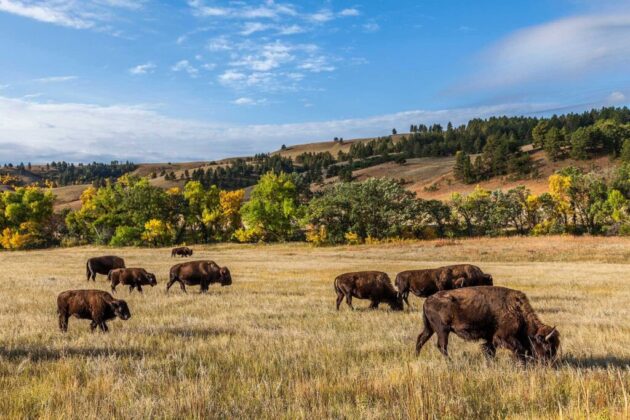
Custer State Park offers a unique blend of natural beauty, abundant wildlife, and rich history. Home to over 1,400 bison, along with pronghorn, elk, bighorn sheep, and the famous “begging burros,” the park is a top destination for wildlife viewing. Its three scenic drives—Wildlife Loop Road, Needles Highway, and Iron Mountain Road—showcase stunning vistas, from rolling prairies to rugged granite peaks. With hiking trails, lakes, and historic sites, Custer State Park rivals many U.S. national parks and is a must-visit alongside nearby attractions like Mount Rushmore and Badlands National Park.
How to Get There
Custer State Park is located in Custer County, South Dakota, easily accessible from Rapid City, the region’s main hub.
By Air: Fly into Rapid City Regional Airport (RAP), 37 miles north of the park (about a 40-minute drive). Airlines like American, Delta, United, and Allegiant serve RAP. Rent a car at the airport, as no public transportation is available to or within the park.
By Car: From Rapid City, take US Highway 16A south to the park (30–40 minutes). The park is also close to: Mount Rushmore: 20 miles, 45 minutes; Wind Cave National Park: 11 miles, 30 minutes; Badlands National Park: 70 miles, 1 hour 15 minutes; A car is essential for exploring the park’s scenic drives and trails.
By Bus or Tour: Guided tours from Rapid City or nearby towns like Custer or Keystone are available, including Buffalo Safari Jeep Tours for off-road wildlife experiences.
Tip: Check road conditions via South Dakota 511, as scenic drives like Needles Highway may close in winter due to snow.
Best Time to Visit
Summer (June–August): Warm days (75–85°F) and cool nights make summer ideal for hiking, swimming, and camping. Expect crowds, especially on scenic drives. Fall (September–October): Vibrant fall colors, milder temperatures (50–70°F), and the Annual Buffalo Roundup (last Friday of September) draw over 20,000 visitors to watch cowboys herd bison.
Spring (April–May): Fewer crowds and blooming wildflowers, but some trails and Needles Highway may be closed until April. Winter (November–March): Quieter with opportunities for snowshoeing and cross-country skiing, but expect cold weather (20–40°F) and limited amenities.
Wildlife Viewing Tip: Early morning or dusk is best for spotting animals along Wildlife Loop Road, when bison, pronghorn, and burros are most active.
Tickets and Fees
Entrance Fee: $20 per vehicle (including motorcycles) for a 7-day pass; $3 per person for motorcoaches. Annual passes are $36 for the first vehicle, $18 for a second, or $80 for a transferable license. No fee is required if passing through on US Hwy 16A or SD Hwy 87 without stopping.
Purchase: Buy licenses online at gfp.sd.gov, at park entrance stations, or at the Visitor Center. Fishing License: Required for fishing in park lakes, available at general stores or online.
Note: The park is open 24/7 year-round, but some facilities (e.g., lodges, dining) close from October to April.
What to See and Do
Scenic Drives
Wildlife Loop Road (18 miles, ~1 hour): A year-round drive through grasslands and hills, perfect for spotting bison, pronghorn, prairie dogs, and “begging burros” (semi-wild donkeys that may approach cars for snacks). Drive slowly (25 mph) and keep a safe distance from wildlife. Tip: Visit the Wildlife Station Visitor Center on the loop for bison herd updates and exhibits.
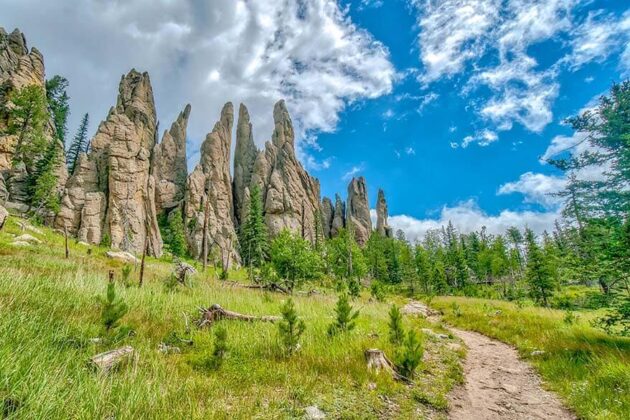
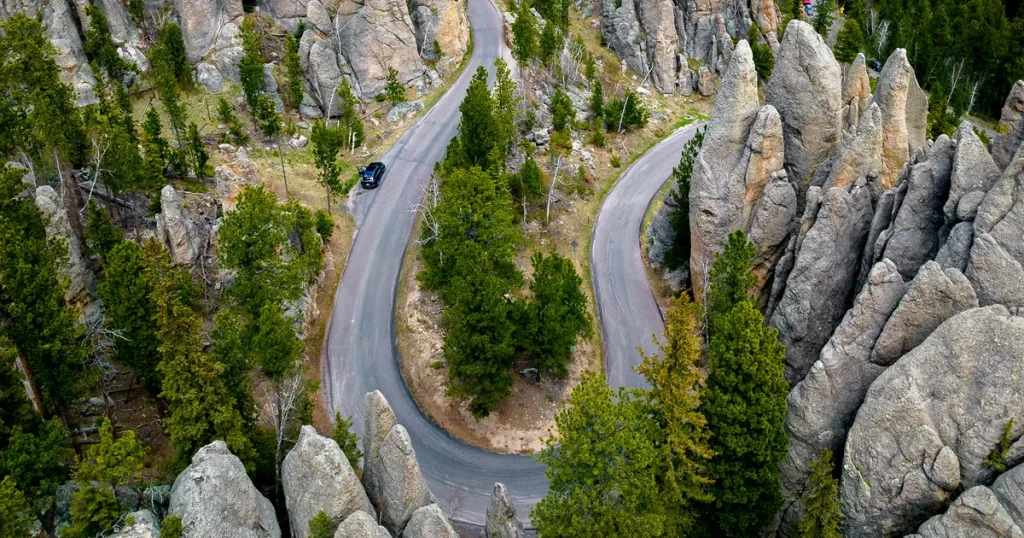
Needles Highway (14 miles, ~1 hour): A National Scenic Byway with hairpin turns, narrow tunnels (as small as 8 feet wide), and granite spires like the Needle’s Eye. Open April–October. Highlights include Sylvan Lake and views of Black Elk Peak. Tip: Avoid if prone to motion sickness, and allow extra time for photo stops.
Iron Mountain Road (17 miles, ~1 hour): Connects the park to Mount Rushmore, featuring three tunnels that frame the monument in the distance. Expect winding roads and stunning views.
Hiking
Black Elk Peak Loop (7.1 miles, moderate, ~3.5 hours): South Dakota’s highest point (7,242 ft) with 360° views of four states. Features a historic stone fire tower. Starts near Sylvan Lake and enters Black Elk Wilderness.
Sunday Gulch Trail (3.9 miles, moderate, ~2 hours): A scenic loop behind Sylvan Lake with forests, creeks, and boulders. Handrails assist on rocky sections.
Little Devils Tower Trail (3.6 miles, moderate, ~2 hours): Offers panoramic views of the Black Hills and granite formations. Branches off Black Elk Peak trails.
Tip: Check trail conditions at the Peter Norbeck Outdoor Education Center and carry water, as some hikes are strenuous.
Wildlife Viewing
Spot bison, elk, bighorn sheep, mule deer, coyotes, and prairie dogs. The park’s Buffalo Safari Jeep Tour (1.5–2 hours, ~$50–$100) takes you off-road for close-up bison encounters.
Rules: Stay 100 yards from bison and elk, and never feed wildlife (except burros, though caution is advised). Feeding other animals is prohibited.
Water Activities
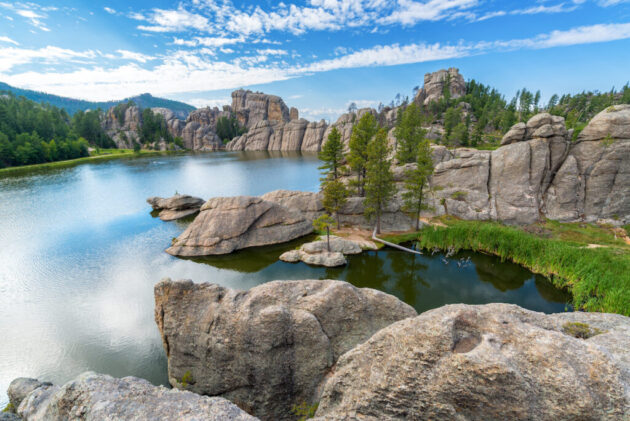
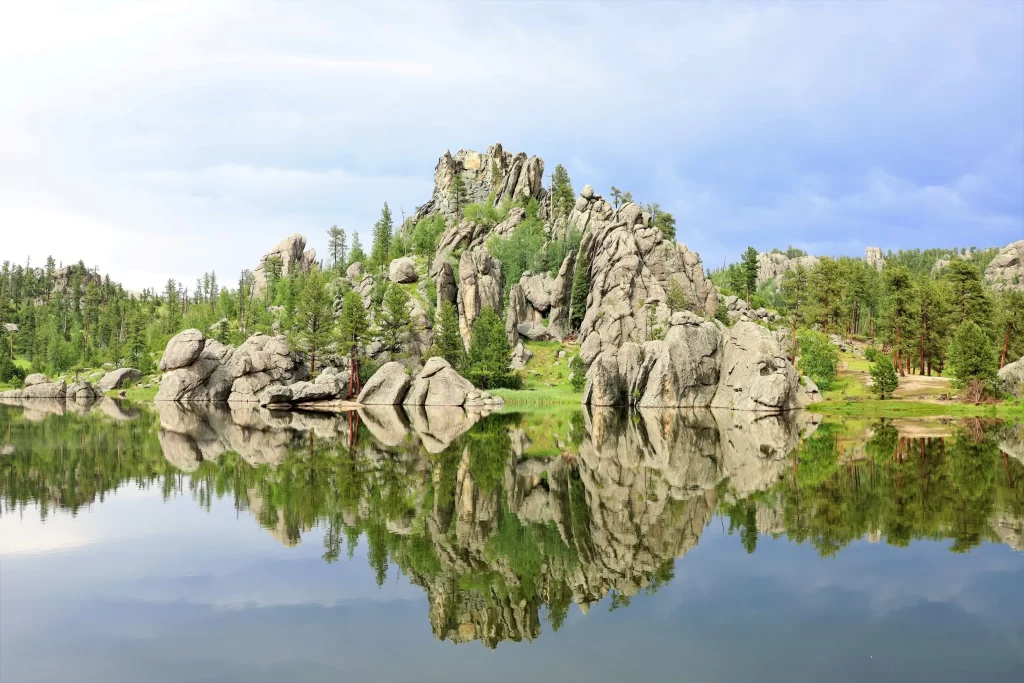
Sylvan Lake: The “crown jewel” of the park, ideal for kayaking, paddleboarding, and swimming. Rentals available (~$15–$30/hour).
Other Lakes: Legion Lake, Stockade Lake (the largest, allows motorized boats), and Center Lake offer fishing and swimming. A South Dakota fishing license is required.
Note: No lifeguards are on duty, and glass containers are banned on swimming beaches.
Cultural and Historical Sites
Custer State Park Visitor Center: Learn about bison and park history with a 20-minute film and exhibits. Open year-round (hours vary). Peter Norbeck Outdoor Education Center: Offers naturalist programs and cultural displays, including a CCC bunkhouse and gold prospecting exhibit.
State Game Lodge: A historic lodge that served as President Calvin Coolidge’s Summer White House in 1927. Listed on the National Register of Historic Places. Badger Hole: The former home of South Dakota’s first Poet Laureate, Charles Badger Clark, with cowboy poetry displays.
Black Hills Playhouse: A summer stock theater in a rustic 345-seat venue, showcasing professional performances (June–August).
Special Events
Annual Buffalo Roundup (Last Friday in September): Watch 50–60 cowboys and cowgirls herd 1,300 bison for health checks and branding. Draws 20,000 visitors. Arrive early for parking.
Junior Naturalist Program: Educational activities for kids aged 7–18, focusing on the park’s history and wildlife.
Where to Eat
On-Site Dining: State Game Lodge Restaurant: Offers hearty meals like bison burgers and steaks, with indoor and outdoor seating (~$15–$30). Legion Lake Lodge: Features a limited-service restaurant with lake views, serving casual fare like sandwiches (~$10–$20). Sylvan Lake Lodge: Fine dining with dishes like trout and pasta (~$20–$40). General stores at Sylvan, Legion, and Stockade Lakes sell snacks and fishing licenses.
Nearby: The town of Custer (4 miles away) has options like Buglin’ Bull Restaurant for burgers and local brews or Skogen Kitchen for upscale dining (~$15–$50). Tip: Pack a picnic for flexibility, as dining options in the park are limited in winter.
Where to Stay
Custer State Park offers diverse lodging, from rustic cabins to historic lodges. Book early via www.custerresorts.com, especially for summer and the Buffalo Roundup.
Lodges and Cabins: Sylvan Lake Lodge: Scenic location near the lake, with cozy rooms and cabins (~$150–$300/night). State Game Lodge: Historic lodge with renovated rooms, ideal for history buffs (~$120–$250/night). Blue Bell Lodge: Rustic cabins with Western charm, plus trail ride access (~$100–$200/night). Legion Lake Lodge: Lakeside cabins with a new dining patio (~$100–$200/night).
Camping: Nine campgrounds, including Game Lodge Campground (central, with showers, $16–$34/night) and Horse Camp (for equestrian campers, with corrals). Book campsites online at gfp.sd.gov or call 1-800-710-2267.
Nearby Towns: Custer (4 miles): Hotels like Holiday Inn Express (~$80–$150/night) or budget motels. Rapid City (30 miles): Wider range, including Hilton Garden Inn (~$100–$200/night).
Pet Policy: Pets are allowed but must be leashed (max 10 feet) and are banned from swim beaches and park buildings. Clean up after pets to avoid fines.
Tips for a Great Visit
Wildlife Safety: Keep 100 yards from bison and elk, and never feed wildlife (except burros, with caution). Stay in your vehicle during “buffalo jams.” Pack Essentials: Bring water, sunscreen, sturdy shoes, and motion sickness tablets for winding drives.
Respect Nature: Don’t remove rocks, plants, or fossils, and follow Leave No Trace principles. Combine Your Trip: Pair with nearby attractions like Mount Rushmore (20 miles), Crazy Horse Memorial (15 miles), or Wind Cave National Park (11 miles). Check Events: Plan for the Buffalo Roundup or Black Hills Playhouse performances for a unique experience.
Final Thoughts
Custer State Park is a nature lover’s paradise, offering a perfect mix of wildlife, scenic drives, and outdoor adventures. From the thrill of spotting bison on Wildlife Loop Road to the awe-inspiring granite spires of Needles Highway, the park delivers unforgettable moments. Plan your visit around the seasons, pack for adventure, and immerse yourself in the untamed beauty of South Dakota’s Black Hills. Whether you’re hiking to Black Elk Peak or enjoying a sunset over Sylvan Lake, Custer State Park will leave you with memories to cherish.
Happy travels!