
A Travel Guide to Bukhara (2026)
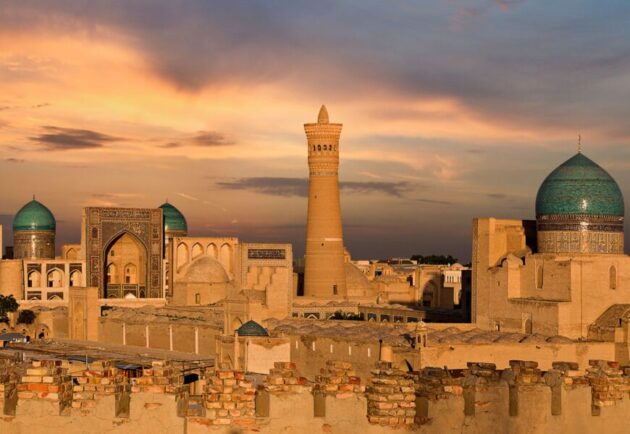
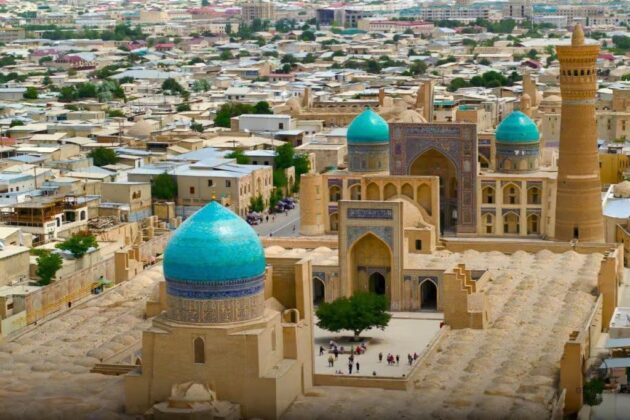
Bukhara, one of Central Asia’s most enchanting Silk Road cities, is often called the “City of a Thousand and One Mosques” or the holiest city in Uzbekistan. With over 2,000 years of history and more than 140 preserved monuments, its beautifully restored old town is a UNESCO World Heritage Site. Unlike the grand turquoise domes of Samarkand, Bukhara feels more intimate and atmospheric, with narrow winding streets, ancient madrasahs, towering minarets, and lively teahouses around historic ponds. It offers a perfect blend of Islamic architecture, Persian influences, and living Central Asian culture.
Why Visit Bukhara?
Bukhara captures the soul of the Silk Road better than almost anywhere else. Its monuments span from the 9th to the 17th centuries, including grand mosques, madrassas, caravanserais, and the imposing Ark fortress. The city is highly walkable, less crowded than Samarkand, and retains a genuine, lived-in feel with traditional bazaars, carpet shops, and evening gatherings around Lyabi-Hauz pond. It’s ideal for history lovers, photographers, and anyone seeking authentic Central Asian experiences.
How to Get There
Bukhara is well-connected within Uzbekistan and serves as a key stop on the classic Tashkent–Samarkand–Bukhara–Khiva route.
By High-Speed Train (Recommended): The comfortable Afrosiyob train is the best option. From Tashkent: ~4 hours. From Samarkand: ~1.5–2.5 hours. Book tickets in advance via the Uzbekistan Railways website or app (railway.uz). Sharq trains are slower but cheaper alternatives.
By Air: Bukhara International Airport (BHK) has flights from Tashkent and some international connections, but trains are generally more convenient for regional travel.
By Bus or Shared Taxi: Available but slower and less comfortable than trains.
Once in Bukhara, the historic center is compact and best explored on foot. Taxis or yandex-style apps are cheap for longer distances.
Best Time to Visit
The ideal seasons are spring (April–June) and autumn (September–October), when temperatures are mild (15–30°C / 59–86°F), skies are clear, and the city is pleasant for walking.
May often features the Silk and Spices Festival with cultural performances.
Summer (July–August) can be extremely hot (over 40°C / 104°F), while winters are cold and sometimes snowy. Avoid peak summer if possible, though crowds are lower then.
What to Do
Bukhara’s highlights are concentrated in the old town. Plan for at least 2–3 full days.
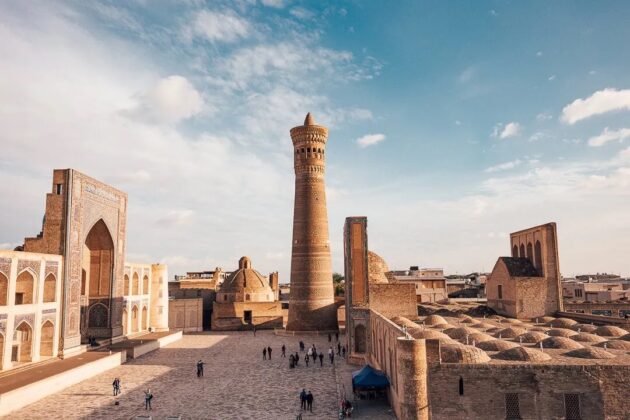
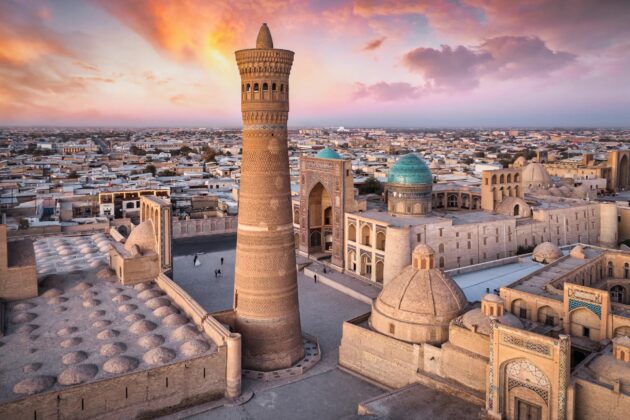
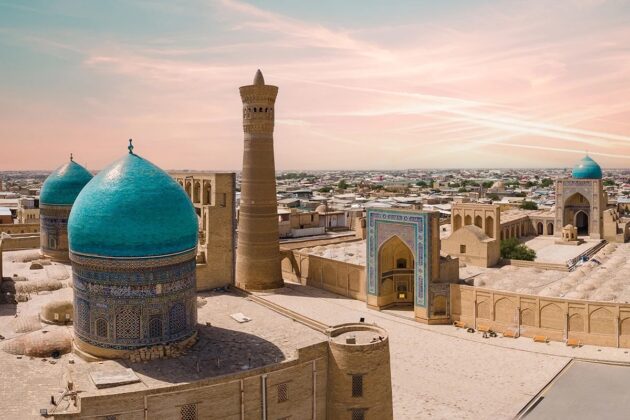
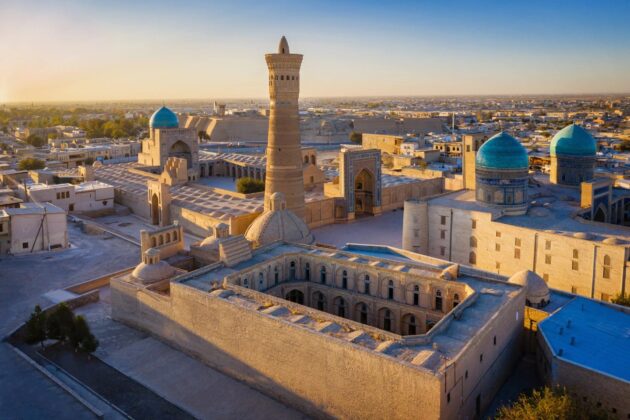
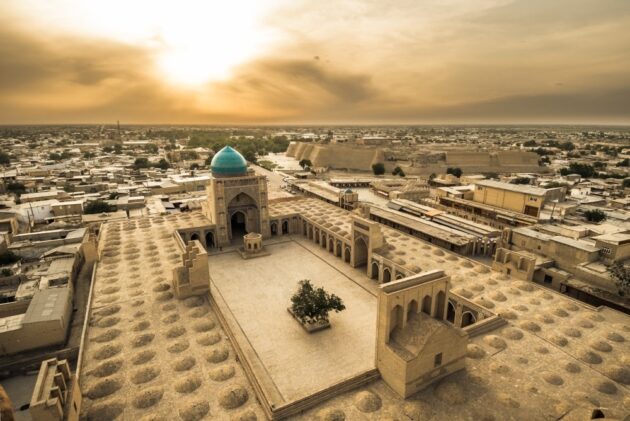
Po-i-Kalyan Complex — The iconic heart of Bukhara, featuring the towering Kalon Minaret (48m/157ft, built in 1127 and once the tallest in Central Asia), the vast Kalon Mosque, and the Mir-i-Arab Madrasah with stunning tilework. Climb or view the minaret for panoramic views.
Ark of Bukhara — The ancient fortress and former residence of emirs. Explore its museums, courtyards, and terraces for insight into royal life and history.
Lyabi-Hauz Complex — A serene 17th-century pond surrounded by madrassas, teahouses, and mulberry trees. It’s the perfect spot for people-watching, evening meals, and photos—especially magical at night.
Ismail Samani Mausoleum — One of the oldest and most elegant structures (10th century), built for the Samanid dynasty with intricate brickwork that resembles a woven basket.
Chor Minor — The charming “Four Minarets” madrasah with its unusual four-towered design and small museum inside.
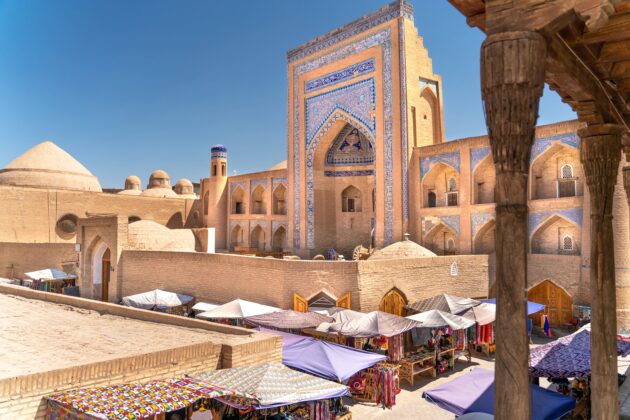
Bazaars and Trading Domes — Wander the historic covered markets (Toqi Telpak Furushon, etc.) for spices, silk scarves, carpets, and souvenirs. The central bazaar offers fresh produce and local snacks.
Additional Gems: Bolo Hauz Mosque (with its wooden columns). Sitorai Mokhi-Khosa (the Emir’s Summer Palace, a short drive outside the center). Bukhara Photo Gallery for beautiful local photography exhibits. Traditional hammams or a carpet-weaving workshop.
Many travelers enjoy a short guided city tour for deeper historical context.
Where to Stay
Stay inside or near the old town for atmosphere and walkability. Bukhara offers excellent boutique hotels in restored historic buildings.
Luxury/Boutique: Mercure Bukhara Old Town, Komil Boutique Hotel, or Minzifa Boutique Hotel.
Mid-Range Charm: Duston Boutique Hotel, Kukaldosh Boutique Hotel, or Old Gate Guesthouse (family-run and highly praised).
Budget-Friendly: Amelia Hotel, Amulet Hotel, or guesthouses around Lyabi-Hauz.
Many properties feature traditional courtyards, handmade textiles, and hearty breakfasts.
What to Eat
Uzbek cuisine is hearty and flavorful. Must-tries in Bukhara:
Plov (rice pilaf with meat and carrots).
Shashlik (grilled skewers).
Lagman (noodle soup).
Samsa (savory pastries).
Green tea and fresh bread from tandoor ovens.
Popular spots include teahouses around Lyabi-Hauz or Silk Road Teahouse. Vegetarian options are available but limited—ask for “bez myasa” (without meat). Try local sweets and dried fruits from the bazaar.
Practical Tips
Currency & Payments: Uzbek som (UZS). Cards are increasingly accepted, but carry cash for markets and smaller places. ATMs are available.
Safety: Bukhara is very safe for tourists. Standard precautions apply (watch for pickpockets in crowded bazaars).
What to Bring: Comfortable walking shoes (cobblestones), modest clothing (cover shoulders and knees at religious sites), sunscreen, and a scarf for women entering mosques. Photography is generally allowed but avoid inside active prayer areas.
Language: Russian and Uzbek are main languages; English is limited but improving in tourist areas. A translation app helps.
Sustainability: Support local artisans and avoid single-use plastics. Many hotels promote eco-friendly practices.
Final Thoughts
Bukhara rewards slow exploration. Wander its alleys at dawn or dusk when the light hits the ancient bricks and tiles, sip tea by the pond as locals chat, and feel the layers of Silk Road history come alive. It’s less flashy than Samarkand but often leaves a deeper, more soulful impression—many travelers call it their favorite stop in Uzbekistan.
Combine it with Samarkand (easy train ride) and Khiva for the ultimate Silk Road adventure. Bukhara is a timeless gem that continues to captivate visitors in 2026 and beyond.
Safe travels and enjoy the magic of ancient Bukhara!