
A Travel Guide to Etosha National Park (2026)
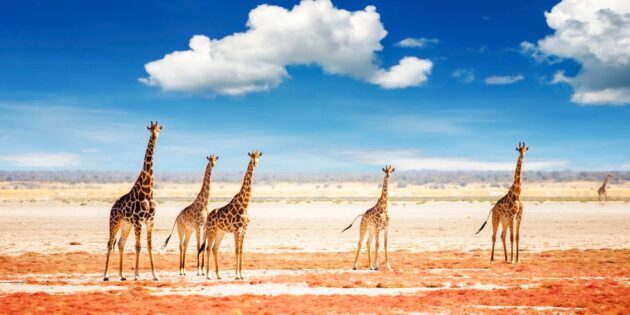
Etosha National Park is one of Africa’s premier wildlife destinations and Namibia’s flagship national park. Famous for its vast, shimmering white salt pan (the Etosha Pan) and exceptional game viewing around permanent waterholes, the park offers some of the best opportunities to see elephants, lions, black rhinos, giraffes, zebras, and more in a dramatic semi-arid landscape. Covering about 22,270 square kilometers, Etosha is a must-visit for safari enthusiasts seeking an authentic, self-drive-friendly experience.
Why Visit Etosha National Park?
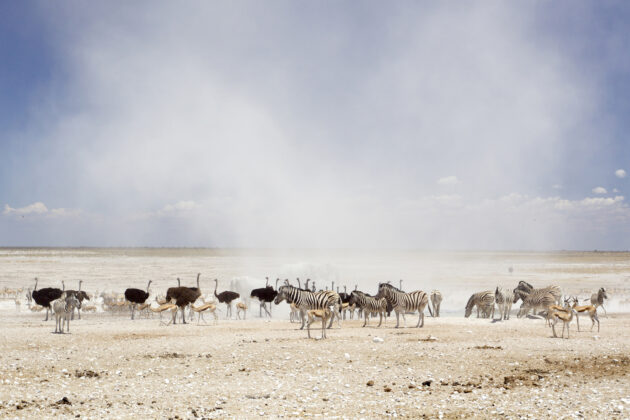
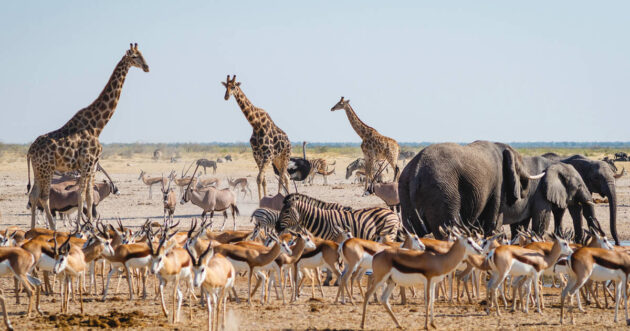
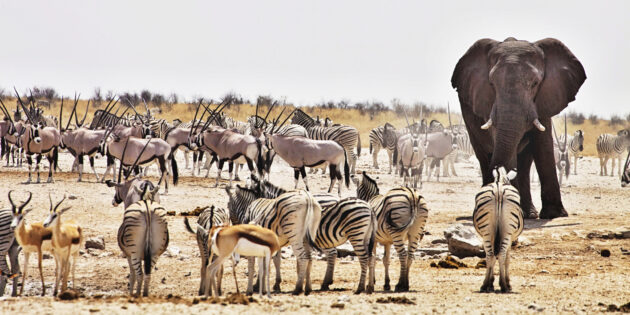
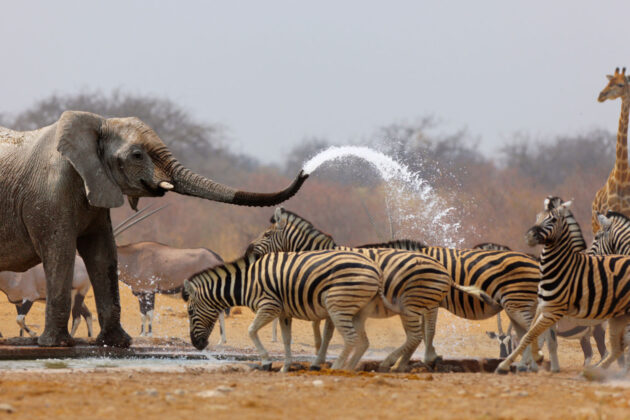
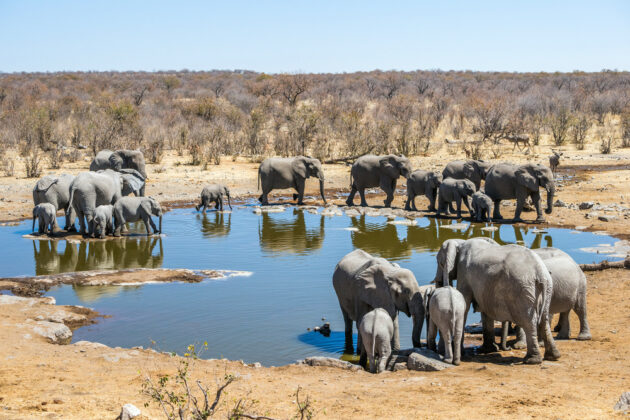
Etosha stands out for its unique setting: during the dry season, animals concentrate around accessible waterholes, creating incredible viewing opportunities right from your vehicle or camp. The park is home to the world’s largest population of free-roaming black rhinos, large herds of elephants, and all the classic African big game (except Cape buffalo). The stark beauty of the salt pan combined with prolific wildlife makes it unforgettable.
Best Time to Visit
The dry season (May to October) is widely regarded as the best time for wildlife viewing:
Animals gather at waterholes, making sightings reliable and spectacular.
Vegetation is thinner, improving visibility.
Weather is cooler (daytime 25–35°C / 77–95°F; nights can drop to 10–15°C / 50–59°F).
Peak months (July–September) offer the highest concentrations but also more visitors and higher prices.
Shoulder months (May–June and October) provide excellent game viewing with fewer crowds. The wet season (November–April) brings green landscapes, migratory birds, and baby animals, but rain can make some roads slippery, and animals disperse more widely.
How to Get There
Etosha is located in northern Namibia, about 400–500 km from Windhoek.
By Air: Fly into Hosea Kutako International Airport (WDH) near Windhoek. From there, charter flights or scheduled connections can take you to airstrips near the park (e.g., Ongava or Mokuti). Domestic flights are also available to Ondangwa (north of Etosha).
By Road (most popular): Self-drive from Windhoek takes 5–7 hours via well-maintained paved roads (B1 and C38/C40 routes). The main entrance is Andersson Gate (south, near Okaukuejo). Rental cars are widely available in Windhoek—opt for a 4×4 for comfort and minor dirt roads.
Guided Transfers/Shuttles: Private transfers from Windhoek to lodges near Etosha are available (4–6 hours).
Getting Around the Park
Self-drive is the most popular and flexible option—roads are good (gravel/dirt but well-maintained), and a standard 2WD vehicle is sufficient for most visitors (though a 4×4 is ideal for confidence).
Guided safaris are available through camps or private operators (morning/evening drives in open vehicles).
Park gates open at sunrise and close at sunset—plan drives accordingly.
What to Do
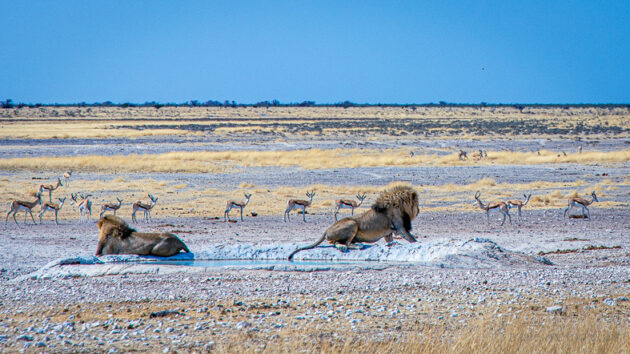
Game Drives & Waterhole Watching — The highlight! Visit famous waterholes like Nebrownii, Halali, Okaukuejo, and Klein Namutoni for close-up views of elephants, rhinos, lions, and more.
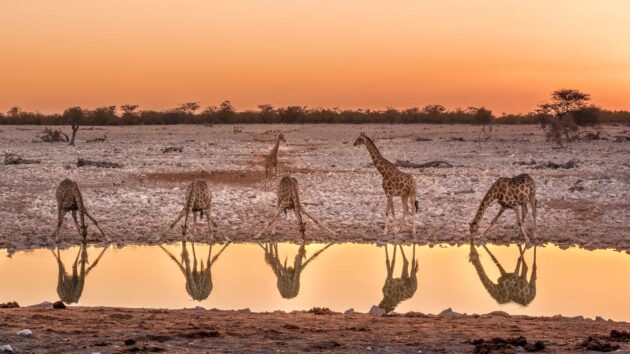
Sunrise & Sunset at the Pan — Watch the salt pan glow in golden light.
Birdwatching — Especially rewarding in the wet season (over 340 species recorded).
Night Drives — Some camps offer guided night drives.
Visit the Salt Pan — Stop at viewpoints for photos of the vast white expanse.
Accommodation Options
Etosha offers excellent choices both inside and outside the park.
Inside the Park (NWR – Namibia Wildlife Resorts): Okaukuejo Camp — Southern entrance; famous floodlit waterhole with excellent lion and rhino sightings. Halali Camp — Central location; great for leopards, elephants, and the Moringa waterhole. Namutoni Camp — Eastern side; historic fort with views over the pan. Dolomite Camp — Western area; luxury feel with stunning sunsets. Onkoshi Camp & Olifantsrus — More secluded options.
These offer chalets, double rooms, and camping sites with facilities like restaurants, shops, and pools.
Outside the Park: Numerous private lodges and camps (e.g., Ongava, Mushara, Onguma, Etosha Oberland) provide luxury options, guided drives, and proximity to gates. These are often more comfortable and include meals/activities.
Book well in advance, especially for dry-season visits.
Practical Tips
Park Fees — Pay entry at the gate (fees vary by nationality and vehicle; check current rates on official sites or at entrance).
What to Bring — Binoculars, camera with zoom lens, sun protection, warm layers for early mornings/evenings, insect repellent, plenty of water, snacks, and a cooler for self-drives.
Safety — Stay in your vehicle (except at designated spots), keep distance from animals, and drive slowly.
Fuel & Supplies — Fill up in towns like Outjo or Tsumeb; limited options inside the park.
Minimum Stay — 3–4 days recommended to explore different areas and gates.
Combine with Other Destinations — Pair Etosha with Damaraland (desert-adapted elephants), Swakopmund, or Sossusvlei for a full Namibia itinerary.
Etosha delivers one of Africa’s most accessible and rewarding safari experiences. Whether self-driving or on guided tours, the magic of watching wildlife against the backdrop of the vast salt pan will stay with you forever. Plan ahead, respect the wildlife, and enjoy one of Namibia’s greatest treasures!