
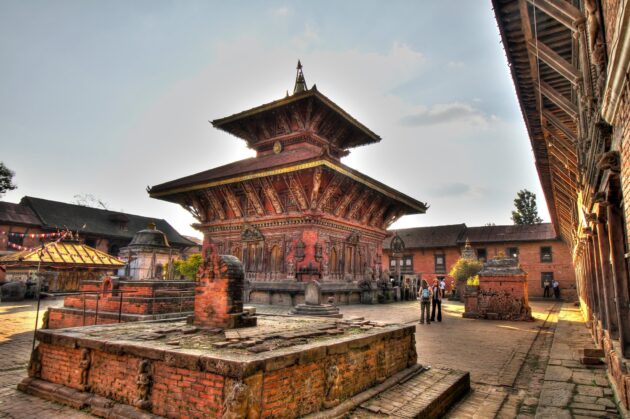
Changu Narayan Temple Travel Guide (2026)
Changu Narayan Temple (also spelled Changunarayan) is one of Nepal’s oldest Hindu temples and a UNESCO World Heritage Site as part of the Kathmandu Valley ensemble. It sits on a hilltop in the village of Changu (Changunarayan Municipality), Bhaktapur District, about 12–22 km east of Kathmandu (distances vary slightly by source, but roughly a 45–90 minute drive).
History and Significance
The temple is dedicated to Lord Vishnu (in his form as Narayan). It dates back to the Licchavi period, with origins around the 4th–5th century AD (some references cite ~325 AD or an inscription from 464 AD by King Manadeva). A devastating fire led to reconstruction in 1702 AD, but many carvings and artifacts remain from the 4th–9th centuries. It is considered the oldest Hindu temple in Nepal still in active use and holds immense cultural, historical, and religious value for Hindus and Buddhists alike. The site features ancient stone inscriptions, sculptures of Vishnu’s avatars, and intricate artwork that highlight Licchavi-era craftsmanship.
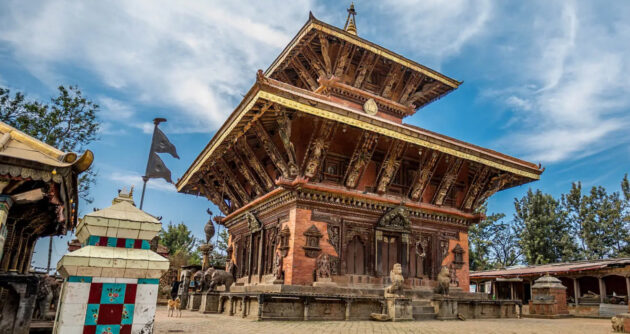
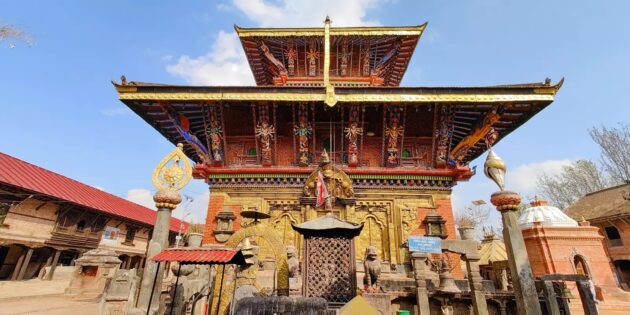
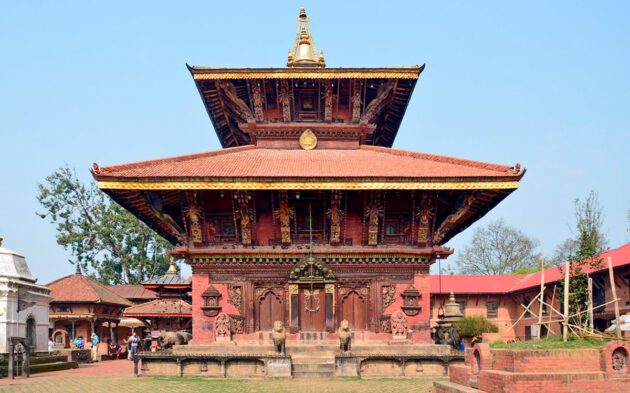
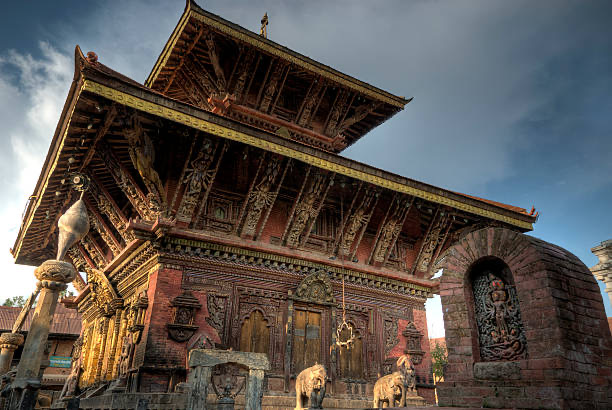
The temple complex includes a two-tiered structure on a high stone plinth, guarded by pairs of mythical and real beasts (lions, elephants, griffins, and sarabhas). Rich wood carvings on the struts depict deities, while the doors and surroundings feature golden figures, lotuses, conch shells, discs, and maces. It is neither purely pagoda nor shikhara style but represents traditional Nepali temple architecture.
Architecture and What to See
Main Shrine: Two-tiered roof with gilded copper elements, intricate embossed wood and stone carvings.
Notable Artifacts: A famous 5th-century Garuda (Vishnu’s mount) kneeling statue, Vishnu avatars, and the oldest known stone inscription in the valley (464 AD).
Surroundings: The hilltop location offers panoramic views of the Kathmandu Valley, surrounded by champak tree forests and the Manohara River below. The small traditional Newar village adds charm with local life, souvenir shops, and a peaceful atmosphere away from Kathmandu’s crowds.
The site feels like a living museum with ongoing worship, making it atmospheric and less tourist-heavy than some other valley sites.
How to Reach Changu Narayan Temple
From Kathmandu: ~45–90 minutes by road. Take a bus/microbus from Ratna Park to Bhaktapur (common and cheap), then switch to a local bus or taxi for the ~6 km uphill to Changu village. Taxis or private vehicles from Kathmandu cost around NPR 1,000–2,000 (one way, negotiable).
From Bhaktapur: Easy 6 km uphill ride or a scenic hike through villages and terraced fields.
Hiking Options: Many combine it with a hike from Bhaktapur or even from Nagarkot (longer but rewarding with valley and Himalayan views).
Best for Day Trips: Pair with Bhaktapur Durbar Square for a full cultural day.
Public transport is straightforward but can be crowded; taxis offer more comfort.
Opening Hours and Entry Fees
Hours: Generally open from early morning (~6 AM or even 4 AM for rituals) to evening (~7 PM or later). The complex is accessible for strolling much of the day; check locally as timings can vary slightly.
Entry Fees: Nepali citizens: Free SAARC nationals (including India, etc.) and sometimes Chinese: NPR 100–300. Foreign nationals: NPR 300–400 (sources vary slightly between 300, 350, or 400; confirm at the ticket counter). Children under 10: Usually free
Carry ID (passport for foreigners) and cash, as cards may not be accepted everywhere.
Best Time to Visit
Dry seasons: September–November (post-monsoon, clear skies, festivals) and March–May (spring, pleasant weather).
Avoid the monsoon (June–August) due to rain and slippery paths.
Early morning (6–9 AM) is ideal for fewer crowds, soft light for photography, and observing rituals. The site is peaceful year-round but livelier during Hindu festivals.
Things to Do Nearby
Explore the small Changu village and its traditional Newar houses.
Visit nearby museums: Changu Museum or Living Traditions Museum.
Hike to or from Nagarkot for sunrise/Himalayan views.
Combine with Bhaktapur Durbar Square (highly recommended for its medieval architecture and pottery square).
Enjoy local Newari food like dal bhat, samay baji, choila, or chura at village eateries.
Souvenir shopping (thangka paintings, handicrafts) is available on-site.
Practical Tips for Visitors
Dress modestly (cover shoulders and knees) as it’s an active religious site; remove shoes before entering certain areas.
Respect customs: No touching statues unless invited, and observe ongoing pujas quietly.
Carry water, sunscreen, and comfortable shoes for the hilltop paths.
Hire a local guide for deeper insights into the carvings and history (especially useful for the inscriptions).
Cash is essential; ATMs are limited in the village.
The location is relatively quiet and less commercialized, offering a more authentic experience compared to central Kathmandu sites.
Altitude is around 1,500–1,600 m — generally comfortable but factor in any mobility needs for the uphill access.
Final Thoughts
Changu Narayan provides a serene, historically rich contrast to busier valley attractions. It’s perfect for history buffs, photographers, and those seeking spiritual or cultural depth without heavy crowds.
For the latest updates (e.g., exact fees or any temporary changes), check with the Nepal Tourism Board or your hotel/tour operator upon arrival, as minor variations can occur. Safe travels — Namaste!