
Tashichho Dzong Travel Guide (2026)
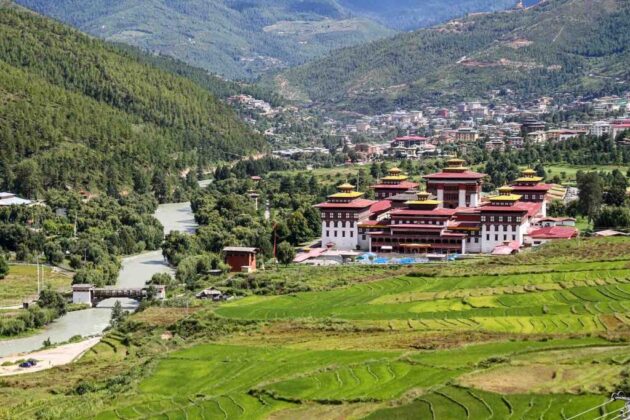
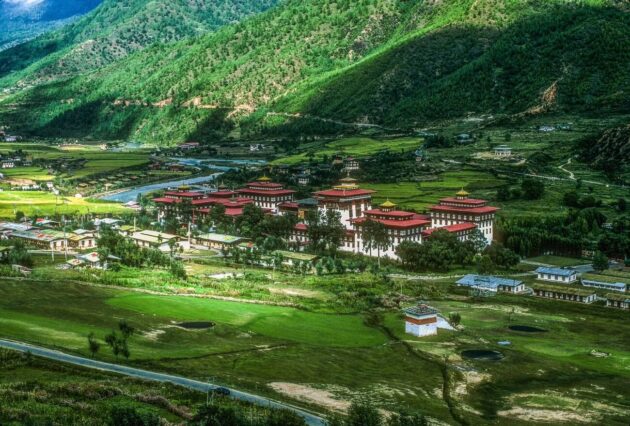
Tashichho Dzong (also spelled Tashichhodzong or Thimphu Dzong), meaning “Fortress of the Glorious Religion,” is one of Bhutan’s most iconic landmarks. Located on the northern edge of Thimphu along the western bank of the Wang Chhu River, it serves as both a grand Buddhist monastery and the primary administrative seat of the Bhutanese government. It houses the King’s throne room, offices for key ministries (including Home Affairs and Finance), and the summer residence of the Je Khenpo (Chief Abbot), along with a large monastic community.
History
The site’s religious roots trace back to 1216 A.D., when Lama Gyalwa Lhanangpa built a small monastery at nearby Dechen Phodrang. In the 17th century, Zhabdrung Ngawang Namgyal—the unifier of Bhutan—relocated and expanded it into a dzong (fortress-monastery) to consolidate spiritual and political power. Over the centuries, it suffered damage from fires (notably 1771) and earthquakes (1897), leading to multiple reconstructions. The modern structure largely dates to a major renovation in the 1960s under the Third King, Jigme Dorji Wangchuck, after Thimphu became the capital in 1952. Built traditionally without nails, it preserves Bhutanese architectural principles while adapting for governance.
Architecture
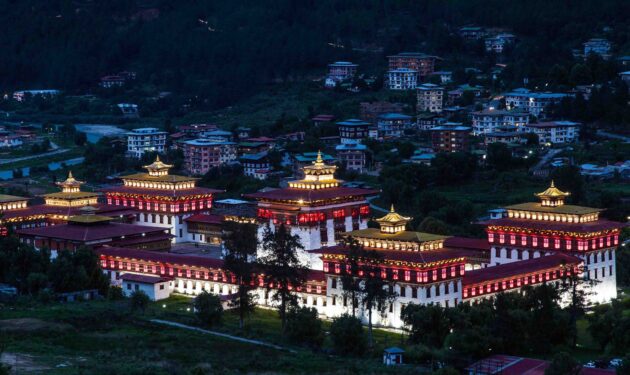
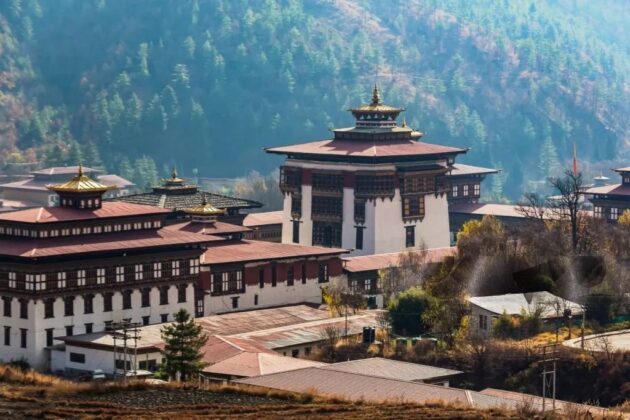
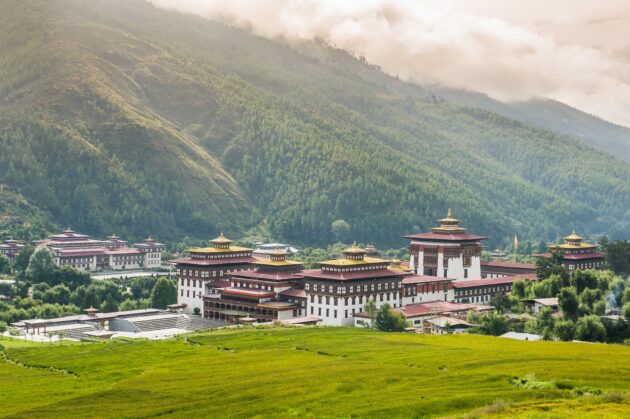
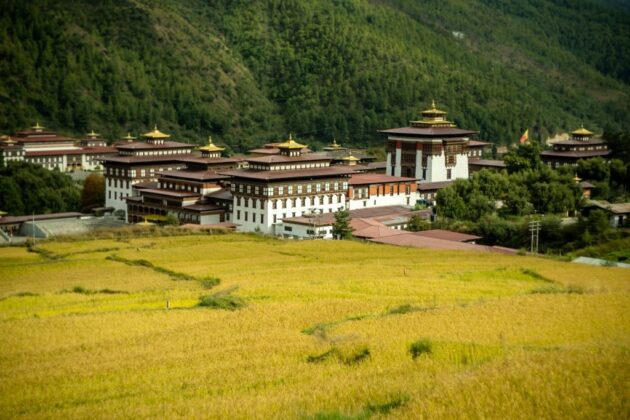
Tashichho Dzong exemplifies classic Bhutanese dzong design: massive whitewashed walls with inward slopes for defense and stability, red-brown trim, golden multi-tiered roofs, and intricate woodcarvings on windows, doors, and beams. The central utse (tower) dominates the complex, which divides into administrative and monastic sections with spacious courtyards, temples, chapels, and murals depicting Buddhist teachings and history. Surrounded by manicured lawns and gardens, it blends harmoniously with the river and valley landscape.
Visiting Hours and Entry
As an active government and monastic complex, access is restricted to protect daily operations: Weekdays (Monday–Friday): Typically 5:00 PM – 6:00 PM (after offices close; some sources note 5:30 PM onward). Weekends (Saturday–Sunday): 9:00 AM – 5:00 PM (more flexible).
Entry fees for tourists vary by source and nationality but generally range from BTN 500 (≈ INR 500 / USD 6) for foreigners in recent updates; some older references cite lower amounts or category-based pricing (e.g., lower for SAARC nationals). Children under 5 often enter free, with concessions for older kids. Fees may have been updated in 2026 for certain monuments—confirm locally or with your tour operator, as Bhutan requires all tourists (except Indians, Bangladeshis, and Maldivians in some cases) to travel on a pre-arranged package with a licensed guide. A guided tour is usually included or highly recommended.
Plan for 1–2 hours. Photography is often allowed in courtyards and exteriors but restricted or prohibited inside temples and sensitive areas—always ask your guide.
How to Reach
From Thimphu center: About 2 km north—easy by taxi, private vehicle, or a pleasant 20–30 minute walk along the river. It’s near the Royal Thimphu Golf Course.
From Paro International Airport: Roughly 50–55 km (1–1.5 hours by road). Most visitors arrive via Paro and transfer to Thimphu as part of a broader itinerary.
Combine with nearby sites like the National Memorial Chorten, Buddha Dordenma, or the Centenary Farmers’ Market.
Best Time to Visit
Spring (March–May) and autumn (September–November) offer the most pleasant weather: mild temperatures, clearer skies, and vibrant landscapes (rhododendrons in spring; golden fields in autumn). These are peak seasons for Bhutan travel. Winter (December–February) is colder but quieter with crisp views. Avoid the monsoon (June–August) due to heavy rains.
Festivals and Special Experiences
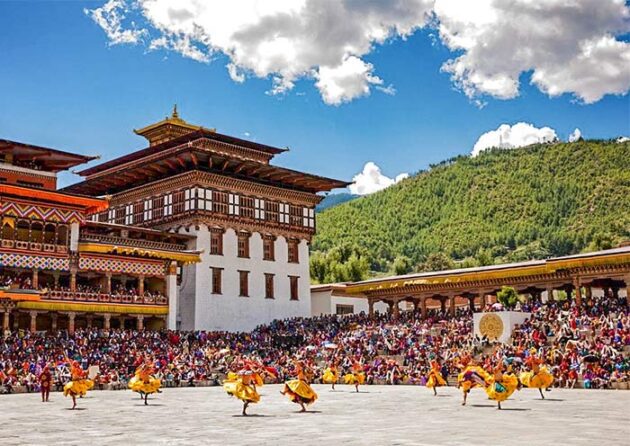
The highlight is the annual Thimphu Tshechu (usually mid-September to early October, following the Bhutanese lunar calendar). Held in the dzong’s courtyards, it features vibrant masked cham dances by monks and lay performers, traditional music, rituals, and crowds in festive attire. It’s a profound cultural and spiritual event celebrating Guru Rinpoche and community. Book early if planning around it, as Thimphu gets busier.
Practical Tips and Etiquette
Dress code: Modest and respectful—cover shoulders and knees (long pants/skirts, no shorts or sleeveless tops). Remove hats and shoes in temples. Smart, clean clothing is preferred.
Behavior: Maintain quiet in prayer areas, follow your guide, avoid touching sacred objects or murals, and respect that this is a working government and religious site. Do not disrupt monks or ceremonies.
Other notes: Carry your passport/ID and travel permit. Wear comfortable shoes for steps and courtyards. Access may be limited during official events. Wheelchair accessibility exists in parts via ramps, but terrain can be uneven.
Guided tours: Essential for context on history, symbolism, and restrictions.
Final Thoughts
Tashichho Dzong offers a rare glimpse into Bhutan’s living blend of tradition, governance, and spirituality. Pair it with Thimphu’s other attractions for a rewarding visit. Always verify current hours, fees, and access rules with your Bhutanese tour operator, as they can change. Safe travels!