
A Travel Guide to Mehrangarh Fort (2026)
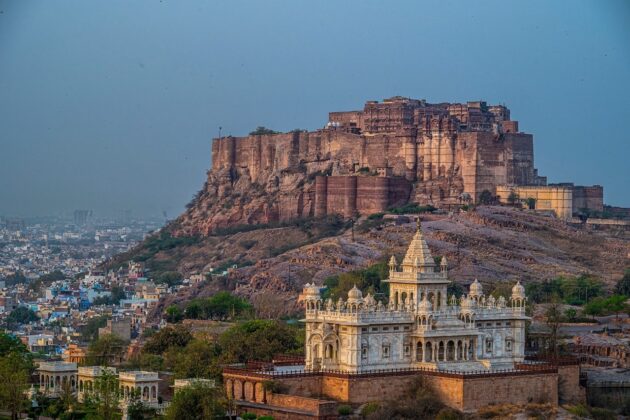
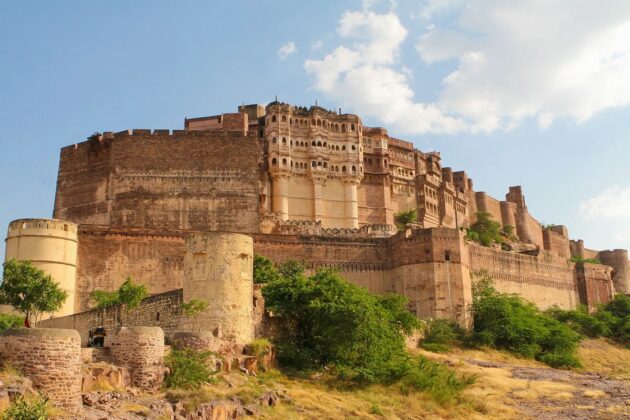
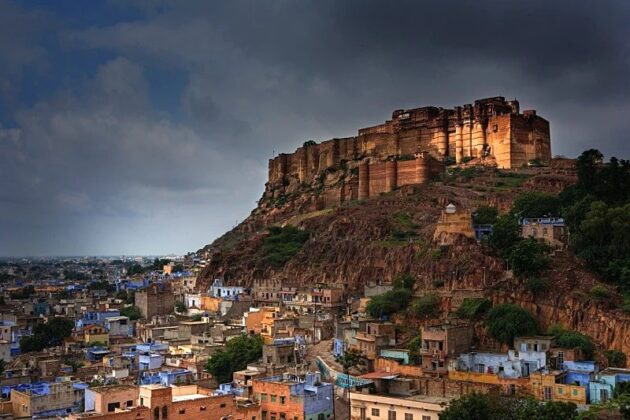
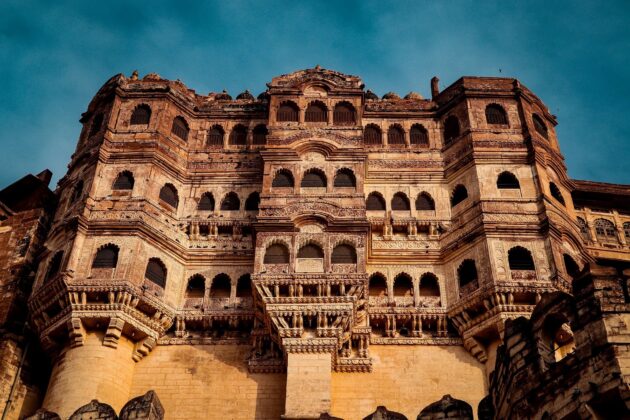
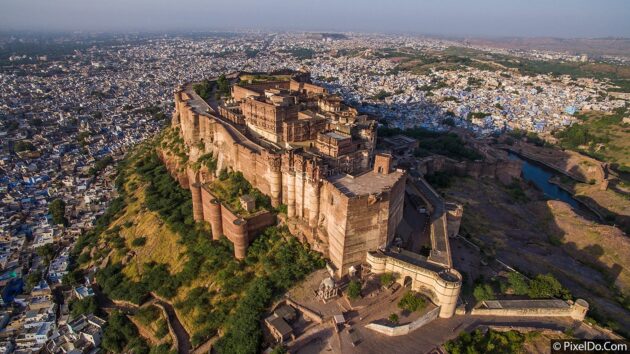
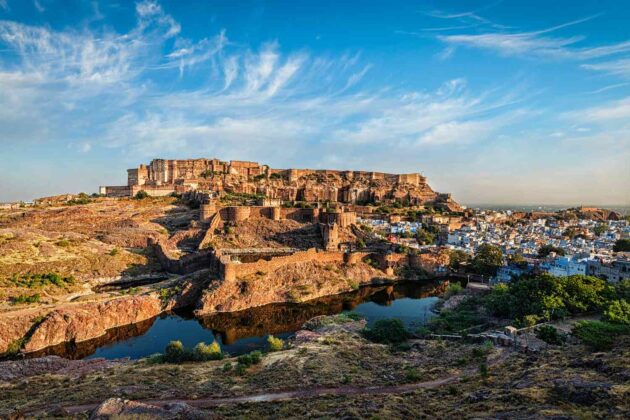
Mehrangarh Fort, also known as the “Fort of the Sun,” is one of India’s most impressive and best-preserved forts. Perched dramatically on a 400-foot (122-meter) rocky hill overlooking Jodhpur — famously called the Blue City for its vibrant indigo-painted houses — this 15th-century fortress offers breathtaking panoramic views, intricate Rajput architecture, and a rich museum showcasing Rajasthan’s royal heritage.
Built in 1459 by Rao Jodha, founder of Jodhpur, the fort stands as a symbol of Marwar region’s power and resilience. Whether you’re a history buff, architecture enthusiast, or photography lover, Mehrangarh Fort is an unmissable highlight of any Rajasthan itinerary.
Why Visit Mehrangarh Fort?
Mehrangarh Fort is not just a massive stone structure; it’s a living museum that tells the story of the Rathore dynasty. Its massive walls, ornate palaces, and strategic location provide stunning vistas of the Blue City below, especially magical at sunrise or sunset. The fort’s well-maintained interiors, including palaces with mirror work, gold filigree, and stained glass, showcase Rajput opulence. It also houses one of the finest collections of artifacts in Rajasthan, making it far more than a simple viewpoint.
How to Get There
Location: Sodagaran Mohalla, Jodhpur, Rajasthan. The fort towers above the old city, easily visible from most parts of Jodhpur.
By Air: Fly into Jodhpur Airport (JDH), about 10 km from the city center. Taxis, auto-rickshaws, or Uber/Ola rides take 20–30 minutes to reach the fort base.
By Train: Jodhpur Junction (JU) is well-connected to major Indian cities like Delhi, Jaipur, Mumbai, and Udaipur. From the station, take a taxi or auto (15–20 minutes).
By Road: Jodhpur is easily accessible by bus or self-drive from Jaipur (about 5–6 hours) or Udaipur (about 6–7 hours). Once in the city, the fort is a short drive or walk from the Clock Tower (Ghanta Ghar) area.
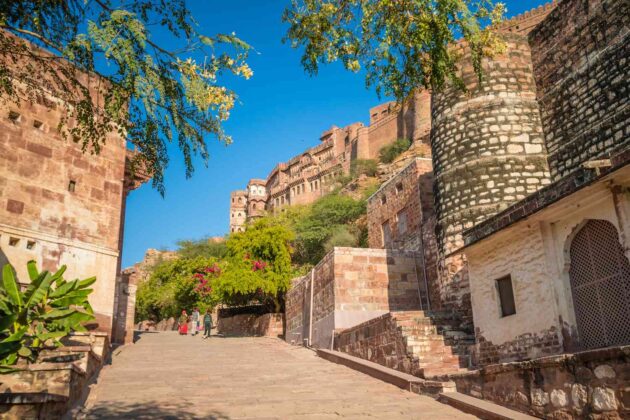
Getting to the Entrance: The climb to the fort is steep. You can walk through the historic gates, take a taxi/auto up the road from Nagauri Gate, or use the convenient elevator (additional small fee, around ₹50).
Best Time to Visit
Optimal Season: October to March (winter) is ideal, with pleasant temperatures (10–27°C / 50–80°F) making exploration comfortable. Avoid the extreme summer heat (April–June, often exceeding 40°C / 104°F) and monsoon (July–September).
Time of Day: Visit early morning (opens at 9 AM) for cooler weather and fewer crowds, or late afternoon for golden-hour views and dramatic lighting on the Blue City. The fort closes at 5 PM (last entry around 4:30 PM).
Festivals: Consider visiting during local events or Jodhpur Foundation Day (May 12), when entry may be free for all (elevator charges apply).
What to See and Do
Mehrangarh Fort is vast — plan for 2–3 hours to explore thoroughly. Key highlights include:
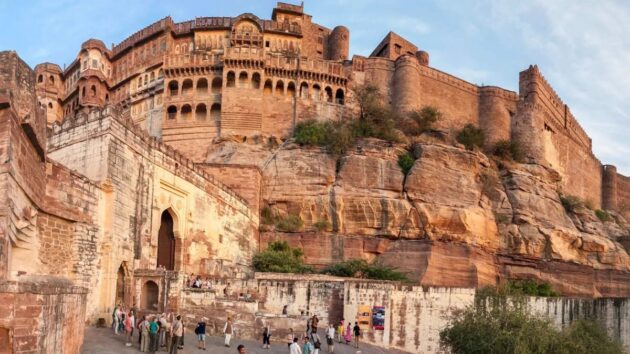
The Seven Gates: Enter through massive fortified gates like Jai Pol, Suraj Pol, and Loha Pol (with iron spikes to deter war elephants). Each has legends and cannonball scars from historical battles.
Palaces and Period Rooms: Moti Mahal (Pearl Palace): The largest, used for state councils, with beautiful stained-glass windows. Phool Mahal (Flower Palace): A grand 18th-century audience hall with exquisite gold filigree and floral motifs. Sheesh Mahal (Mirror Palace): Features intricate mirror work, once a royal bedchamber. Jhanki Mahal (Queen’s Palace): Offers views of cradles and artifacts related to royal women.
Mehrangarh Museum: One of the best in Rajasthan, displaying weapons, miniature paintings, royal costumes, palanquins (sedan chairs), and decorative arts. English descriptions and an excellent audio guide make it highly informative.
Shringar Chowk (Coronation Courtyard): Where rulers were anointed on a marble throne.
Temples: Chamunda Mataji Temple (dedicated to the city’s patron goddess) and Nagnechi Ji Temple.
Panoramic Views and Ramparts: Walk along the walls for sweeping views of the Blue City, Umaid Bhawan Palace, and the Thar Desert beyond. Sunset here is spectacular.
Additional Experiences: Try the Flying Fox zipline (if available) for an adventurous perspective, or enjoy a meal at on-site cafes like Café Mehran or Mehran Terrace with fort views.
Tickets and Practical Information
Entry Fees (approximate as of 2026; check official site for updates): Indian Adults: ₹200 (concessions for students/seniors: ₹100); Foreign Tourists: ₹800 (students: ₹500); Children under 5: Free.
Audio Guide: Highly recommended (₹180–₹300, available in multiple languages including English; often included or discounted for foreigners). It provides clear narration with Rajasthani music.
Other Charges: Elevator (₹50 one way), professional video camera (extra fee), guided tour (₹500+ depending on group size).
Tickets: Available at the entrance or online via the Mehrangarh Museum Trust website. Buy in advance during peak season.
Photography: Still photography is generally allowed with the ticket; check for any restrictions inside museum areas.
What to Bring and Tips for Visitors
Essentials: Comfortable walking shoes (lots of steps and uneven surfaces), sunscreen, hat, water bottle, and a light scarf (for temple visits or dust).
Respect Rules: Dress modestly (cover shoulders and knees for temples). No touching artifacts. Follow “no photography” signs where posted.
Accessibility: The elevator helps, but some areas involve stairs. Wheelchair access is limited in parts.
Crowd Avoidance: Go early or combine with nearby Jaswant Thada (a marble cenotaph, 10–15 minutes away) for a full morning.
Safety: The fort is well-maintained and safe, but watch for monkeys. Hire official guides or use the audio guide instead of unofficial touts.
Combine Your Visit: Pair with a walk through the Blue City below, Clock Tower market for spices and textiles, or rooftop dinner with fort views.
Where to Stay and Eat Nearby
Stay: For immersive experiences, choose heritage hotels like Taj Umaid Bhawan Palace, Ranbanka Palace, or boutique options in the old city (e.g., near Clock Tower). Budget guesthouses and Airbnbs are plentiful.
Dining: On-site options include Café Mehran and Palki Café. Nearby rooftop restaurants like those around Clock Tower or Dev Kothi offer great views of the illuminated fort at night. Try local Rajasthani thali, dal baati churma, or street snacks in the Sardar Market.
Final Thoughts
Mehrangarh Fort is a masterpiece of Rajput engineering and artistry that beautifully captures the grandeur of Rajasthan’s royal past. Its commanding presence over the Blue City, combined with excellent preservation and engaging exhibits, makes it one of the top forts in India — often ranked among travelers’ favorites. Whether exploring its palaces, soaking in the views, or learning about its history via audio guide, a visit here will leave you in awe of Jodhpur’s timeless charm.
Plan at least half a day, and don’t forget your camera for those iconic Blue City shots! Safe travels and enjoy the “Sun Fort” experience.