
Mingun Travel Guide (2026)
Mingun is a small historic village on the western bank of the Ayeyarwady (Irrawaddy) River in Myanmar’s Sagaing Region, about 11 km north of Mandalay. It’s a popular half-day or full-day excursion known for its ambitious but unfinished royal monuments from the early 19th century under King Bodawpaya and his successors. The site offers a mix of massive brick ruins, a striking white pagoda, and one of the world’s largest ringing bells, all in a relaxed riverside setting.
How to Get There
The classic and most scenic way is by public ferry or tourist boat from Mandalay:
Boats typically depart from the west pier (around 26th Street jetty) at 9:00 AM.
The journey takes about 45–60 minutes upriver, offering views of river life.
Return boats usually leave Mingun around 1:00–1:30 PM.
Ferry/boat ticket: Around 5,000 Kyat per person one-way or return (upper deck may cost more, e.g., 10,000 Kyat). Buy at the pier.
Private boat charters or guided tours are available for more flexibility (full-day options often combine Mingun with Sagaing or other royal cities). Road access exists but the boat ride is the highlight for most visitors. All main sights in Mingun are within easy walking distance (15–30 minutes) from the landing point—no taxi needed.
Top Attractions
Mingun’s main draws are clustered together. A 5,000 Kyat zone fee (archaeological area ticket) typically covers entry to the key sites (separate from the boat fare; confirm current prices on arrival).
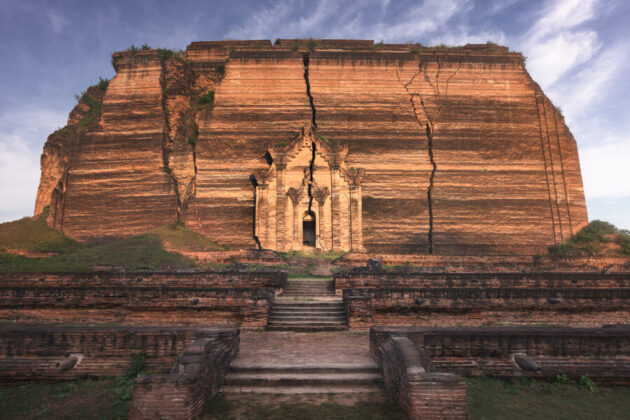
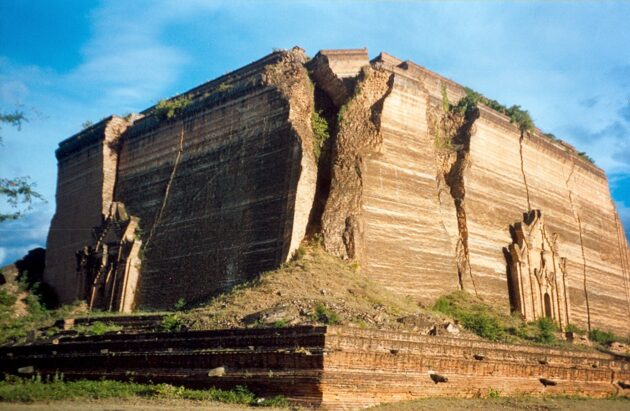
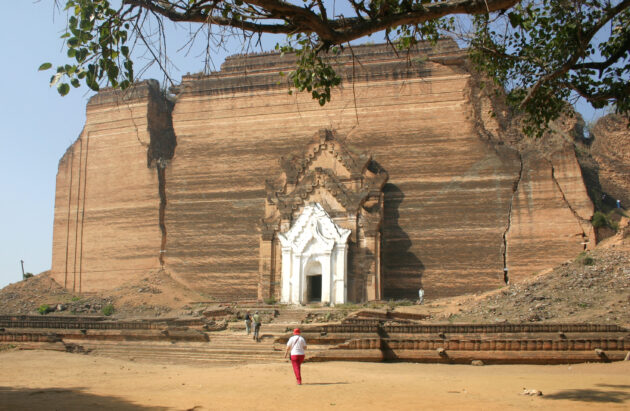
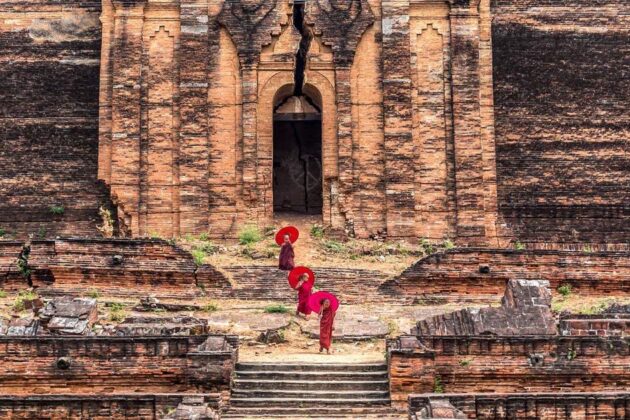
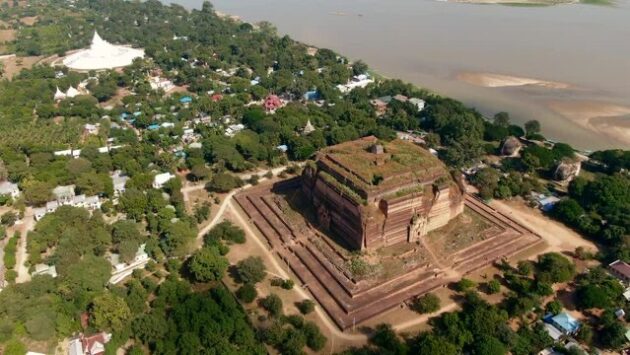
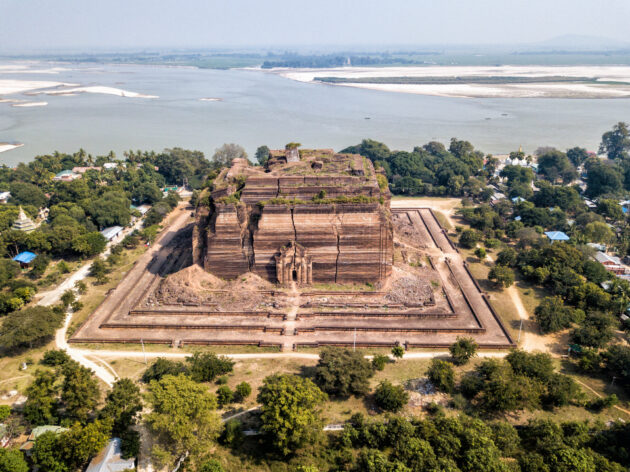
Mingun Pahtodawgyi (Unfinished Pagoda): King Bodawpaya’s ambitious project to build what was intended as the world’s largest stupa (planned ~150m high). Only about one-third was completed before work stopped; it’s essentially a massive pile of bricks (often called the largest brick pile in the world). An 1839 earthquake cracked it, adding to its dramatic, ruined appearance. You can climb stairs for views. It’s imposing and photogenic, especially in morning light.
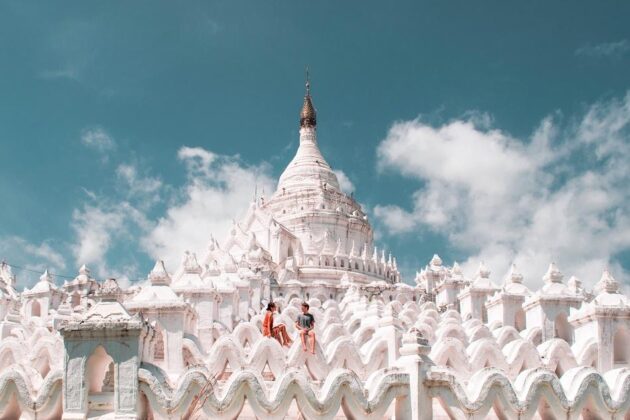
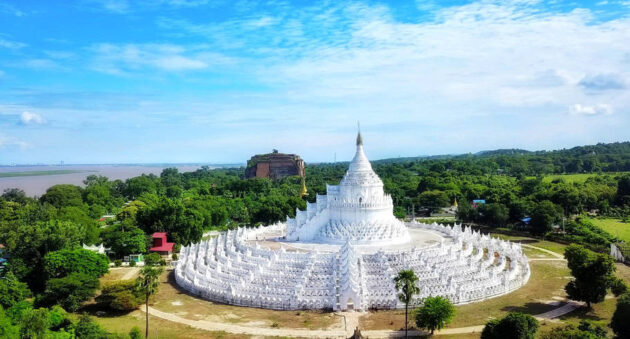
Hsinbyume Pagoda (Myatheindan or White Pagoda): Built in 1816 by King Bagyidaw to honor his wife (Princess Hsinbyume). This is the most visually striking site—a bright white structure with seven concentric wavy terraces representing the cosmic mountain Mount Meru and surrounding ranges. The undulating design and top shrine make it highly photogenic and unique among Myanmar pagodas. Many visitors rank it as the highlight.
Mingun Bell: Cast between 1808–1810, this 90-tonne (roughly 90,000 kg) bronze bell is one of the largest functioning ringing bells in the world. It’s housed in a simple shelter; visitors can strike it (locals may demonstrate the proper technique) or even crawl inside for the acoustic experience. It’s a short walk from the other sites.
Other nearby sights: Giant ruined Chinthe (lion-like guardian statues) by the riverbank—their heads were lost in the 1839 earthquake. Smaller pagodas like Settawya (with a Buddha footprint) may also be visited.
Sights are compact, so 3–5 hours on the ground is usually enough. Early morning or late afternoon light is best for photos; the atmosphere is peaceful with local life around.
Best Time to Visit
The cool, dry season from November to February is ideal for Myanmar overall and Mingun—pleasant temperatures (around 20–30°C/68–86°F), low rainfall, and comfortable walking/exploring. This is peak tourist time, so expect more visitors.
March–May: Very hot (can exceed 40°C in central areas); early starts help.
June–October: Rainy/monsoon season; some disruption possible, but fewer crowds and greener landscapes.
Visit early in the day to avoid peak heat and align with boat schedules.
Practical Tips
Duration: Perfect as a half-day trip from Mandalay; extend for relaxed wandering or combining with Sagaing.
What to bring: Comfortable shoes for walking on uneven/brick surfaces, sun protection (hat, sunscreen), water, and cash (Kyat) for fees and small purchases. Modest dress for religious sites (shoulders/knees covered; remove shoes).
Food: Limited options—simple local eateries or street food near the sites/bell area. Eat in Mandalay before/after for more variety.
Accommodation: Mingun has very limited (or no major) tourist lodging; most visitors base in Mandalay and day-trip. Mandalay has a wide range of hotels.
Currency & Costs: Low overall—boat + zone fee is inexpensive by international standards. ATMs are scarce in Mingun; bring cash.
Other: Respect Buddhist sites (no pointing feet at images). Photography is generally fine, but avoid sensitive subjects. The area has a laid-back village feel.
Final Thoughts
Mingun pairs well with visits to Mandalay’s other attractions or the ancient royal cities (Ava, Sagaing). For the most up-to-date details on schedules, fees, and conditions, check locally in Mandalay or with a reputable tour operator upon arrival, as things can change.
If planning a trip, prioritize safety and flexibility—enjoy the unique riverside monuments if conditions allow!