
Mount Tai (Tai Shan), located in Tai’an City, Shandong Province, is one of China’s Five Great Mountains and a UNESCO World Heritage Site. Revered for over 3,000 years as a sacred site, it has been a place of worship for emperors, poets, and pilgrims. Known as the “First of the Five Great Mountains,” Mount Tai symbolizes spiritual significance, natural beauty, and cultural history. Its majestic peaks, ancient temples, and breathtaking sunrises make it a must-visit destination for travelers. This guide will help you plan an unforgettable trip to Mount Tai.

A Travel Guide to Mount Tai
Why Visit Mount Tai?
Mount Tai is not just a mountain; it’s a cultural and spiritual landmark. Emperors of various dynasties climbed its slopes to offer sacrifices and pray for prosperity, believing it connected heaven and earth. Today, it attracts hikers, history buffs, and nature lovers with its scenic trails, historic sites like the Dai Temple, and the iconic sunrise from the summit. Whether you’re seeking adventure, cultural immersion, or spiritual reflection, Mount Tai offers a profound experience set against stunning landscapes.
How to Get There
Mount Tai is located in Tai’an City, approximately 400 km south of Beijing and 80 km from Jinan, Shandong’s capital. Here are the main transportation options:
By High-Speed Train: From Beijing: Take a high-speed train (G-series) from Beijing South Station to Tai’an Station (2–2.5 hours, ¥185–250 one way). Trains run frequently. From Shanghai: High-speed trains from Shanghai Hongqiao to Tai’an take about 3.5–4 hours (¥400–550 one way). From Jinan: A quick 20–30-minute train ride to Tai’an costs ¥20–40. Tai’an Station is 10 km from the mountain’s entrance. Taxis or ride-hailing apps like Didi cost ¥15–25 to the base.
By Bus: Long-distance buses from Beijing, Jinan, or Qingdao arrive at Tai’an’s bus station. From there, local buses (e.g., No. 3 or 19, ¥2–5) or taxis take you to Mount Tai’s entrance. Travel time from Jinan is about 1.5 hours (¥20–30).
By Car: Driving from Jinan takes about 1 hour via the G2 Beijing-Shanghai Expressway. Parking is available near the Red Gate (Hongmen) or Tianwai Village for ¥10–20/day.
To the Mountain: The main starting points for climbing are Red Gate (Hongmen) for traditional hiking routes or Tianwai Village for cable car access. Both are accessible by local bus or taxi from Tai’an.
Best Time to Visit
Spring (March–May): Mild weather (15–25°C) and blooming flowers make this ideal for hiking. Cherry blossoms and azaleas add color to the trails. Autumn (September–November): Cool temperatures (10–20°C) and vibrant foliage offer stunning views, especially for sunrise seekers.
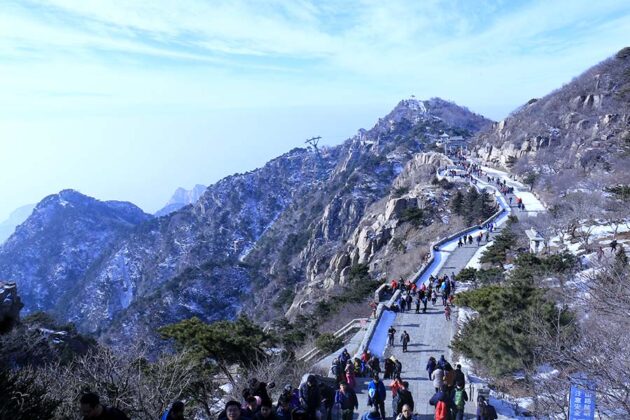
Summer (June–August): Warm (25–35°C) and lush, but expect occasional rain and crowds, especially during school holidays. Winter (December–February): Cold (–5 to 5°C) with fewer visitors, but icy trails can be challenging. Proper gear is essential.
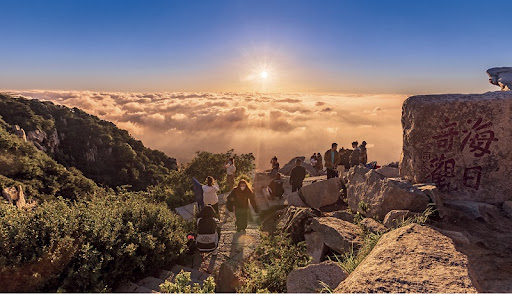
Sunrise Tip: The summit’s sunrise (around 5:00–6:30 AM, depending on the season) is a highlight. Check sunrise times and plan an overnight stay or early climb to catch it. Crowd Avoidance: Avoid Chinese holidays like National Day (October 1–7) and Labor Day (May 1–5) for fewer crowds.
Tickets and Opening Hours
Opening Hours: The scenic area is open 24 hours for hikers, but specific attractions (e.g., Dai Temple, cable cars) have set hours: Dai Temple: 8:00 AM–5:00 PM; Cable Car: 7:00 AM–5:30 PM (April–October), 8:00 AM–5:00 PM (November–March).
Ticket Prices: Mount Tai entrance: ¥115/adult, ¥55 for students and seniors (with ID). Dai Temple: ¥30 (or included in combo tickets). Cable Car: ¥100 one way, ¥200 round trip. Shuttle Bus (Tianwai Village to Mid-Mountain): ¥30 one way. Discounts apply for children under 1.4 meters (half price) or 1.2 meters (free).
Booking: Tickets are available on-site or via apps like Ctrip or WeChat. During peak seasons, book cable car or shuttle tickets in advance.
What to See and Do
Mount Tai offers a mix of hiking, cultural exploration, and natural beauty. The main trail to the summit (Jade Emperor Peak, 1,547 meters) is about 6–7 km with over 6,000 stone steps, taking 3–6 hours to climb depending on fitness.
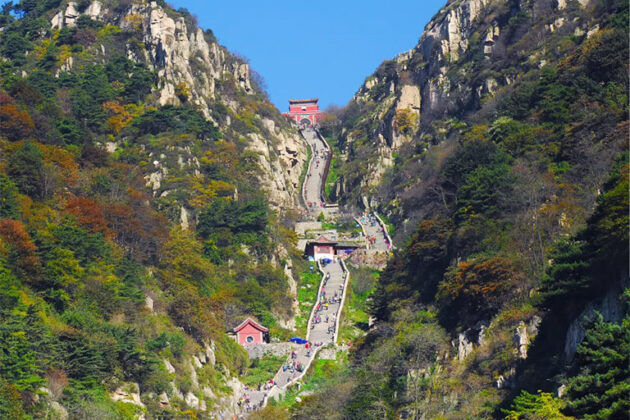
Hiking Routes: Red Gate Route (Classic): Start at the Red Gate, pass historic sites like the Doumu Palace and Zhongtian Gate, and reach the summit via the Eighteen Bends. This strenuous but rewarding route is the traditional pilgrimage path. Tianwai Village Route: Take a shuttle bus to Mid-Mountain, then a cable car to near the summit for a shorter hike (1–2 hours). Ideal for families or those short on time. Night Climb: Start at midnight to catch the sunrise. Rent a flashlight and wear warm clothing, as temperatures drop at night.
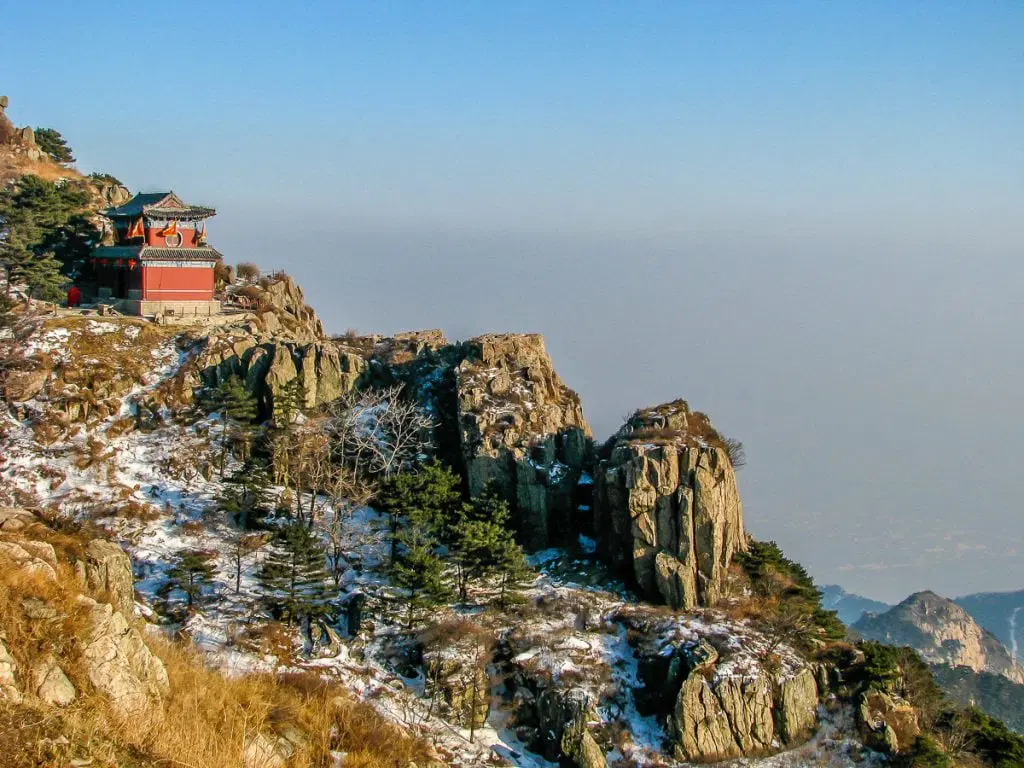
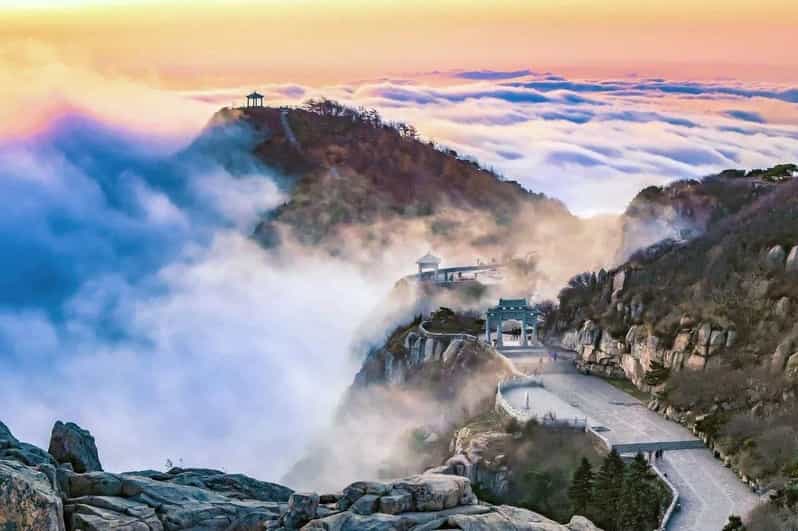
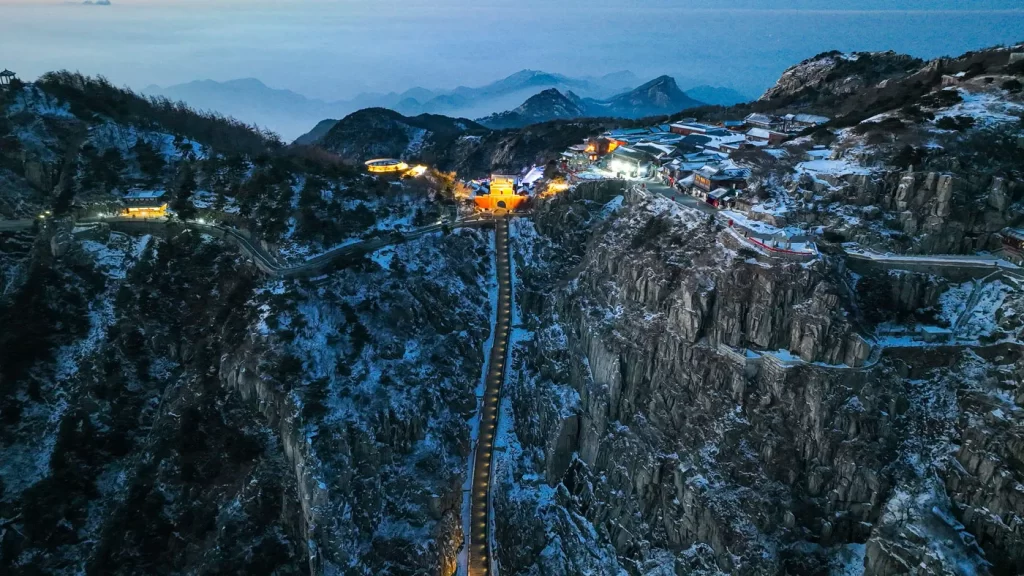
Key Attractions: Dai Temple (Dai Miao): Located at the base in Tai’an, this 1,000-year-old temple is dedicated to the God of Mount Tai. It’s a cultural gem with ancient architecture, steles, and cypress trees planted by emperors. Jade Emperor Peak (Yuhuang Ding): The summit’s highest point, home to the Jade Emperor Temple. Enjoy panoramic views and the iconic sunrise. South Heaven Gate (Nantianmen): A majestic gate near the summit, marking the transition to the “heavenly” realm. Bixia Temple: Dedicated to the Goddess of Mount Tai, this colorful temple is a spiritual highlight. Stone Sutra Valley: Features ancient Buddhist scriptures carved into cliffs, a testament to the mountain’s religious history.
Sunrise Viewing: The summit’s sunrise is legendary. Arrive at the Sun Viewing Peak (Zhanlu Terrace) early to secure a spot. Rent or bring a warm coat (available at the summit for ¥20–50).
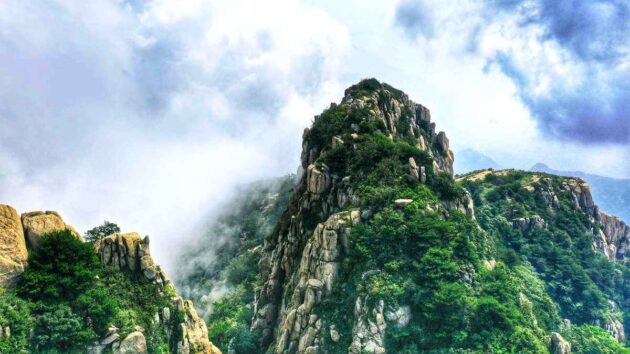
Photography and Exploration: Capture ancient inscriptions, misty peaks, and vibrant temples. The Cloud Bridge and Five Doctors Pine are iconic photo spots.
Explore side trails for quieter views, like the Peach Blossom Valley in spring.
Where to Eat
On the Mountain: Small stalls along the trails sell snacks (noodles, dumplings, bottled water) for ¥10–30. Options are basic and pricey, so pack snacks if possible.
Near the Base: Tai’an city offers restaurants serving Shandong cuisine, such as braised pork and pancakes (¥20–50/meal). Try Lu Cai (Shandong-style dishes) near the Dai Temple. Tip: Bring water and energy bars for the climb, as hydration is key.
Where to Stay
Staying in Tai’an or on the mountain allows flexibility for sunrise viewing or multi-day exploration:
On the Mountain: Shenqi Hotel (near the summit): Basic but convenient for sunrise, ¥200–500/night. Book early for peak seasons. Rental Tents: Available at the summit for ¥50–100, ideal for budget travelers.
In Tai’an: Wanda Realm Tai’an (4-star, 10-minute drive from Red Gate): Comfortable with modern amenities, ¥400–600/night. Jinjiang Inn (budget, near Tai’an Station): Clean and affordable, ¥150–250/night. Hostels/Airbnb: Options in Tai’an start at ¥80–150/night.
Booking Tip: Use Ctrip or Booking.com for deals, and reserve summit accommodations well in advance.
Tips for a Great Visit
Prepare for Hiking: Wear sturdy shoes, bring a walking stick (available for ¥10–20), and pace yourself on the steep steps. Rest stops are frequent. Dress in Layers: The summit is cooler than the base, especially at night (5–10°C colder). Bring a jacket for sunrise viewing.
Respect the Site: Avoid littering or defacing historic areas, as Mount Tai is a sacred site. Cash and Apps: Some vendors accept only cash or WeChat Pay/Alipay, so carry ¥100–200 in small bills.
Combine Your Trip: Visit nearby attractions like the Dai Temple, Tai’an’s Stone Carving Museum, or Qufu (Confucius Temple, 1-hour train ride) for a cultural itinerary.
Final Thoughts
Mount Tai is more than a mountain—it’s a journey through China’s spiritual, cultural, and natural heritage. Whether you’re climbing its ancient steps, marveling at historic temples, or watching the sunrise paint the sky, Mount Tai offers a profound and rewarding experience. Plan your visit around the seasons, pack for adventure, and embrace the legacy of this sacred peak.
Happy travels!