
Shwedagon Pagoda Travel Guide (2026)
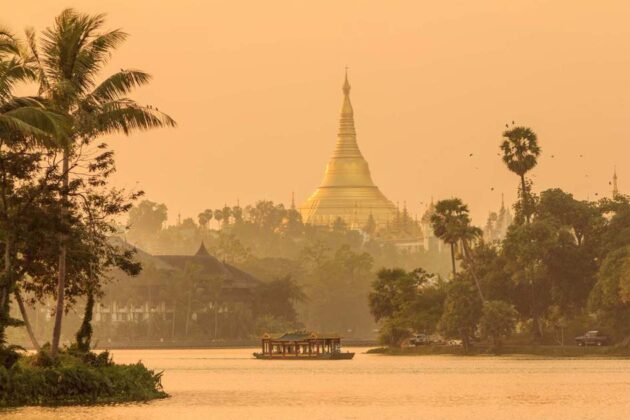
Shwedagon Pagoda (also known as the Golden Pagoda or Great Dagon Pagoda) is Myanmar’s most sacred Buddhist site and a dazzling landmark dominating Yangon’s skyline. Perched atop Singuttara Hill in the Dagon Township, this gilded stupa is believed to enshrine relics of four previous Buddhas, including eight strands of hair from Gautama Buddha himself.
Quick Facts
Height: Main stupa is 99 meters (325 feet) tall, rising from a 51-meter hill.
Materials: Covered in gold plates (thousands of solid gold bars on the base and upper sections), with the hti (umbrella spire) adorned with thousands of diamonds, rubies, sapphires, and other gems.
Location: No. 1 Shwedagon Pagoda Road, Yangon (about 30 minutes from Yangon International Airport).
Opening Hours: Daily from 4:00 AM to 10:00 PM (last admission around 9:45 PM). It may stay open 24 hours on special Buddhist holidays.
Entrance Fee (2026): Approximately 10,000–20,000 MMK (~USD $2.50–$10) for foreigners (cash only; varies by source and possible recent adjustments—check on arrival). Locals pay less.
History and Significance
Legend dates the pagoda back over 2,500 years to the time of Buddha, when two merchant brothers received his hairs and enshrined them here with relics of three prior Buddhas. Historical records point to construction or major rebuilding by the Mon people between the 6th–10th centuries AD, with significant expansions in the 14th–18th centuries by Burmese kings and queens (notably Queen Shin Sawbu, who donated her weight in gold). Earthquakes have damaged it repeatedly, but it has been lovingly restored and enlarged. It remains a living spiritual center for Myanmar’s Buddhists and a symbol of national identity.
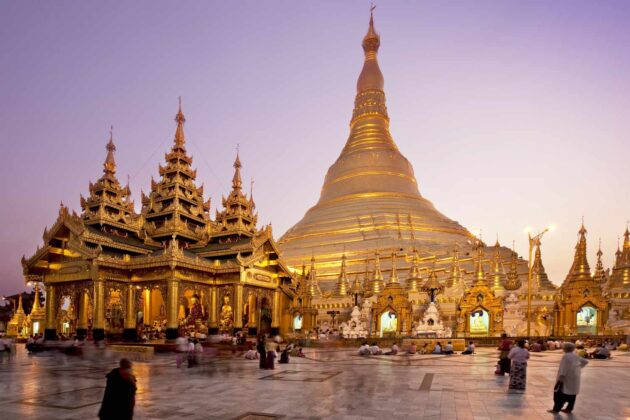
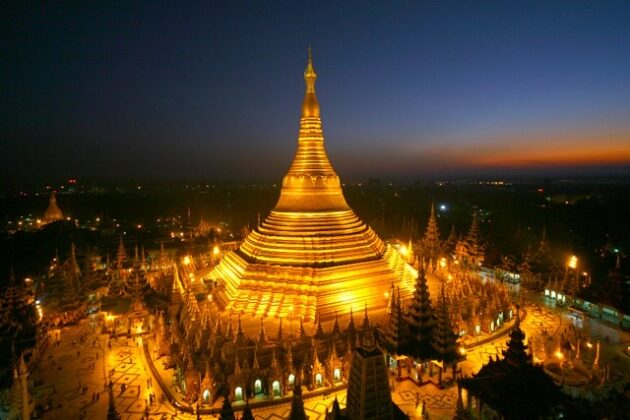
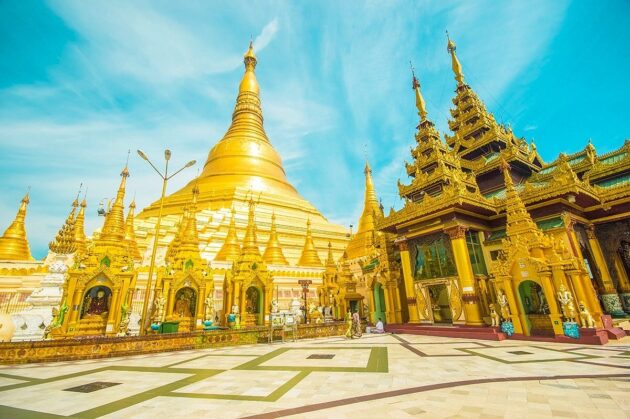
The complex spans a vast terrace with the central stupa surrounded by dozens of smaller stupas, shrines, pavilions, and statues. Eight planetary posts correspond to days of the week (Wednesday split into morning/afternoon), where devotees pour water or offer flowers based on their birth day.
What to See and Experience
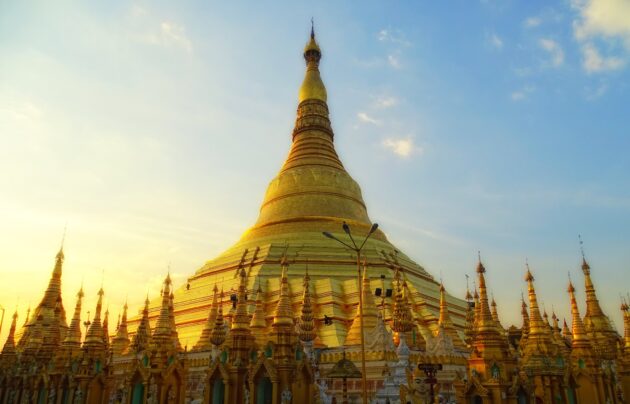
The gleaming main stupa, especially breathtaking as light shifts throughout the day.
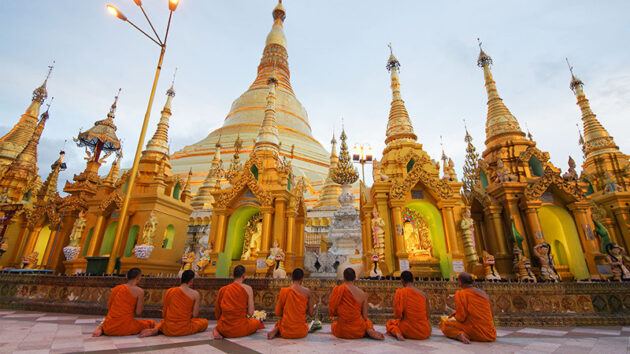
Intricate side shrines with Buddha statues, ornate carvings, and prayer areas.
Guardian chinthe (lion) statues at the four main entrances (north, south, east, west).
Bustling atmosphere of monks, pilgrims, and families circumambulating the platform.
Best Time to Visit
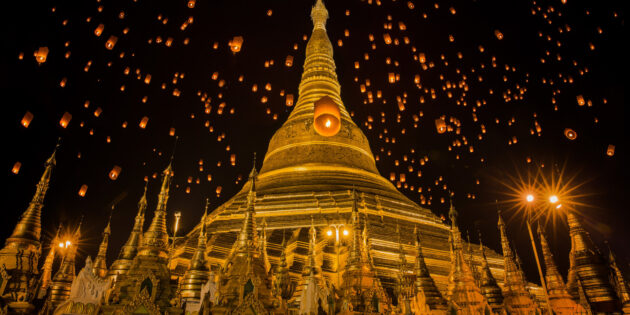
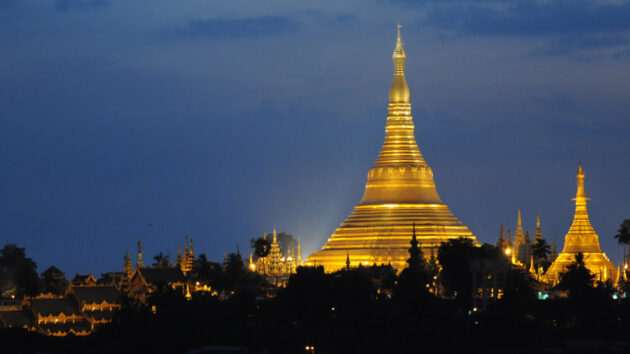
Sunset is the most magical time: the gold glows intensely during golden hour, transitioning to a stunning blue-hour spectacle with lights illuminating the stupa against the darkening sky. Arrive around 4–5 PM to explore in daylight, then stay for the transformation. Sunrise offers a quieter, more serene experience with fewer crowds. Avoid midday heat if possible. Bats often emerge at dusk, adding to the atmosphere.
Best overall season: November to February (cooler, drier weather). April–May can be very hot.
Practical Tips for Visitors
Dress Code: Modest attire is strictly enforced—no shorts, short skirts, sleeveless tops, or tight/revealing clothing. Shoulders and knees must be covered for both men and women. Long trousers and elbow-length sleeves are safest. Some entrances may offer longyi (traditional sarong) rentals if needed.
Footwear: Shoes and socks must be removed at the entrances (leave them at designated areas or carry in a bag). The marble/tiles can get hot in the sun.
Etiquette: Walk clockwise around the stupa. Be respectful—lower your voice, avoid pointing feet at Buddha images, and don’t touch sacred objects without permission. Photography is generally allowed (no flash in some indoor areas).
Getting There: From Yangon Airport (RGN): Taxi or Grab app (~20,000–30,000 Kyats / $5–8, 15–30 minutes). From downtown Yangon: Taxi/Grab (cheap, ~3,000–5,000 Kyats), or local bus (e.g., routes stopping nearby).
Time Needed: 1–3 hours (longer if you want to sit, observe, and absorb the vibe).
Other Tips: Bring water, sunscreen/hat (for outdoor areas), and cash (small bills). ATMs are nearby. The site is wheelchair-friendly in parts but can be crowded.
Final Thoughts
Shwedagon isn’t just a sight—it’s an immersive experience of Myanmar’s deep Buddhist devotion and architectural splendor. Plan your visit for dusk if you can; the memory of the glowing gold against the twilight sky is unforgettable. Safe travels!