
Wat Yai Chai Mongkhon Travel Guide (2026)
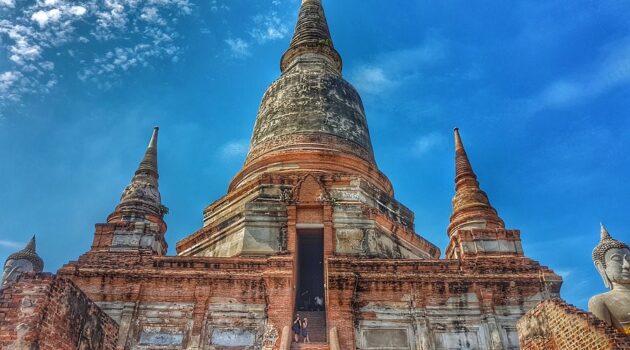
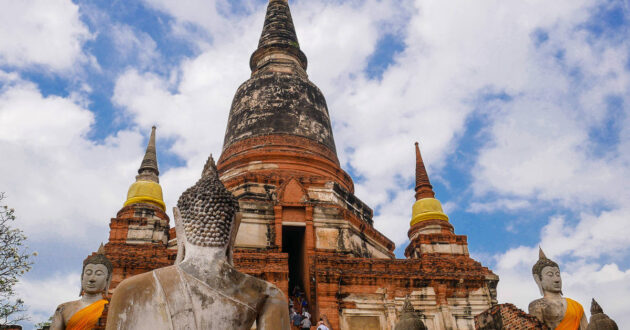
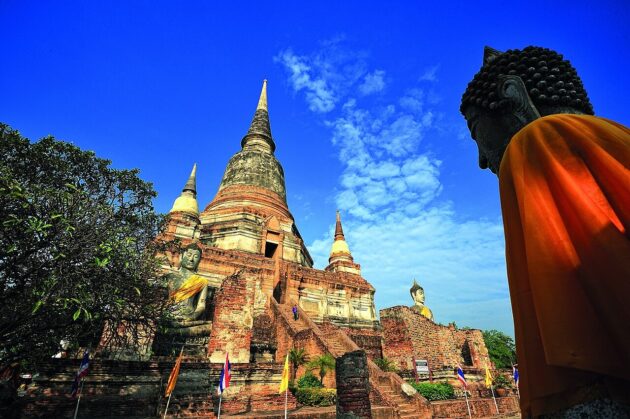
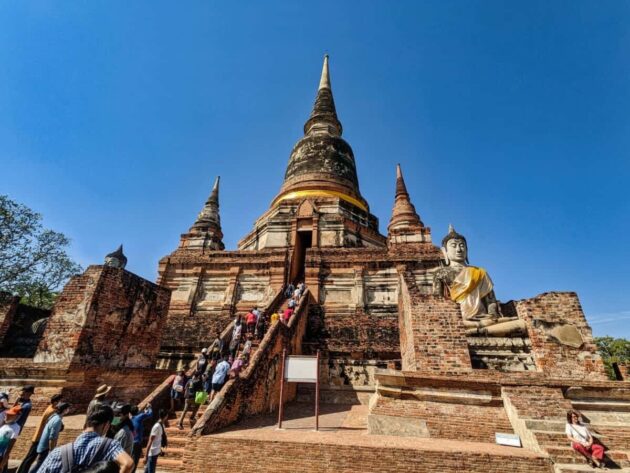
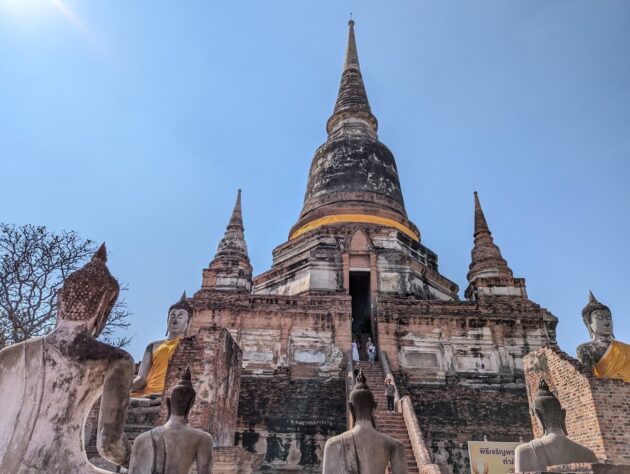
Wat Yai Chai Mongkhon (วัดใหญ่ชัยมงคล), or the “Great Monastery of Auspicious Victory,” is one of the most iconic and photogenic temples in Ayutthaya, Thailand. It is an active Buddhist monastery with impressive historical architecture, including a towering chedi (stupa), rows of seated Buddha statues, and a reclining Buddha.
History
King U-Thong (Ramathibodi I) founded the temple in 1357, originally as Wat Pa Kaeo (Monastery of the Crystal Forest) or Wat Chao Phraya Thai, partly to honor his sons who died of cholera and to house monks returning from Sri Lanka.
King Naresuan the Great later expanded it significantly. In 1592, he built or enlarged the massive central chedi to commemorate his victory over the Burmese in a legendary elephant duel (or after repelling a Burmese invasion). This gave the temple its current name.
The site was damaged during the Burmese sack of Ayutthaya in 1767 and restored in the 20th century (notably in the 1950s). It remains a living temple where monks reside, blending history with active worship.
What to See and Do
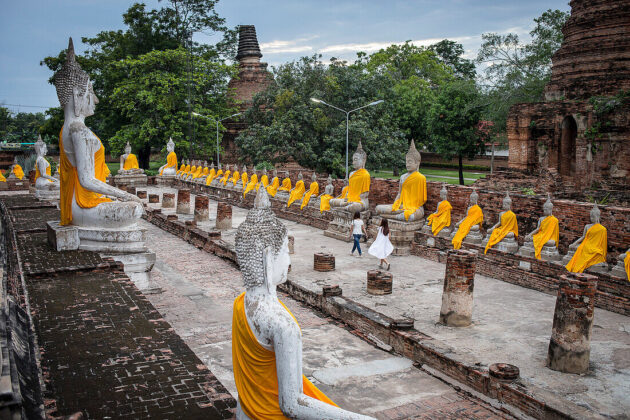
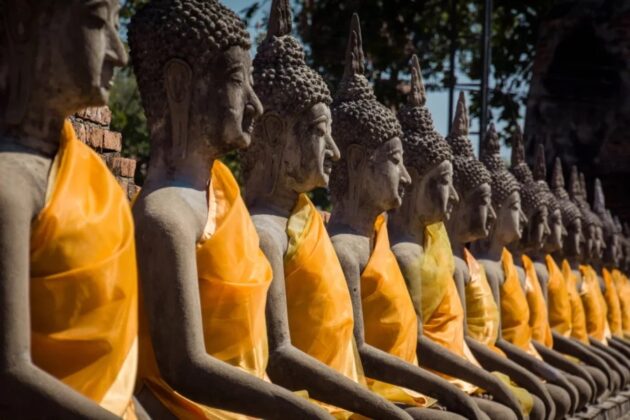
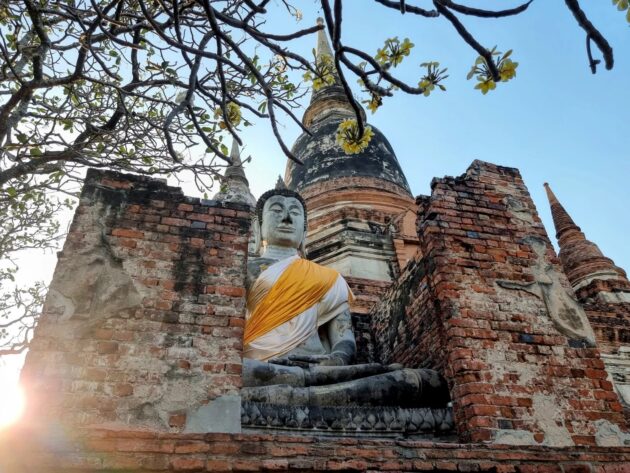
Main Chedi (Phra Chedi Chai Mongkhon): The highlight—a tall, bell-shaped stupa (one of Ayutthaya’s tallest, estimates around 30–62 meters depending on sources). Climb the stairs for panoramic views of the temple grounds and surrounding area. A rectangular gallery surrounds it with rows of seated Buddha statues draped in saffron robes.
Reclining Buddha: A serene white reclining Buddha (built or associated with King Naresuan) near the entrance, often adorned in yellow cloth and facing east.
Other Features: Ordination hall (ubosot), vihara, smaller shrines, well-kept gardens, and additional Buddha images. The atmosphere feels spiritual and less ruined compared to many Ayutthaya sites.
Photography: Golden hour light (early morning or late afternoon) beautifully illuminates the chedi and statues. Respect the statues—do not climb on them.
Plan 1–2 hours to explore thoroughly.
Practical Information
Opening Hours: Daily 8:00 AM – 5:00 PM (some sources note up to 6:00 PM).
Entrance Fee: Around 20 THB for foreigners (free for Thais). Fees can vary slightly by source.
Dress Code: Modest clothing required (shoulders and knees covered). Be respectful as it is an active temple—remove shoes in certain areas, speak quietly, and avoid disruptive behavior.
Best Time to Visit: Early morning (8–10 AM) or late afternoon (3–5 PM) for cooler temperatures, better light, and fewer crowds. Overall best season for Ayutthaya: November–February (cooler and drier). Avoid midday heat.
How to Get There
Location: Southeast of Ayutthaya’s main historical island, in Phai Ling sub-district (about 4–5 km from central sites). GPS: approx. 14.3465° N, 100.5925° E.
From Bangkok: Day trip by train + local transport, bus, or private tour (1.5–2 hours).
Within Ayutthaya: Rent a bicycle (popular and scenic), hire a tuk-tuk (e.g., ~200 THB/hour for a loop), or use a scooter/motorcycle. It pairs well with nearby sites like Wat Phanan Choeng.
Tips for Visitors
Combine with other Ayutthaya ruins for a full day (e.g., via bike or tuk-tuk tour).
Bring water, sunscreen, and a hat—grounds are open and it gets hot.
There are often vendors for drinks/souvenirs nearby; ATMs may be available.
Respect monks and ongoing worship. Donations support the temple.
It is less crowded than some central ruins but popular with tourists—early visits help.
Final Thoughts
This temple offers a perfect mix of history, spirituality, and Instagram-worthy views. It is a must-visit in Ayutthaya for its scale, active atmosphere, and symbolic importance in Thai history. Enjoy your trip!