
Nishiki Market Travel Guide (2026)
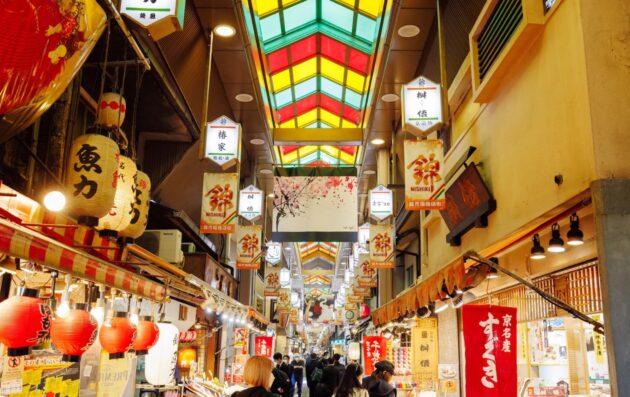
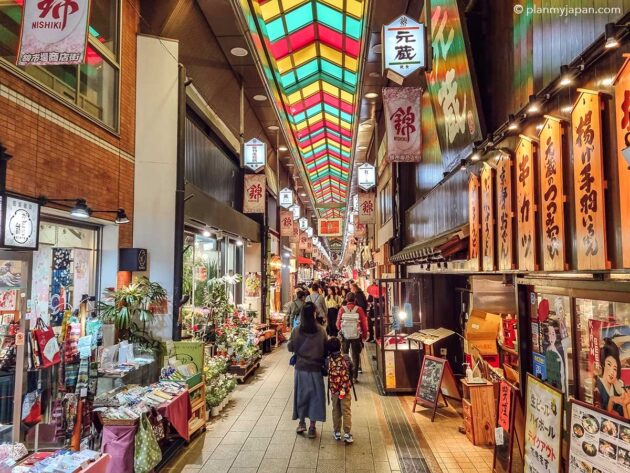
Nishiki Market (錦市場, Nishiki Ichiba), often called “Kyoto’s Kitchen,” is one of the most vibrant and historic food markets in Japan. Stretching about 390 meters (roughly 0.25 miles) through a narrow covered arcade in central Kyoto, it has been a bustling marketplace for over 400 years.
Today, it’s a paradise for food lovers, offering everything from fresh seafood and seasonal vegetables to Kyoto specialties, street snacks, pickles, knives, and traditional crafts. The market perfectly blends old-world charm with modern tourism while still serving local chefs and residents.
Location & How to Get There
Address: Nishikikōji Street, Nakagyo Ward, Kyoto
Closest Stations:
Kyoto Shiyakusho-mae Station (Tozai Line) – Exit 13 or 14 (2–3 minutes walk)
Karasuma-Oike Station (Karasuma & Tozai Lines) – 5 minutes walk
Hankyu Kawaramachi Station – About 10 minutes walk
The market runs parallel to Shijo Street between Teramachi and Takakura streets. It’s very central, making it easy to combine with visits to Gion, Pontocho, or Kiyomizu-dera.
Opening Hours & Best Time to Visit
General Hours: Most shops open around 9:00–10:00 AM and close around 6:00–7:00 PM.
Best Time: Weekday mornings (10 AM – 12 PM) for fewer crowds and freshest produce. Avoid weekends and national holidays if you dislike crowds.
Seasonal Tips: Spring (cherry blossom season) and autumn (fall foliage) are peak tourist times. Early summer is great for fresh produce.
What to Expect & Highlights
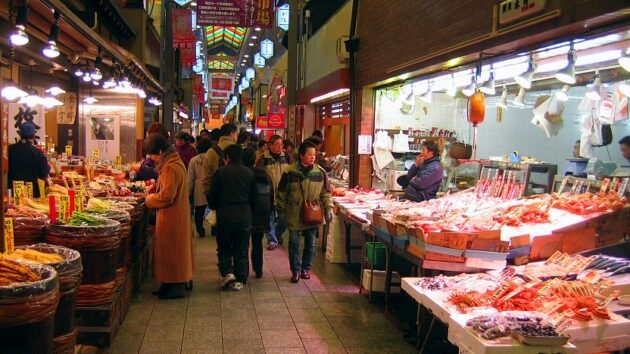
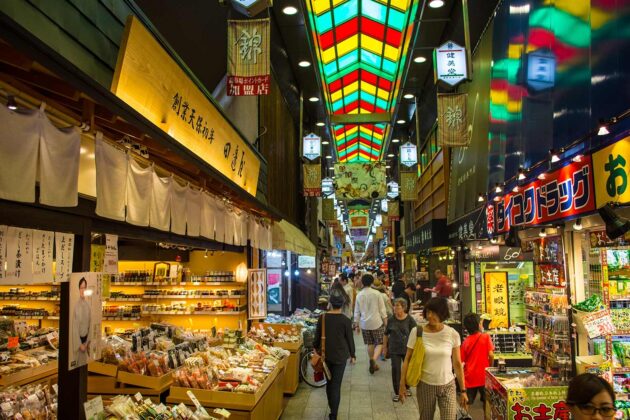
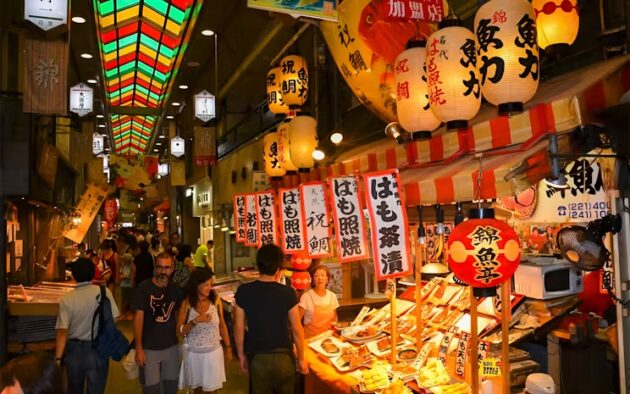
The market is a narrow, covered pedestrian street lined with over 100 shops. Expect a lively atmosphere with vendors calling out, the smell of grilled fish and pickles in the air, and samples being offered.
Must-Try Foods & Shops:
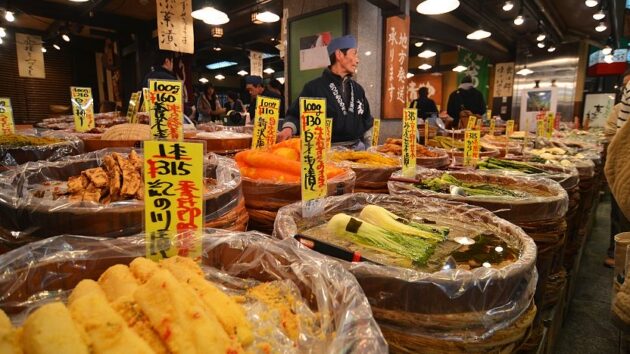
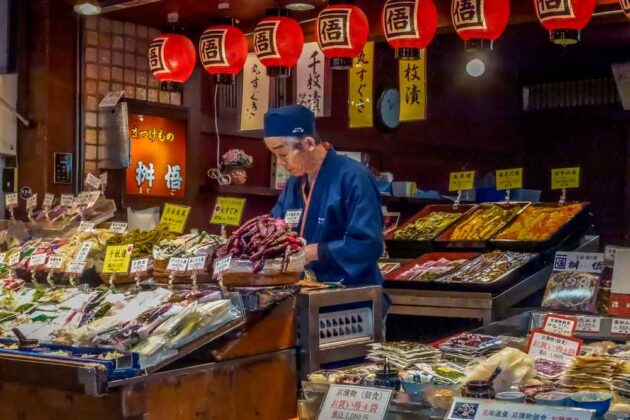
Kyoto Pickles (Tsukemono): Try kyuri asazuke (lightly pickled cucumber) or shiba-zuke (eggplant pickled with red shiso).
Seafood: Fresh sashimi, grilled mackerel, and dried fish. Look for Nishiki Takashimaya area stalls.
Yuba (Tofu Skin): A Kyoto specialty – try it in various forms.
Tamago-yaki (Rolled Omelette): Sweet or savory versions at several stalls.
Sake & Sweets: Sample local sake or matcha sweets.
Knife Shops: Famous for high-quality Japanese knives (e.g., Aritsugu – one of the oldest).
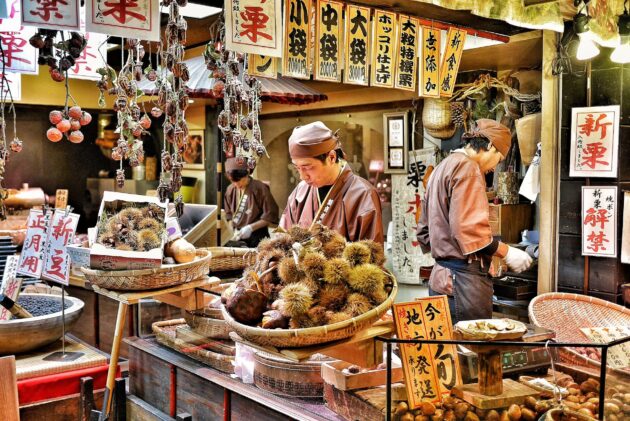
Seasonal Specialties: Matcha in spring/summer, chestnuts and yuzu in autumn/winter.
Popular Spots: Nishiki Warai (for okonomiyaki or savory pancakes); Konnamon (for fresh tofu and yuba); Pickle shops like Nishiki Maeda or Tsujiki; Katsura-ya for mochi and traditional sweets.
Practical Tips
Duration: 1–2 hours is enough for a good wander and snacks, but plan 3+ hours if you want to eat and shop extensively.
Cash is King: Many small stalls only accept cash. Bring plenty of small bills (¥1000 notes).
Eating While Walking: Traditionally frowned upon in Japan, but many stalls now offer small seating or standing counters. Look for “tabe-aruki” (eating while walking) permitted signs.
Language: English menus and signs are common, and many vendors speak basic English.
Souvenirs: Japanese knives; Pickled vegetables (vacuum-packed); Matcha, yuzu kosho, or seasonings; Chopsticks and lacquerware.
Nearby Attractions
Teramachi Shopping Arcade (connected directly to Nishiki)
Kawaramachi Street (department stores, restaurants)
Pontocho Alley (traditional nightlife area, 10–15 min walk)
Gion District (geisha area)
Kyoto Imperial Palace (north of the market)
Pro Tips
Go hungry — the market is designed for grazing.
Bring a reusable bag for purchases.
If you love cooking, buy unusual ingredients and seasonings to take home.
Respect the locals: the market still functions as a working market for Kyoto residents.
Final Thoughts
Nishiki Market is more than just a tourist spot — it’s a living piece of Kyoto’s food culture. Whether you’re a serious foodie or just want to experience the atmosphere, it’s an essential stop in any Kyoto itinerary.
Enjoy your visit to Kyoto’s Kitchen! 🇯🇵