
Fushimi Inari Taisha Travel Guide (2026)
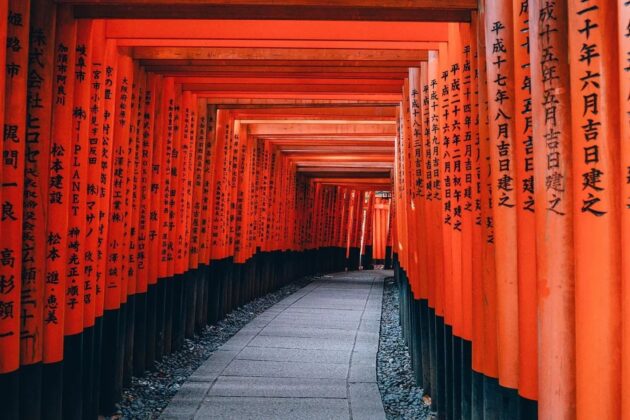
Fushimi Inari Taisha (伏見稲荷大社) is one of Kyoto’s most iconic and photogenic attractions. Famous worldwide for its thousands of vibrant vermilion torii gates winding up Mount Inari, this Shinto shrine is a must-visit for anyone traveling to Kyoto. Dedicated to Inari, the god of rice, agriculture, prosperity, and business success, it attracts millions of visitors annually for its spiritual atmosphere, scenic hiking trails, and cultural significance.
History and Significance
Founded in 711 CE by the Hata clan (an influential immigrant group), Fushimi Inari Taisha predates Kyoto becoming Japan’s capital. It serves as the head shrine for all Inari shrines in Japan—there are said to be around 30,000 nationwide.
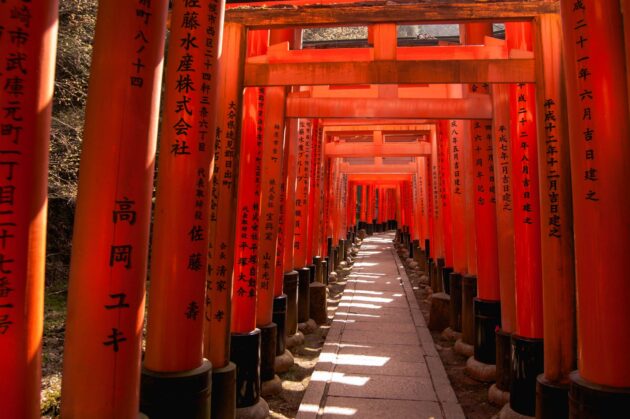
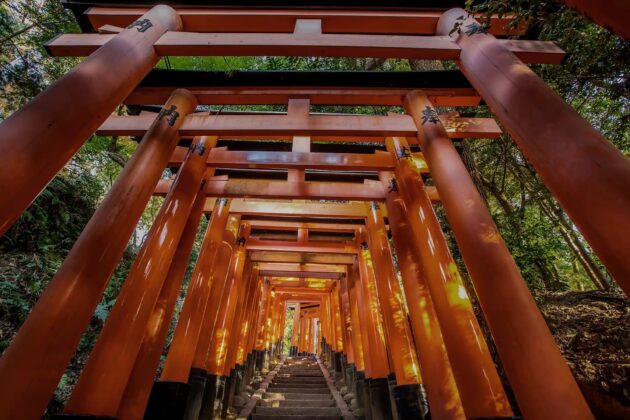
Foxes (kitsune) are Inari’s messengers, and you’ll see many fox statues throughout the grounds, often with red bibs or holding keys/jewels in their mouths. The torii gates (over 10,000 in total) are donations from individuals and companies seeking blessings for prosperity—the donor’s name and date are inscribed on the back of each gate.
How to Get There
From Kyoto Station: Take the JR Nara Line to Inari Station (5 minutes, ~150 yen one way). The shrine entrance is right across the street.
From Gion / Higashiyama area: Take the Keihan Main Line to Fushimi Inari Station (short ride), then walk about 5-7 minutes.
Tip: If you have a JR Pass, the JR Nara Line option is free.
Opening Hours and Fees
Open 24/7, every day of the year.
Free admission — no entrance fee at any point.
Shops, restaurants, and some facilities typically operate from around 9 AM to 5 PM.
Best Time to Visit
Fushimi Inari gets very crowded during the day, especially between 9 AM and 4 PM.
Best for fewer crowds and magic: Early morning (ideally before 7-8 AM, or at sunrise) or after sunset / at night.
Sunrise visits offer beautiful light filtering through the gates with relative peace.
Night visits create an atmospheric, almost mystical experience (though bring a light and stay on marked paths).
Peak seasons: Cherry blossom (late March–early April) and autumn foliage (late November) are beautiful but extremely busy.
What to See and Do
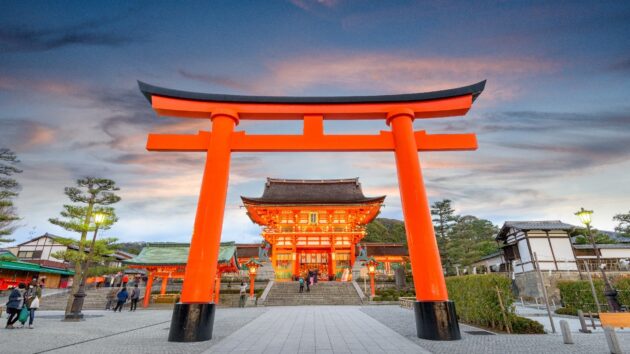
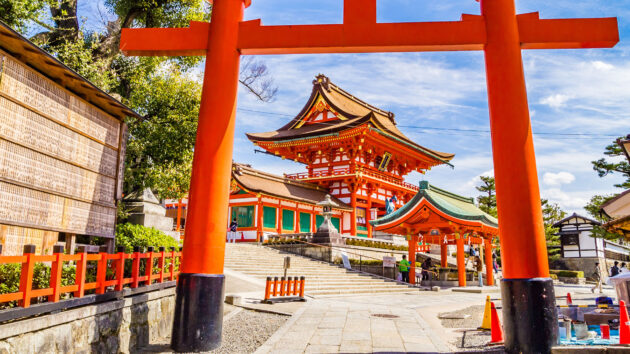
Main Shrine Area: Start at the large Romon Gate (donated by Toyotomi Hideyoshi in 1589). Pay respects at the main hall (honden).
Senbon Torii (Thousand Torii Gates): The famous tunnel of gates begins just behind the main buildings. This is the most photographed section.
Hike to the Summit: Follow the trails up Mount Inari (233m / ~765 ft). The full loop to the top and back is about 4-5 km and takes 1.5–3 hours depending on pace.
Key point: Yotsutsuji Intersection offers great panoramic views over Kyoto.
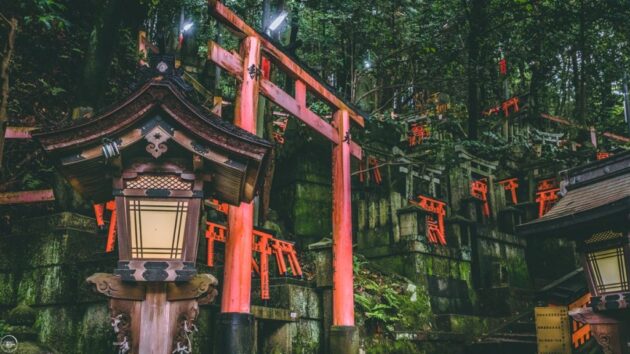
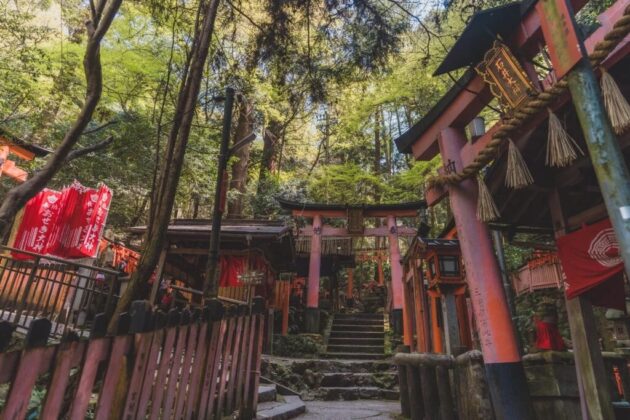
Higher up, the paths become quieter with smaller shrines, stone altars, and forest scenery.
Fox Statues and Sub-Shrines: Look for fox offerings (often inari-zushi or kitsune udon nearby).
Ema Plaques: Write wishes on wooden plaques and hang them.
Fitness Note: There are many stone steps. Wear comfortable walking shoes.
Practical Tips
Time needed: 1 hour for the main area and Senbon Torii; 2–3 hours for a full hike.
Crowd avoidance: Go early, late, or hike beyond the main torii tunnels.
Photography: Wide-angle lenses work well for the gate tunnels. Higher sections have fewer people for cleaner shots.
Etiquette: Bow before entering torii gates. Be respectful and quiet in shrine areas. Do not go off-trail.
What to bring: Water, comfortable shoes, rain jacket (if needed), flashlight/phone light for night visits, and cash for small offerings or food.
Food nearby: Try kitsune udon (fox udon) or inari-zushi (sweet fried tofu pockets) in the area. There are vending machines and restrooms along the trail.
Nearby Attractions
Combine with a visit to the Fushimi Sake District (just a short train or taxi ride away) for brewery tours and tastings, or explore southern Kyoto.
Fushimi Inari Taisha is more than just a photo spot — it’s a living spiritual site and a beautiful natural escape. Whether you visit at dawn with golden light or at dusk in serene quiet, it offers one of Japan’s most memorable experiences. Plan your visit early or late for the best memories!