
Ginkaku-ji (Silver Pavilion) Travel Guide (2026)
Ginkaku-ji, officially known as Jishō-ji (Higashiyama Jishō-ji), is one of Kyoto’s most serene Zen temples. Often called the Silver Pavilion, it contrasts with its glittering counterpart, Kinkaku-ji (Golden Pavilion). While the main pavilion was never actually covered in silver leaf, its understated elegance perfectly embodies the wabi-sabi aesthetic—finding beauty in imperfection and simplicity.
A Brief History
In 1482, Ashikaga Yoshimasa, the 8th shogun of the Muromachi period, built this as his retirement villa, modeling it after his grandfather’s Golden Pavilion. After his death in 1490, it was converted into a Rinzai Zen temple. The site became a cultural hub for the Higashiyama Culture, influencing Japanese arts like the tea ceremony, flower arrangement, Noh theater, and garden design.
What to See and Do
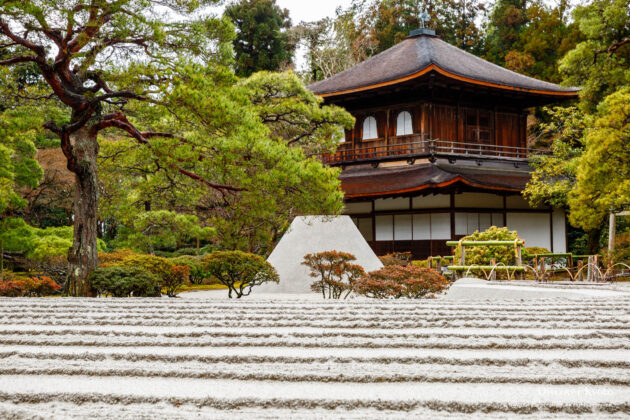
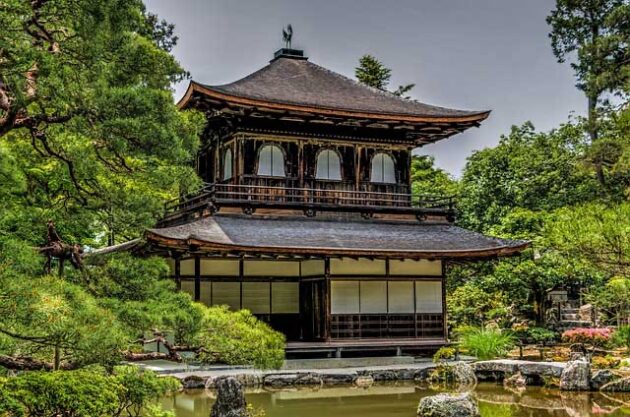
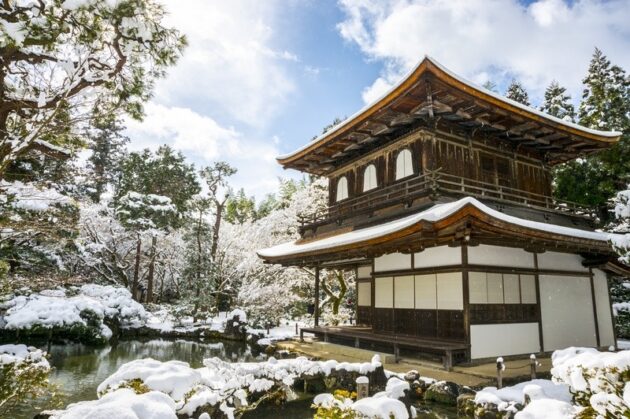
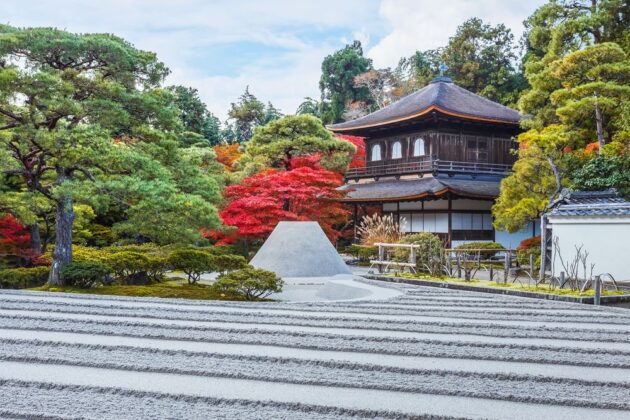
The Silver Pavilion (Kannon-den): The two-story main structure features a graceful thatched roof. The upper floor houses a statue of Kannon (the goddess of mercy).
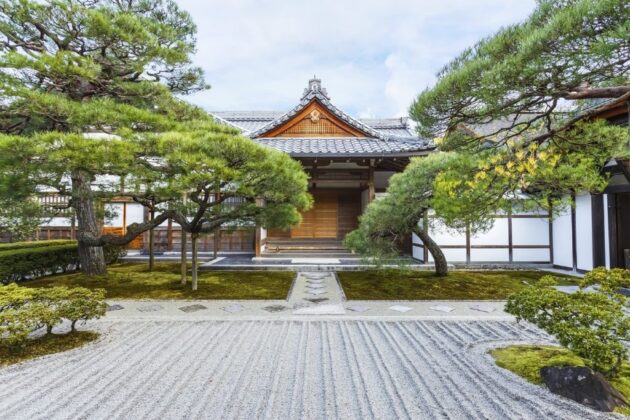
Tōgudō Hall: Contains the oldest surviving tea ceremony room in Japan (Dōjinsai).
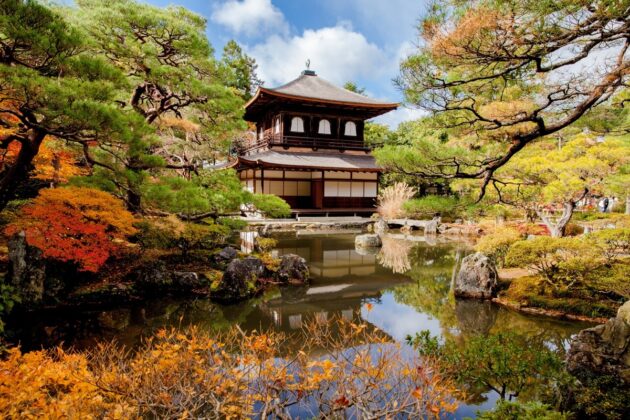
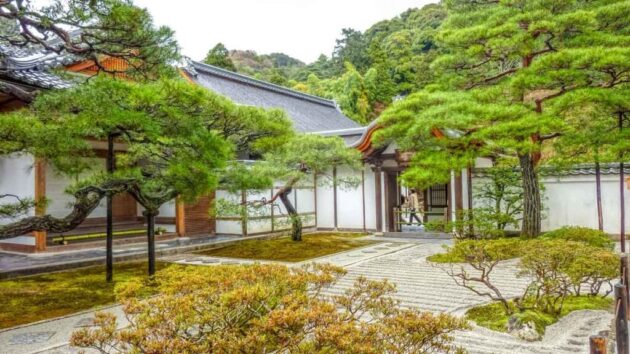
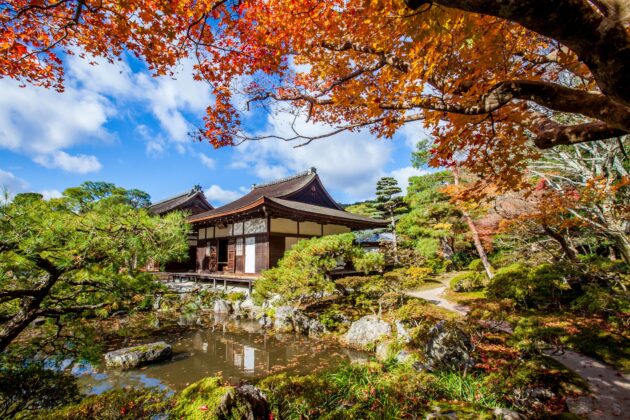
The Gardens: Admire the meticulously raked white sand garden known as the Ginshadan (Sea of Silver Sand), which includes a large sand cone called Kogetsudai. The moss-covered garden around the pond offers a lush, contemplative contrast.
Viewpoint Trail: Climb the path behind the temple for panoramic views over the entire complex and Kyoto city. This is a highlight many visitors miss.
A typical visit lasts 30–60 minutes, though you’ll want extra time to soak in the atmosphere.
Practical Information
Opening Hours: March to November: 8:30 AM – 5:00 PM; December to February: 9:00 AM – 4:30 PM. Open year-round with no regular closing days.
Admission: ¥500 for adults / high school students; ¥300 for elementary and junior high students.
How to Get There
By Bus (easiest from central Kyoto): Take city bus #5 or #17 from Kyoto Station (about 35–40 minutes, ¥230). Get off at Ginkakuji-michi stop and walk 5–10 minutes uphill.
Combined with Philosopher’s Path: Walk the scenic 2km stone path along a cherry tree-lined canal from Nanzen-ji Temple (30–45 minutes). This is highly recommended, especially in spring.
Subway + Bus: Take the Karasuma Line to Imadegawa Station, then transfer to bus 203 or 204.
Best Time to Visit
Early morning (right after opening) or late afternoon (near closing) to avoid crowds and enjoy better light and tranquility.
Spring (late March–early April): Cherry blossoms along the nearby Philosopher’s Path.
Autumn (mid-to-late November): Stunning fall foliage.
Winter: Snowy scenes create a magical, quiet atmosphere.
Weekdays are preferable over weekends and holidays.
Tips for Visitors
Wear comfortable walking shoes — there are some slopes and gravel paths.
Photography is allowed in the gardens, but respect the serene environment and avoid flash or tripods in restricted areas.
No food or drinks inside the temple grounds. There are cafes and shops near the entrance and along the Philosopher’s Path.
Combine with nearby attractions: Philosopher’s Path, Honen-in Temple, Nanzen-ji Temple, and Eikando Temple for a full half-day or full-day Higashiyama exploration.
Consider purchasing a ticket as a keepsake — they are often designed like traditional talismans.
Final Thoughts
Ginkaku-ji offers a peaceful, introspective experience that captures the essence of Zen and traditional Japanese aesthetics. Whether you visit under blooming cherry blossoms, vibrant autumn leaves, or a dusting of snow, its understated beauty leaves a lasting impression.
Enjoy your visit to Kyoto! 🇯🇵