
Senso-ji Temple (Sensō-ji) Travel Guide (2026)
Senso-ji, also known as Asakusa Kannon Temple, is Tokyo’s oldest Buddhist temple and one of its most iconic landmarks. Located in the historic Asakusa district, it offers a vibrant blend of ancient spirituality, traditional Japanese culture, bustling shopping streets, and delicious street food. With over 30 million visitors annually, it remains a must-visit for first-time travelers to Tokyo.
Brief History
According to legend, in 628 AD, two fishermen brothers discovered a statue of Kannon (the bodhisattva of compassion) in the Sumida River. Despite trying to return it, the statue kept coming back, so the village headman built a temple to enshrine it. The temple was formally completed in 645 AD, making it Tokyo’s oldest.
The current structures are post-World War II reconstructions (the main hall was rebuilt in the 1950s), but they faithfully preserve the original grandeur. The temple has been rebuilt multiple times throughout history due to fires, earthquakes, and wars.
How to Get There
Senso-ji is extremely accessible and sits just a 5-minute walk from Asakusa Station.
Main access lines: Tokyo Metro Ginza Line, Toei Asakusa Line, Tobu Skytree Line, and Tsukuba Express.
From Tokyo Station: Take JR Yamanote Line to Kanda (2 min), then Ginza Line to Asakusa (10-11 min). Total: ~15-20 minutes.
From Shinjuku: ~20-25 minutes via subway transfers.
From Shibuya: Around 30 minutes.
Pro tip: Use Exit 1 (Ginza Line) or A4/A5 (Asakusa Line) for the shortest walk to Kaminarimon Gate.
What to See and Do
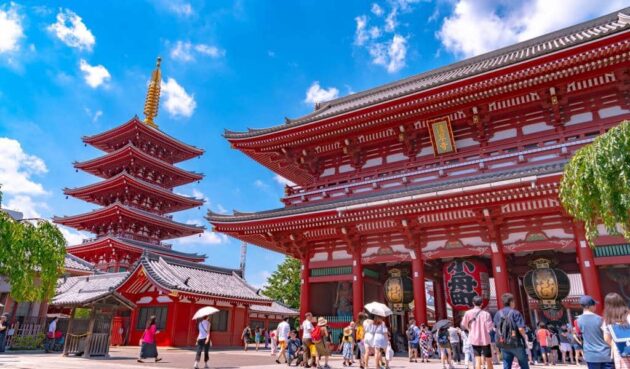
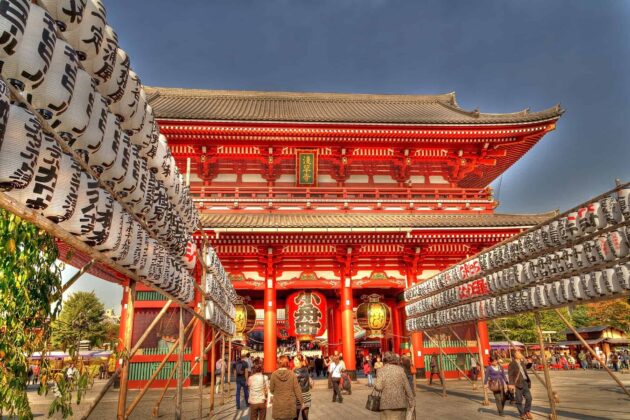
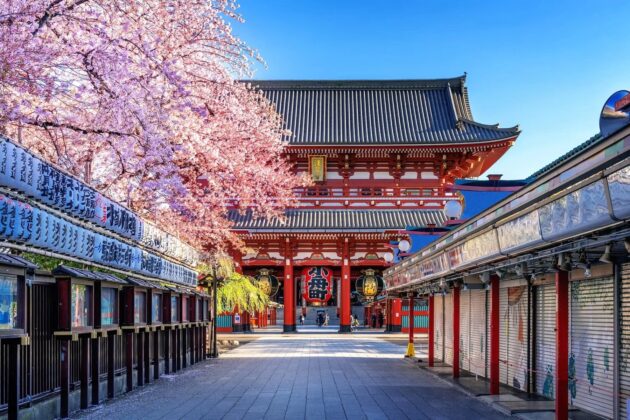
Kaminarimon (Thunder Gate): The iconic red entrance gate with a massive lantern and statues of Fujin (wind god) and Raijin (thunder god). This is the classic photo spot.
Nakamise-dori Shopping Street: A 250-meter-long pedestrian street lined with over 50 traditional shops selling souvenirs, snacks, crafts, and sweets. It’s lively and fun to explore.
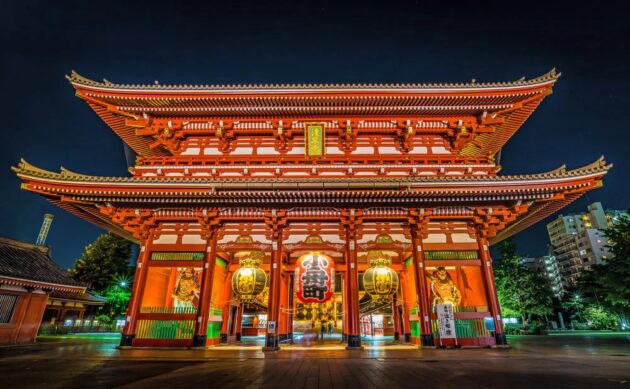
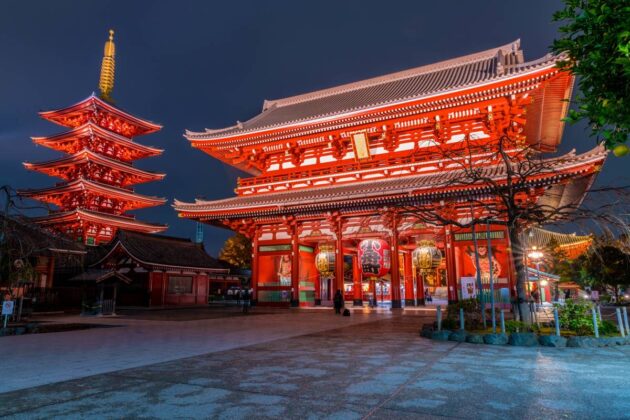
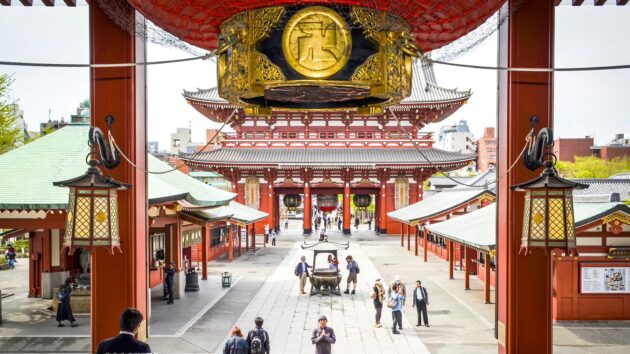
Hozomon Gate: The second major gate, guarded by fierce Niō statues. It leads to the inner temple grounds.
Main Hall (Kannondo): Dedicated to Kannon. Visitors can offer incense, toss coins, and pray. The interior is ornate and atmospheric.
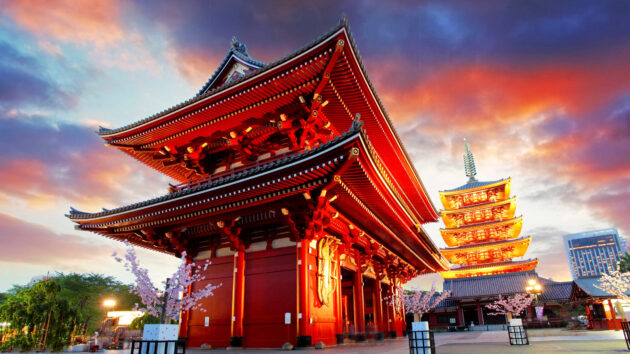
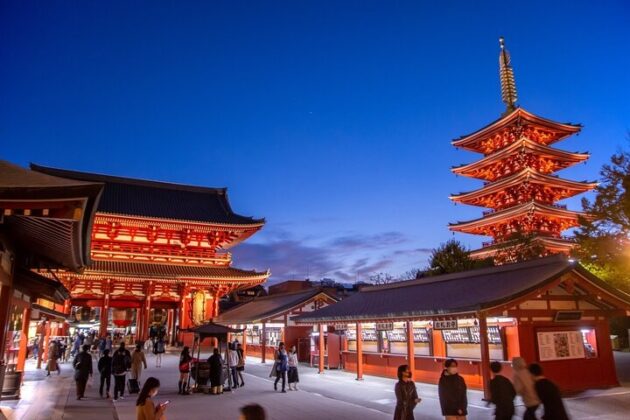
Five-Story Pagoda: A striking red pagoda (rebuilt in 1973), one of the tallest in Tokyo at about 53 meters.
Other Highlights: Asakusa Shrine (adjacent Shinto shrine). Omikuji (fortune-telling) slips. Incense burner (for purifying smoke). Denboin Garden (if open).
Temple Grounds: Open 24/7. Main Hall typically 6:00 AM – 5:00 PM (6:30 AM start in winter). Admission is free.
Best Time to Visit
To avoid crowds: Early morning (before 9 AM) or evening (after 4-5 PM, especially for beautiful night illuminations).
Best seasons: Spring (cherry blossoms) and autumn (fall foliage).
Festivals: Sanja Matsuri (May) is the biggest and most energetic.
Midday and weekends are very crowded.
Practical Tips
Dress comfortably — Expect walking on varied surfaces.
Etiquette: Be respectful. Follow Buddhist customs when praying (e.g., bow, clap or offer incense quietly).
Money: Bring small change for offerings, omikuji, and street food.
Photography: Allowed in most areas, but be mindful inside the main hall.
Crowds: It’s touristy — go early for peaceful photos.
Language: English signs and pamphlets are available.
Food and Shopping Recommendations
Try Ningyo-yaki (sweet filled cakes), Taiyaki, Dango, or Tempura along Nakamise.
Nearby: Explore Asakusa for sushi, ramen, or traditional Japanese sweets.
Souvenirs: Kimono accessories, fans, snacks, and lucky charms.
Nearby Attractions
Sumida River — Scenic walks and boat cruises.
Tokyo Skytree — About 15-20 minutes on foot (great views).
Kappabashi Kitchen Town — For chef tools and plastic food samples.
Akihabara or Ueno — Easy day-trip extensions.
Final Thoughs
Senso-ji perfectly captures Tokyo’s unique contrast between old and new. Spend at least 1-3 hours here, and consider returning in the evening for a different atmosphere. It’s a wonderful introduction to Japanese temple culture and the soul of old Tokyo. Enjoy your visit!