
War Remnants Museum Travel Guide (2026)
The War Remnants Museum (Bảo Tàng Chứng Tích Chiến Tranh) in Ho Chi Minh City (formerly Saigon) is one of Vietnam’s most visited and emotionally powerful historical sites. It documents the Vietnam War—referred to locally as the “American War”—primarily from the Vietnamese perspective, focusing on the human cost, atrocities, chemical warfare, and long-term consequences.
Is It Worth Visiting?
Yes, for most travelers interested in history—it’s inexpensive, centrally located, and provides a sobering, firsthand look at the war’s human toll that few other sites match. Many describe it as impactful or even cathartic, though it’s emotionally heavy and not a “fun” attraction. If you’re short on time or prefer lighter sightseeing, the Reunification Palace offers a related but less graphic complement.
How to Get There
On foot: Easy from the Reunification Palace (Independence Palace), Notre-Dame Cathedral, or Central Post Office (10–20 minutes).
Grab/Taxi: Cheap and convenient (use the Grab app for ride-hailing—widely used in Vietnam). Avoid unofficial taxis loitering outside.
Public transport: Several bus routes serve the area.
From the airport or farther districts, a Grab ride is straightforward and inexpensive.
It pairs well with a morning or afternoon walking itinerary covering nearby colonial-era and historical sites.
What to Expect: Exhibits and Experience
The museum spans an outdoor courtyard and multiple indoor floors (typically three levels). Highlights include:
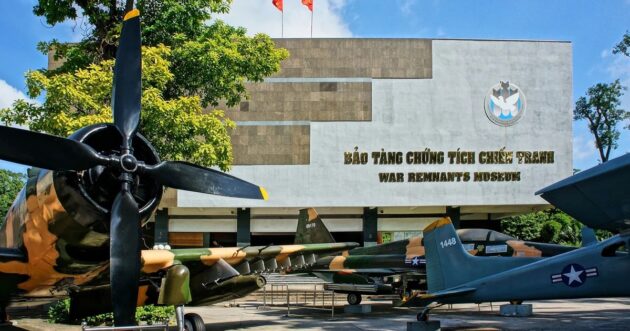
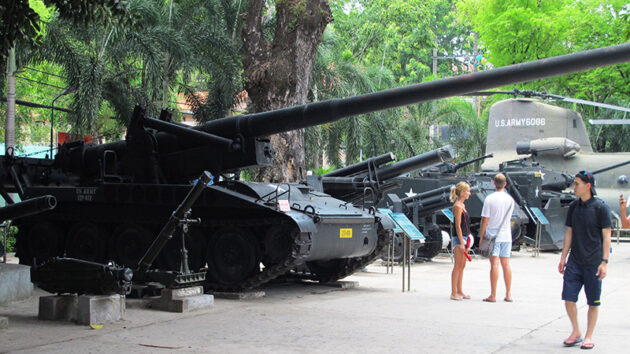
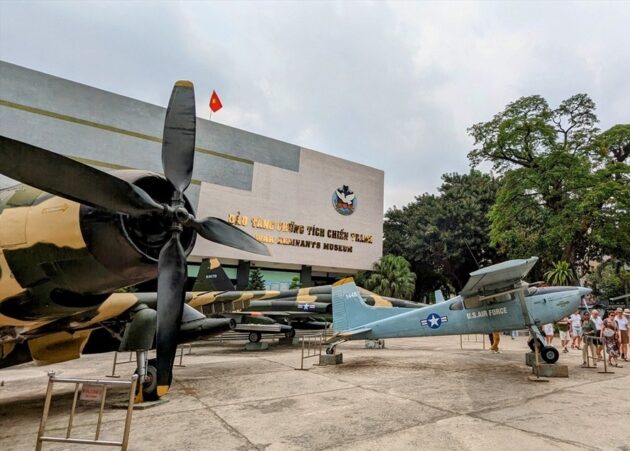
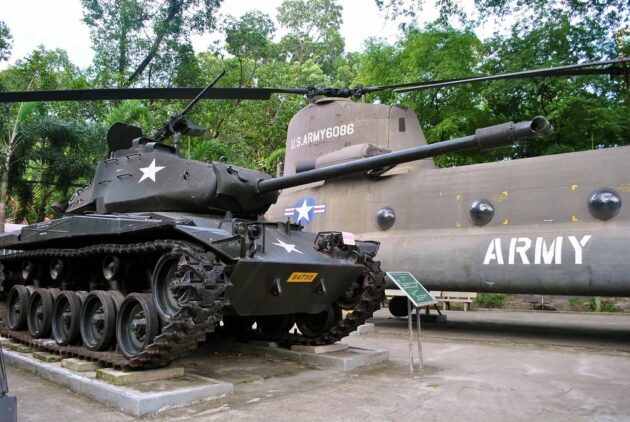
Outdoor area: Captured or abandoned U.S. military hardware, including helicopters (e.g., UH-1 Huey), fighter jets, tanks (M48 Patton), artillery, and bombs.
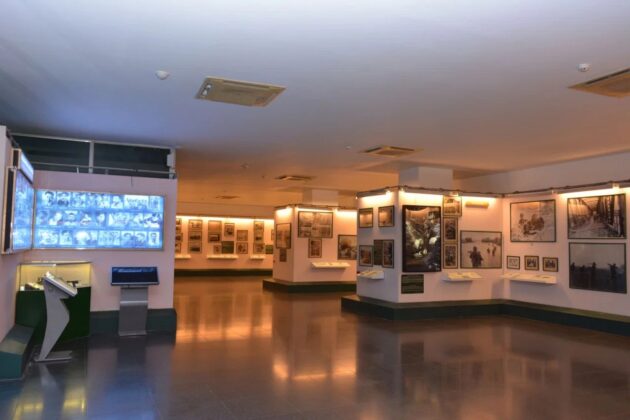
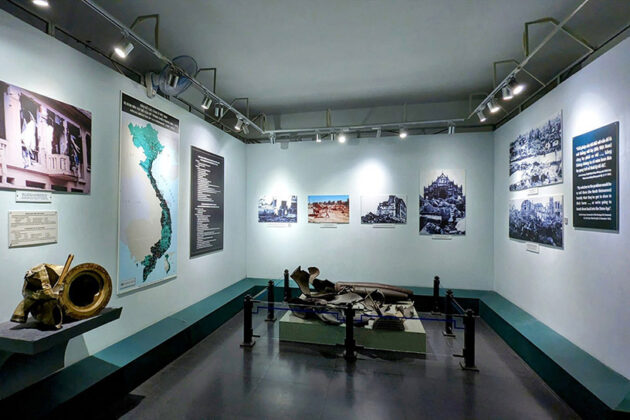
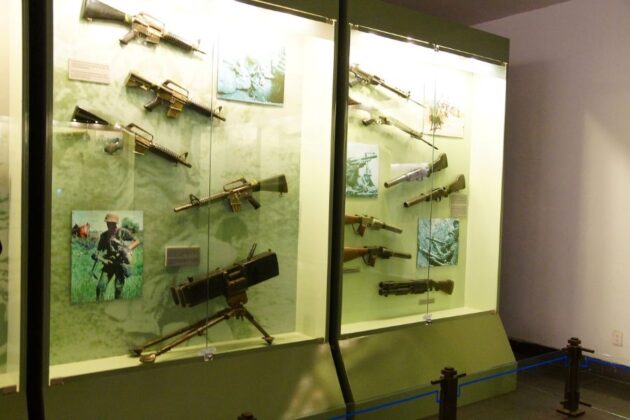
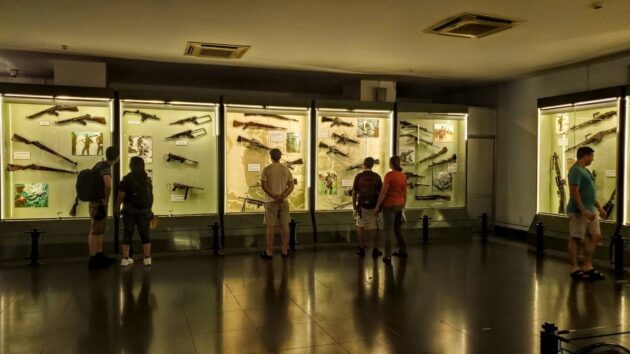
Indoor exhibits: Over 1,500 artifacts, photos, documents, and films across thematic displays. Key sections cover: War crimes and atrocities (including the My Lai Massacre). Effects of chemical defoliants like Agent Orange (graphic images of birth defects and long-term health impacts). Napalm and phosphorus bomb effects.
“Requiem” photo exhibition: Powerful war photography by international (and Vietnamese) photojournalists killed in action. Tiger cages (reproductions of harsh prison conditions for political prisoners). Global anti-war movements and historical context from the French colonial period through the war years.
Captions are in Vietnamese, English, and sometimes other languages. The tone is unapologetically Vietnamese, emphasizing suffering caused by “aggression” and highlighting Vietnamese resilience. Many visitors find it raw, moving, and educational, though some note it presents a one-sided narrative.
Important Warnings: Content is highly graphic (disturbing photos of injuries, deformed children, massacres, and war horrors). It is not recommended for young children or those sensitive to intense imagery. Some areas (e.g., Agent Orange rooms) can be especially upsetting. No air conditioning in some parts—can get hot and humid; it may also be noisy with crowds. Photography is generally allowed, but be respectful.
Practical Information
Address: 28 Võ Văn Tần Street, Ward 6, District 3, Ho Chi Minh City (corner of Võ Văn Tần and Lê Quý Đôn streets).
Opening Hours: 7:30 AM to 5:30 PM daily, including weekends and public holidays. Last ticket sales around 5:00 PM.
Entrance Fees (as of recent updates): Adults: 40,000 VND (~$1.50–1.60 USD); Children 6–15/16: 15,000–20,000 VND; Under 6: Free. Payment is typically cash in VND (some reports note card acceptance, but bring cash to be safe). Student discounts may apply with ID.
Time Needed: 1.5–3 hours, depending on how much you read. Plan for at least 2 hours for a thoughtful visit.
Tips for Your Visit
Best time: Arrive early (right after opening) or later in the afternoon to avoid peak crowds and the midday heat. Weekends and holidays can be busier.
Wear comfortable clothes and shoes; bring water (limited shade outdoors initially).
Take your time reading captions for context—rushing diminishes the impact.
Consider a guided tour if you want deeper historical explanations or to combine with sites like the Reunification Palace or Cu Chi Tunnels (many full-day tours include entrance fees and transport).
Approach with an open mind: It offers a perspective that may differ from Western accounts of the war.
Nearby Attractions
Reunification Palace (short walk).
Saigon Notre-Dame Cathedral and Central Post Office.
Tao Dan Park or other District 1 spots.
Final Thoughts
The museum is a member of the International Council of Museums (ICOM) and attracts hundreds of thousands of visitors yearly. It remains a key stop for understanding modern Vietnamese history. Check the official site or recent traveler updates closer to your trip for any minor changes in hours or fees. Safe travels!