
Mekong Delta Travel Guide (2026)
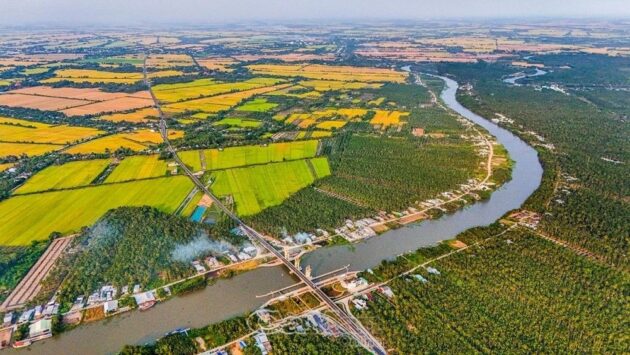
The Mekong Delta (known locally as Đồng Bằng Sông Cửu Long or “Nine Dragon River Delta”) is Vietnam’s fertile southwestern region, often called the country’s “rice bowl.” It spans over 40,000 km² across 13 provinces, featuring a vast network of rivers, canals, rice paddies, fruit orchards, mangrove forests, and vibrant floating markets. Life here revolves around the water, with stilt houses, sampan boats, and a relaxed pace that contrasts sharply with the bustle of Ho Chi Minh City (Saigon), just a short trip away.
Best Time to Visit
The dry season (November to April, peaking December–February) offers the most comfortable weather: sunny days, lower humidity, temperatures around 25–32°C (77–90°F), and calmer rivers ideal for boat trips and photography. This is high season with more visitors but still feels peaceful compared to big cities.
The rainy season (May–October) brings lush green landscapes, fewer crowds, and lower prices, but expect frequent (often short) showers, higher humidity, and potentially higher water levels that can enhance the “floating” feel of markets. August–November (high water) can be vibrant if you don’t mind rain.
How to Get There
Most travelers start from Ho Chi Minh City (HCMC):
Bus: Cheapest and straightforward. Frequent services (e.g., Futa, Thanh Buoi) from Mien Tay (Western) Bus Station to My Tho (~1.5–2 hours), Ben Tre, Vinh Long, or Can Tho (~3–4 hours). Tickets ~$7–14 USD.
Private car/taxi or van: Comfortable for groups or day trips (~$65–100+ USD depending on distance/vehicle). Door-to-door and flexible stops.
Speedboat or tour boat: Scenic option to nearby spots like My Tho/Ben Tre.
Flight: Quick to Can Tho Airport (~45–60 minutes from HCMC).
Independent travel is easy with buses or Grab (ride-hailing app), but many opt for guided day tours or multi-day packages from HCMC for convenience, especially first-timers.
Top Places to Visit
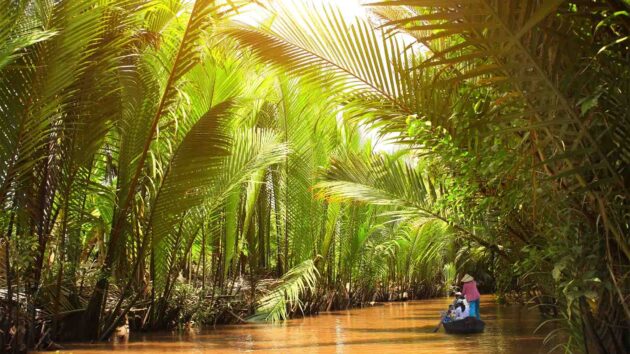
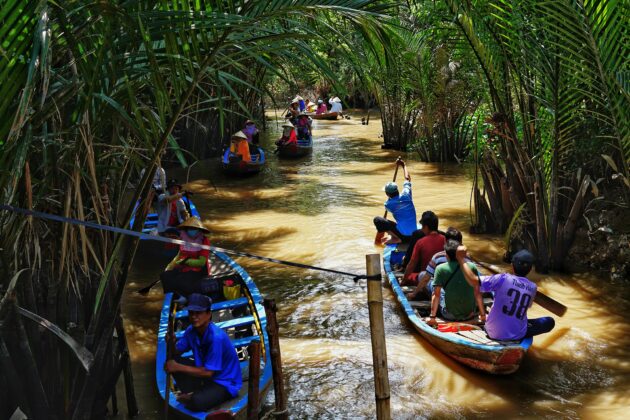
Ben Tre (“Land of Coconuts”): Serene narrow canals shaded by palm trees, coconut candy workshops, brick factories, fruit orchards, and peaceful rowing boat rides. Great for authentic rural vibes and cycling. Ideal for shorter stays or day trips.
Can Tho: The Delta’s bustling “capital” and best base for floating markets. Stroll the Ninh Kieu riverside, visit Ong Pagoda, and enjoy city amenities with easy access to countryside.
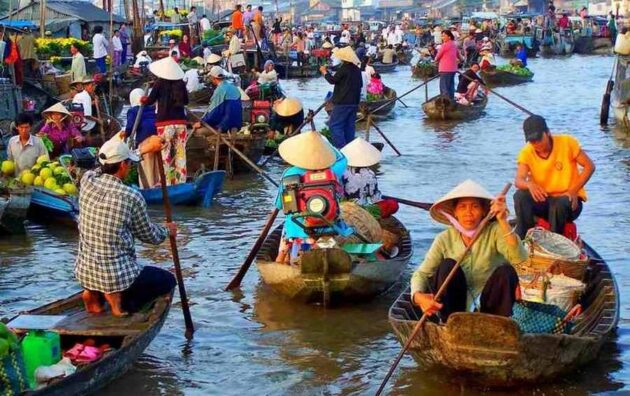
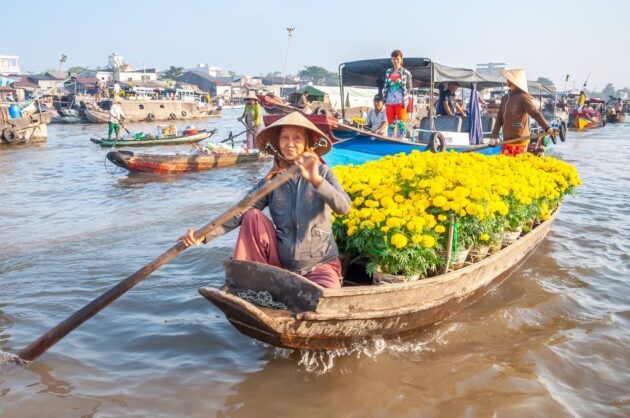
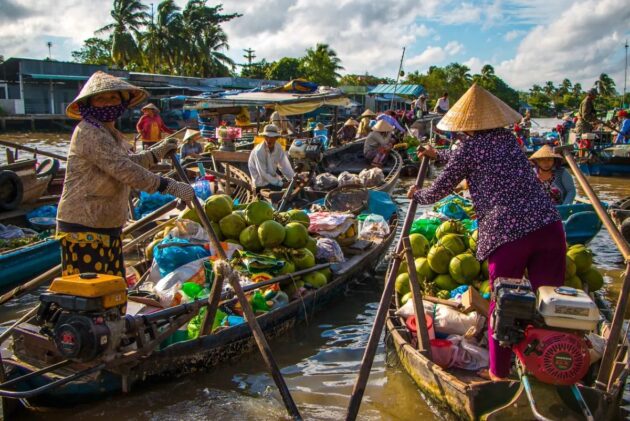
Cai Rang Floating Market (near Can Tho): The largest and most famous. Arrive at dawn (5–7 AM) to see dozens of boats trading fruits, vegetables, and goods. Less crowded options like Phong Dien exist nearby.
My Tho & Vinh Long: Gateway areas with islands (Dragon, Unicorn, Phoenix, Tortoise), pagodas (like Vinh Trang), orchards, and homestays. Good for classic boat tours.
Others worth considering: Tra Vinh (Khmer temples and lakes), Chau Doc (near Cambodia border, more remote), or bird sanctuaries like Tra Su.
Top Things to Do
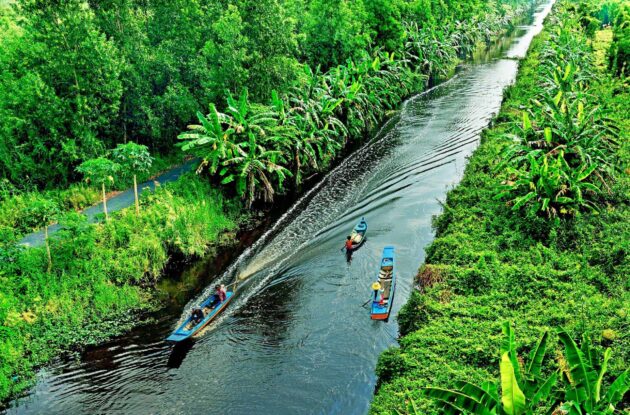
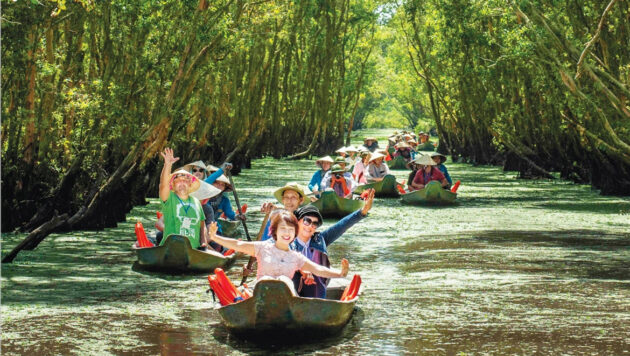
Boat rides: Motorized boats on main rivers + traditional sampan (rowing) boats through narrow canals— the highlight for most visitors.
Explore floating markets at sunrise.
Cycle or walk through villages, rice fields, and orchards; sample fresh fruit (pineapple, durian, rambutan, etc.) straight from the garden.
Visit workshops: Coconut processing, candy-making, rice paper/puff production, or brick kilns.
Homestay overnight: Sleep in a local home or eco-lodge for home-cooked meals, cycling, and immersion in daily life.
Cultural stops: Pagodas, temples, and bird sanctuaries.
Relax: Enjoy riverside sunsets, fruit buffets, or a multi-day river cruise.
What to Eat
The Delta’s cuisine emphasizes fresh, abundant produce, river fish, and coconut. Must-tries:
Hu Tieu My Tho: Noodle soup with pork, shrimp, and clear broth.
Banh Xeo: Crispy savory pancake with shrimp, pork, and bean sprouts.
Bun Ca or Bun Mam: Fish-based noodle soups.
Fresh spring rolls, grilled items, and fermented fish hotpot (Lau Mam).
Floating market eats: Noodle soups or fruit from boat vendors.
Coconut-based sweets and drinks everywhere in Ben Tre.
Street food and homestay meals are highlights—opt for fresh and cooked items; drink bottled water.
Practical Tips
Accommodation: Homestays or farm stays for authenticity (peaceful, affordable, meals included). Hotels in Can Tho for convenience. Book ahead in peak dry season.
Getting around locally: Boats are essential; use buses, Grab, or xe om (motorbike taxis) on land. Traffic is chaotic—drive defensively if renting.
What to pack: Light clothes, sunscreen, hat, insect repellent, rain poncho (year-round possibility), comfortable shoes for walking/cycling, cash (ATMs available but scarcer in villages).
Safety: Generally very safe for tourists. Watch for petty scams on tours, stick to reputable operators for boats, and avoid swimming in unknown waters. Standard precautions apply (drink bottled water, watch for mosquitoes).
Sustainability: Support local homestays and small operators; minimize single-use plastic; respect river communities.
Final Thoughts
The Mekong Delta rewards a slower pace—rent a bike, chat with locals, and let the river set the rhythm. It’s one of Vietnam’s most photogenic and culturally rich areas.