
Royal Palace of Cambodia Travel Guide (2026)
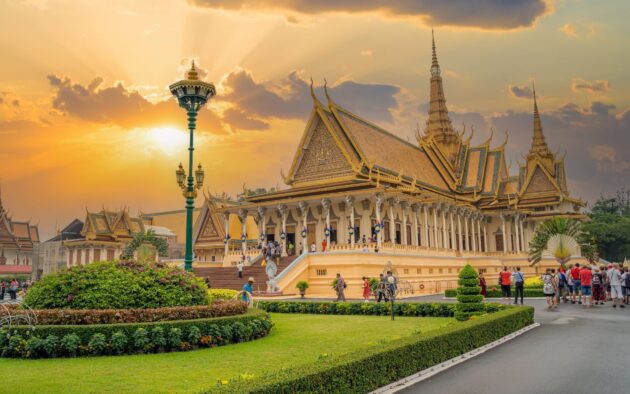
The Royal Palace of Cambodia (Preah Barom Reacheaveang Chaktomuk Serey Mongkol) in Phnom Penh is one of the country’s most iconic landmarks and a highlight for visitors to the capital. This sprawling complex serves as the official residence of King Norodom Sihamoni and features stunning Khmer architecture with French colonial and Thai influences.
History and Overview
Construction began in 1866 under King Norodom I, who moved the royal capital from Oudong to Phnom Penh. The original structures were largely rebuilt or modified between 1912 and the 1930s, with further restorations over the decades. The palace complex covers several hectares along the western bank of the Tonle Sap and Mekong rivers’ confluence (known as Chaktomuk). It includes over 50 buildings divided into compounds: the central area with the Throne Hall, the southern Silver Pagoda compound, the northern Khemarin Palace (the King’s private residence, closed to the public), and western private areas.
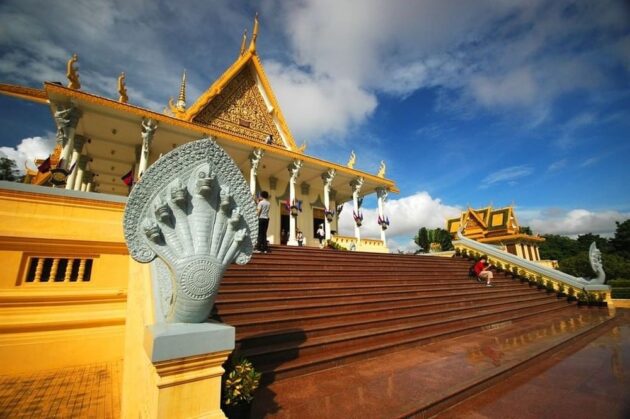
The site symbolizes Cambodia’s monarchy and cultural heritage, with ornate gilded spires, intricate carvings, manicured gardens, and murals depicting epic stories like the Ramayana.
What to See
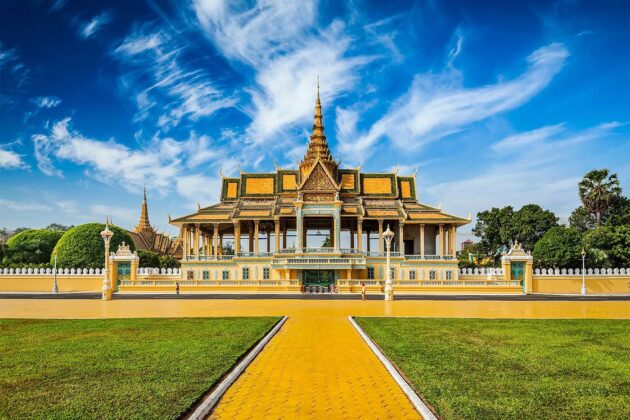
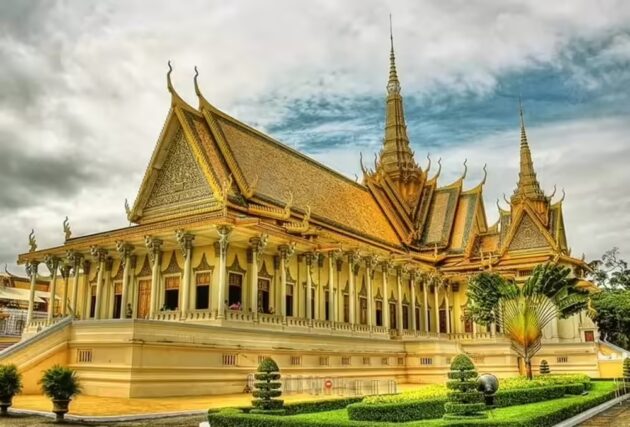
Throne Hall (Preah Tineang Tevea Vinichhay): The grand central building used for coronations and official ceremonies. It features a towering spire with a four-faced Brahma figure and opulent interiors.
Silver Pagoda (Wat Preah Keo Morakot or Temple of the Emerald Buddha): A major draw within the complex. Its floor consists of over 5,000 silver tiles weighing more than 6 tons. Inside, you’ll find priceless Buddhist artifacts, including a diamond-adorned Maitreya Buddha and a small emerald Buddha statue. The surrounding courtyard has beautiful murals.
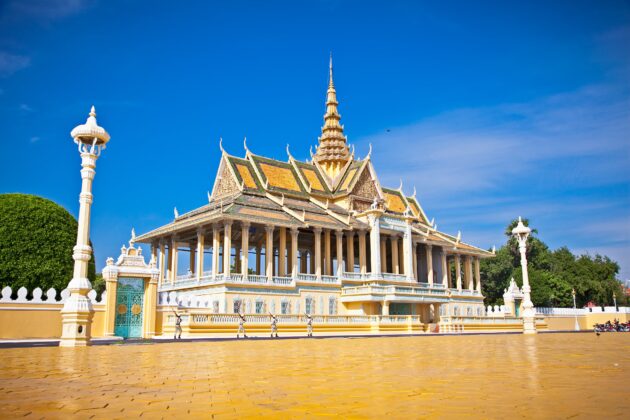
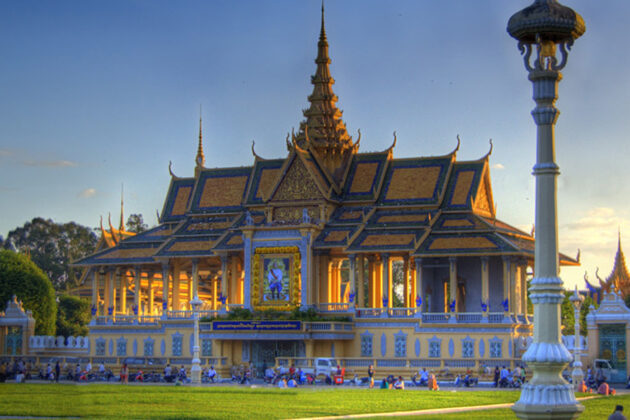
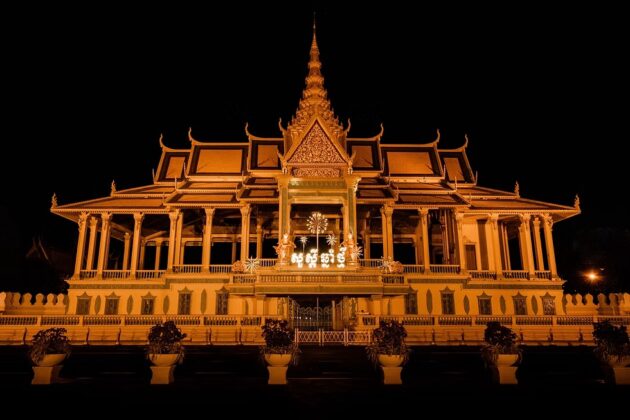
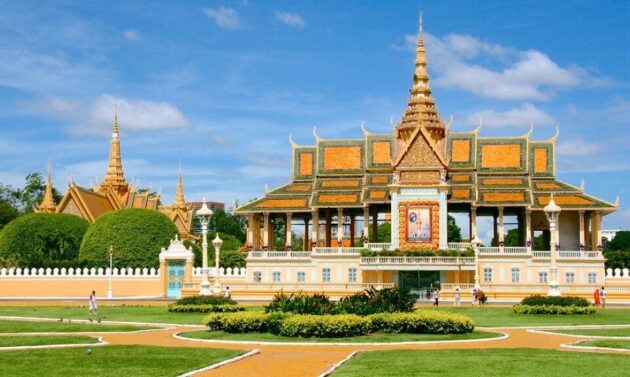
Other features: Chan Chhaya Pavilion (used for royal performances), stupas (chedi), royal busts, exhibition halls with royal gifts and artifacts, and lush gardens. Note that many areas (including the King’s residence) remain off-limits to preserve privacy and sanctity.
The architecture blends traditional Khmer elements (curved roofs, prangs) with European touches from the French protectorate era.
Practical Information
Opening Hours: 8:00 AM – 11:00 AM and 2:00 PM – 5:00 PM daily (ticket office closes earlier, e.g., 10:30 AM and 4:30 PM). Closed during certain royal ceremonies or national holidays—check locally if possible.
Entry Fee: $10 USD per adult (cash only; children often discounted or free under certain ages). Locals pay significantly less (~$1). No advance tickets needed—buy at the entrance.
Guided Tours: Optional official guides available at the entrance for around $10 per group/hour. Self-guided is common; no official audio guides mentioned in most sources.
Dress Code (Strictly Enforced): Shoulders and knees must be fully covered. No tank tops, short shorts/skirts, cleavage, or revealing clothing. Hats and shoes often removed in buildings. Sarongs or t-shirts may be available for purchase/rent at the entrance if needed, but it’s best to come prepared (long pants/skirt + sleeves). This applies to both men and women.
Other Rules: Small bags only; photography restrictions may apply inside certain buildings (check on-site). The site can get crowded, especially mornings.
Pro Tip: Visit early (right at 8 AM) to beat the heat and crowds. The grounds are open and sunny—bring water, a hat, and sunscreen.
Getting There
The palace is centrally located on Samdach Sothearos Boulevard (near Street 240), right by the riverfront. It’s walkable from many riverside hotels or Sisowath Quay. Tuk-tuks are cheap and plentiful (~$2–4 from central areas); use apps like Grab for taxis. Airport transfers to the area are straightforward.
Nearby Attractions
Silver Pagoda (included in the ticket—it’s part of the complex).
National Museum of Cambodia (next door, excellent Khmer art collection).
Sisowath Quay/Riverside: Lively promenade with cafes, sunset views, and people-watching.
Wat Ounalom or other nearby temples.
The area is perfect for a half-day exploration.
Tips for Visitors
Best Time to Visit Phnom Penh: November–February (cooler, drier season). Avoid the hot/dry peak (March–May) or rainy season (May–October) if possible, though the palace is visitable year-round.
Phnom Penh Practicalities: USD is widely accepted (alongside Cambodian Riel). Traffic is chaotic—cross carefully. Watch for bag/phone snatching on busy streets (keep valuables secure). Stay hydrated in the heat.
Accessibility: Grounds involve walking; some areas may have steps.
Tours: Many full-day Phnom Penh tours include the palace (with transport and fees), which can simplify logistics.
Final Thoughts
The Royal Palace offers a serene, majestic contrast to Phnom Penh’s bustling energy and provides deep insight into Cambodia’s royal and Buddhist traditions. It’s well worth the visit for its beauty and cultural significance—plan 1–2 hours to explore properly. Enjoy your trip to Cambodia!