
Temple of Literature Travel Guide (2026)
The Temple of Literature (Văn Miếu – Quốc Tử Giám) in Hanoi is Vietnam’s first national university and one of the city’s most serene, culturally significant landmarks. Built in 1070 during the Lý Dynasty by Emperor Lý Thánh Tông, it was originally dedicated to Confucius and later expanded in 1076 into the Imperial Academy (Quốc Tử Giám) to educate scholars and mandarins for the royal court.
It operated for over 700 years as a center of Confucian learning, with stone stelae honoring top scholars from imperial exams. Today, it’s a peaceful oasis of traditional architecture, gardens, and ponds that offers a refreshing contrast to Hanoi’s bustling streets. Many Vietnamese students still visit to pray for academic success.
Location and Getting There
The temple is at 58 Quoc Tu Giam Street, Dong Da District, in a leafy area west of the Old Quarter (about a 25–30 minute walk or 10-minute Grab ride). It’s centrally located and easy to combine with other sights.
From the Old Quarter: Walk, cycle, or take a short taxi/Grab ride (inexpensive and quick).
From Noi Bai International Airport: Take the Airport Express Bus (No. 86 or similar) to the city center, then switch to Grab or a taxi. Taxis or ride-hailing apps are straightforward for direct travel.
Public transport: Buses like 02, 23, or 38 stop nearby (look for “Van Mieu”).
Grab (ride-hailing app) is widely used and reliable in Hanoi for getting around.
Opening Hours and Tickets
Daytime: Generally 8:00 AM – 5:00 PM daily (some sources note slight seasonal variations, e.g., opening at 7:30 AM in summer; ticket counter closes ~30 minutes before closing).
Night tours (with 3D mapping shows): Available on select evenings (e.g., Wednesdays, Saturdays, Sundays) around 6:30–9:30/10:30 PM—check locally for exact schedules and pricing, as they feature illuminated architecture.
Ticket prices (approximate; confirm on-site as minor variations exist): Adults: ~70,000 VND (~US$2.70); Students (with valid ID): ~35,000 VND; Children under 15: Often free or discounted.
Bring small cash, though some reports mention cards may be accepted in certain cases. A visit typically takes 1–2 hours (longer if you linger or join a guided tour).
What to See: The Five Courtyards
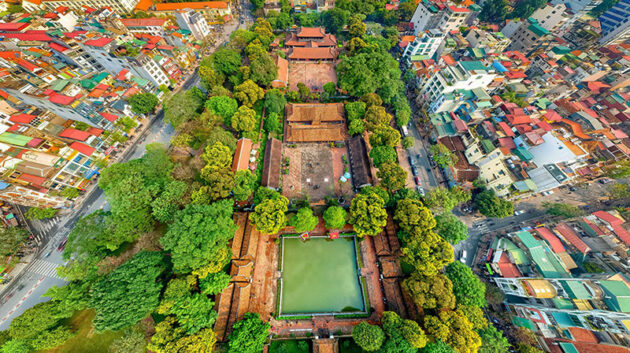
The complex follows a traditional layout inspired by Confucian principles, progressing from outer to more sacred spaces across ~54,000 m²:
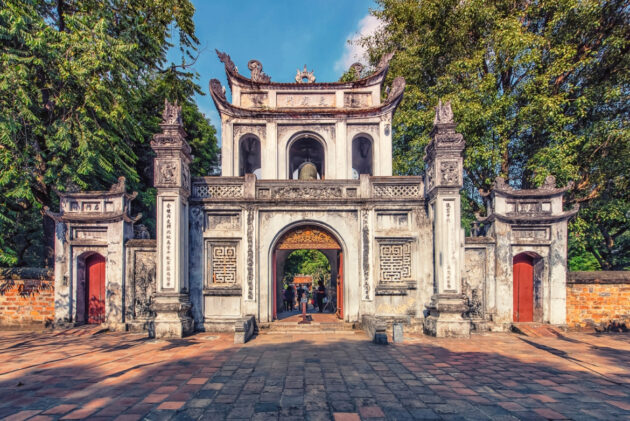
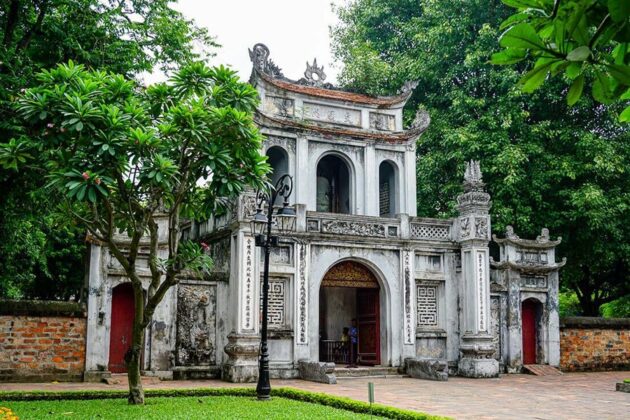
First Courtyard — Enter via the grand Van Mieu Gate (triple-arched). A tree-lined path leads inward.
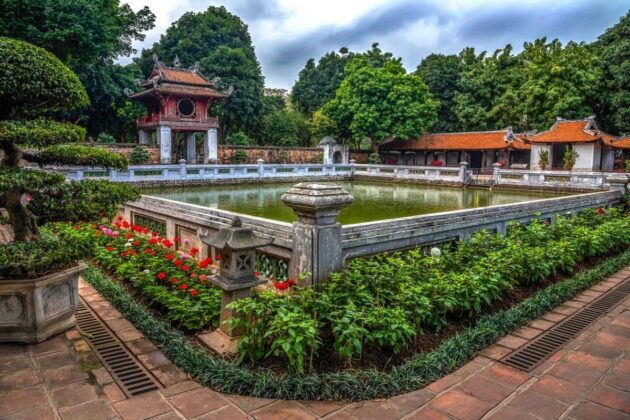
Second Courtyard — Features the striking Khue Van Pavilion (an octagonal structure with elegant wooden elements symbolizing celestial knowledge), a central well (Thien Quang Well), and gardens.
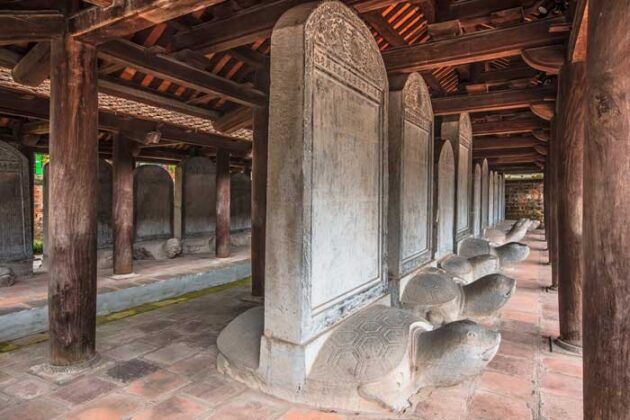
Third Courtyard — Home to the famous stone stelae (doctors’ tablets) mounted on turtle backs—116 originals from 1484 onward, each inscribed with names of successful exam graduates. Turtles symbolize longevity and wisdom; do not touch or rub their heads (it damages the ancient artifacts, despite old superstitions about bringing luck).
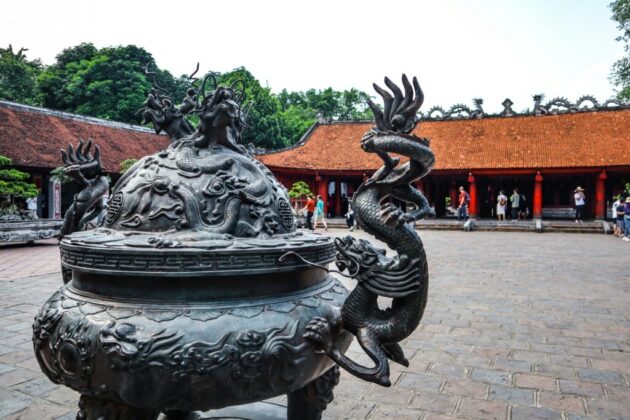
Fourth Courtyard — Includes the Dai Thanh Gate and altars to Confucius and other sages.
Fifth Courtyard — The former academy grounds with lecture halls and spaces representing scholarly life.
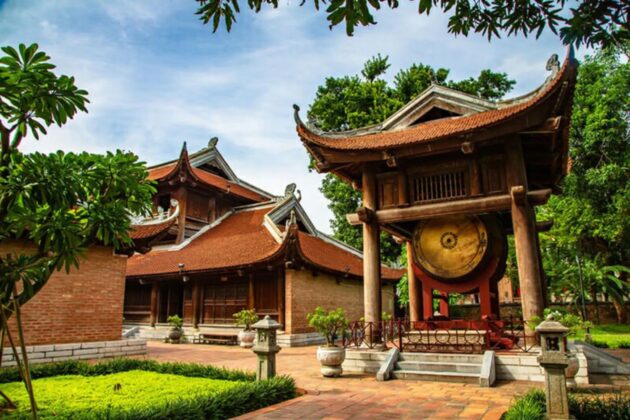
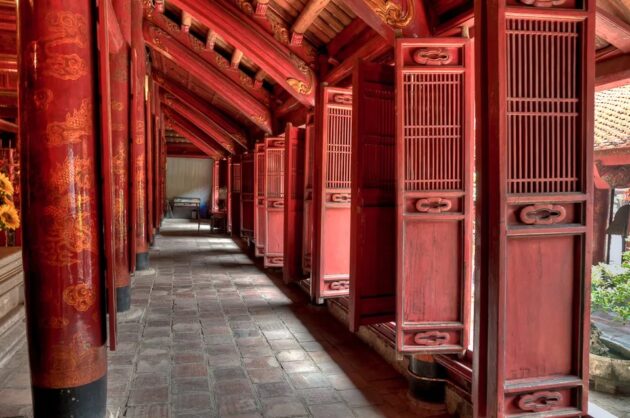
Highlights include traditional Vietnamese architecture (red pillars, curved ceramic roofs, intricate carvings), serene ponds, ancient trees, and a calm, scholarly atmosphere. Photography is allowed (avoid flash near altars), and early morning light is ideal.
Best Time to Visit
Time of year: October to April (cooler, drier weather; Hanoi winters are mild but can be damp). Avoid peak summer heat/humidity if possible.
Time of day: Arrive right at opening (8 AM) or late afternoon to beat crowds and tour groups. Weekdays are quieter than weekends or exam seasons. Mornings offer better photos and cooler temperatures.
Crowds can build mid-morning, especially with school groups or during festivals like Tet.
Practical Tips
Dress respectfully: Cover shoulders and knees; this is a cultural and spiritual site. Comfortable shoes are essential for walking on uneven paths.
Behavior: Keep noise low, especially near worship areas. No smoking or littering. Stay on paths and don’t climb on structures.
What to bring: Water, hat/sunscreen (it can get hot), and cash for tickets/souvenirs. A reusable water bottle is smart.
Guided experience: Consider an audio guide, private guide, or small-group tour for deeper historical context—many visitors say it greatly enhances the visit.
Night option: The illuminated 3D mapping show provides a different, vibrant perspective.
Accessibility: The site has paths but may involve steps; check current conditions if mobility is a concern.
Etiquette note: Vietnamese students often visit for blessings—be mindful around altars.
Nearby Attractions
Vietnam National Fine Arts Museum (right across the street) — Excellent for Vietnamese art and sculpture.
Imperial Citadel of Thang Long (UNESCO site, ~1.5 km) — Ancient archaeological remains.
Ho Chi Minh Mausoleum and Ba Dinh Square (~2–2.5 km) — National landmark (note security/check hours).
Hoa Lo Prison Museum (~1.8 km) — Colonial and wartime history.
Old Quarter, Hoan Kiem Lake, or Train Street are also reachable.
Final Thoughts
It’s more than a photo stop—it’s a living symbol of Vietnam’s deep respect for education, scholarship, and Confucian values. Visitors consistently describe it as peaceful, well-preserved, and a welcome escape from the city’s energy, with beautiful architecture and meaningful history.