
Fort Morgan Travel Guide (2026)
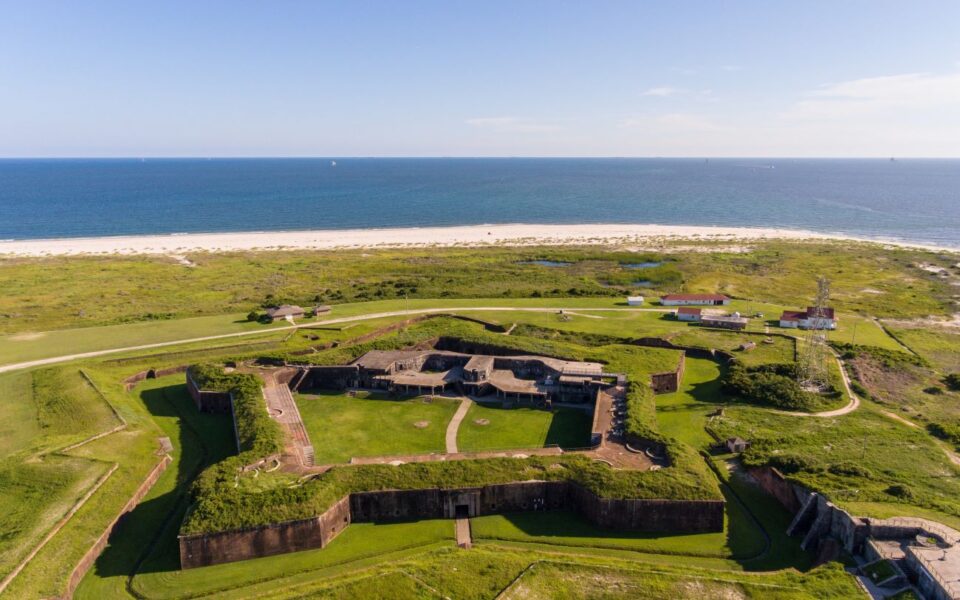
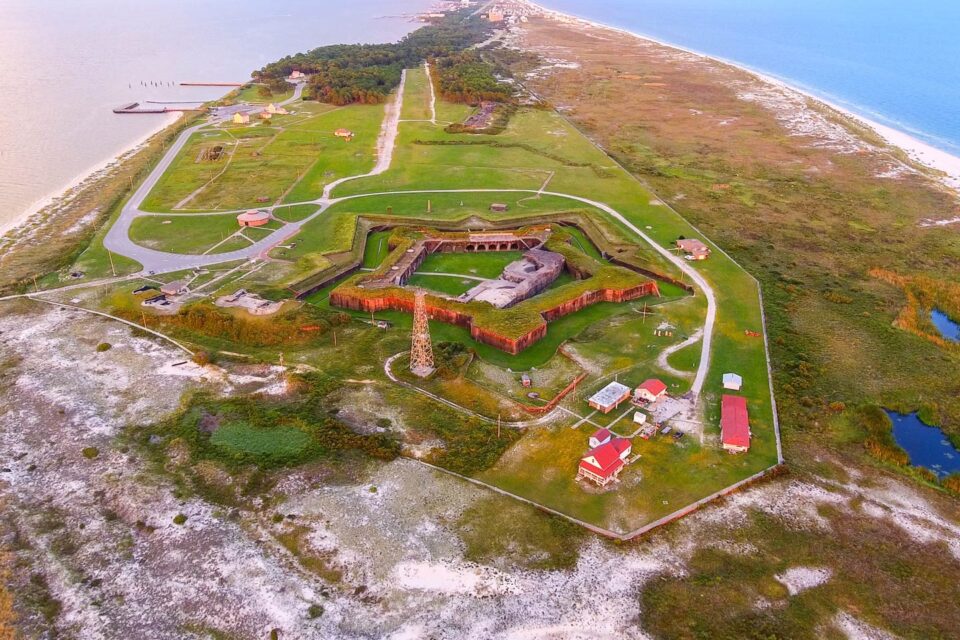
Fort Morgan is a National Historic Landmark guarding the entrance to Mobile Bay, built between 1819 and 1834 and the scene of the 1864 Battle of Mobile Bay, when Admiral David Farragut ran his fleet past Confederate guns with the cry “Damn the torpedoes!” The star-shaped brick fort stands largely intact, with tunnels, casemates, and batteries to explore, plus a museum of the site’s military history. Its most irreplaceable experience is walking the fort’s brick passages and walls where one of the Civil War’s most famous naval engagements unfolded.
Why It Is Worth Visiting
The fort’s history spans the nineteenth century’s coastal defense: construction began in 1819 and took until 1834, built by skilled masons including many enslaved African Americans, and the result is a massive brick fortification standing at the western end of Highway 180. Its defining moment came on August 5, 1864, when Admiral Farragut ordered his fleet through the heavily mined bay entrance — the battle in which he reportedly said, “Damn the torpedoes!” Visitors can tour the fort finished in 1834, the concrete artillery batteries built between 1895 and 1904, and a museum covering Mobile Point’s military history from 1814 to 1945. The fort is also a Globally Important Bird Area, a stopover for migrating birds in spring and fall.
DananaGo’s read is that Fort Morgan rewards military-history travelers with a rare intact brick fort, and rewards birders with a bonus during migration seasons — two reasons to visit in one coastal location.
DananaGo’s verdict: This is a Secondary Attraction (state-level recommendation) — an Alabama B-grade stop worth a detour when time allows. The reasons are concrete: it is an intact National Historic Landmark fort, the scene of the 1864 Battle of Mobile Bay, and its tunnels and casemates make naval history walkable. It suits military-history and Civil War travelers, families, and coastal-history visitors. A reasonable stay is 2 hours for the fort, museum, and grounds. Travelers with no interest in military history can skip it; for Civil War and coastal-history travelers, it is the essential Mobile Bay fort.
What to Experience
The Fort’s Walls and Casemates
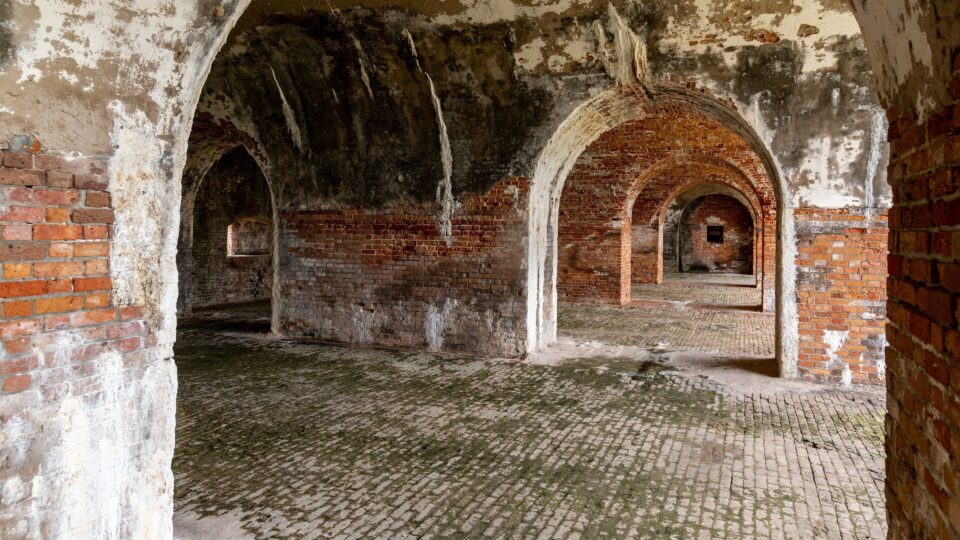
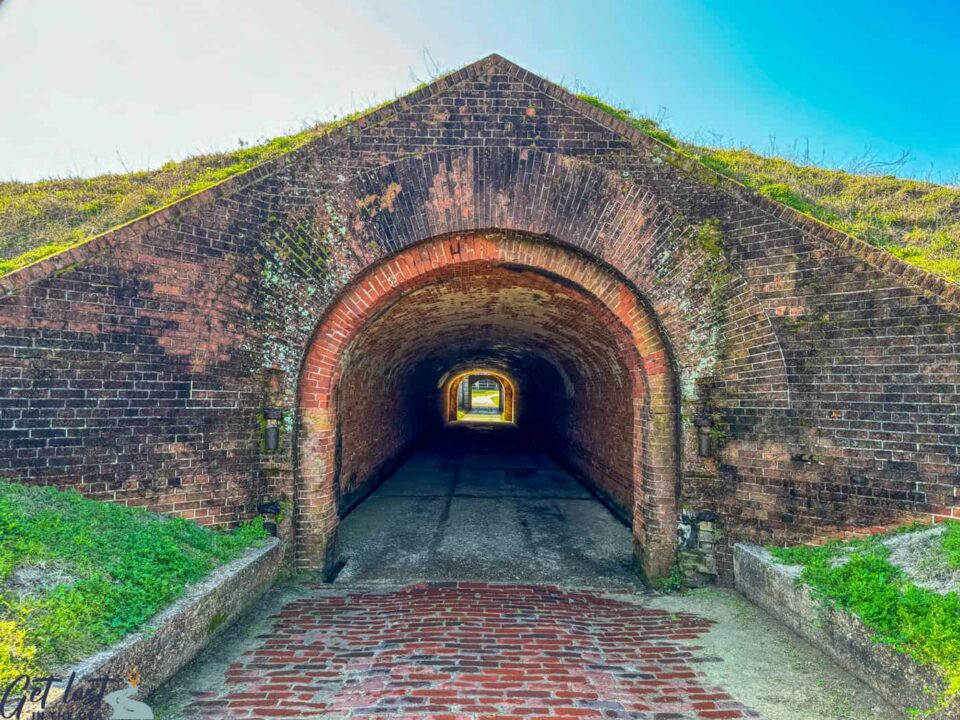
Walk the star-shaped fort’s brick passages, casemates, and walls, where the 1864 battle unfolded. The fort’s interior is largely intact, and its tunnels and chambers carry the scale of a nineteenth-century coastal defense.
The Museum
The Fort Morgan Museum covers the military history of Mobile Point from 1814 to 1945, connecting the fort’s founding, the Civil War battle, and the later batteries. It is the interpretive core of the visit.
The Batteries and the Grounds
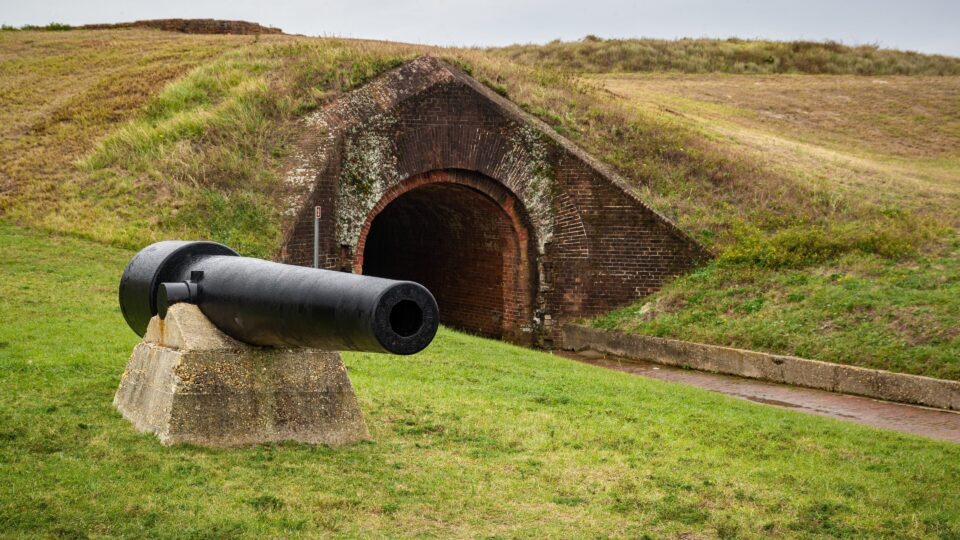
Beyond the main fort, the concrete artillery batteries built between 1895 and 1904 and the historic military buildings dating from 1898 to 1910 show the site’s later coastal-defense era, and the grounds are a globally important stopover for migrating birds.
Plan Your Visit
| Address | 51 Highway 180 West, Gulf Shores, AL 36542 |
|---|---|
| Recommended time | 2 hours for the fort, museum, and grounds |
| Hours | Fort and grounds daily 8 am–5 pm; museum daily 9 am–4 pm; closed Thanksgiving, Christmas, and New Year’s Day |
| Admission | Adults $8; college students, seniors, and children 6–18 $5; family of four $20; active, reserve, or retired military free with ID |
| Best time | Spring and fall for mild weather and migrating birds |
| Getting there | At the western end of Highway 180, 22 miles west of Highway 59 in Gulf Shores; also reachable from Dauphin Island by the Mobile Bay Ferry |
Check the official website for current opening hours, admission prices, reservations, and key visitor policies.
A Focused Visit Route
Start at the Fort Morgan Museum to learn the site’s history, from its 1834 completion to the 1864 battle. Walk into the main fort and explore its casemates, tunnels, and walls, then move to the later artillery batteries and historic buildings on the grounds. Allow two hours for the full loop. If you are visiting in migration season, keep an eye on the trees and grounds for birds during the walk.
DananaGo Tips
- Start at the museum, then walk the fort; the museum gives the battle context the walls need.
- Consider arriving by the Mobile Bay Ferry from Dauphin Island for a memorable approach.
- Check the site’s event calendar; cannon-firing and living-history programs run at times.
- Budget an hour-plus for the fort interior — the casemates and tunnels take time to cover.
Explore More of Alabama
Alabama has more to offer beyond the fort — use the state map below to find other sites worth your time.