
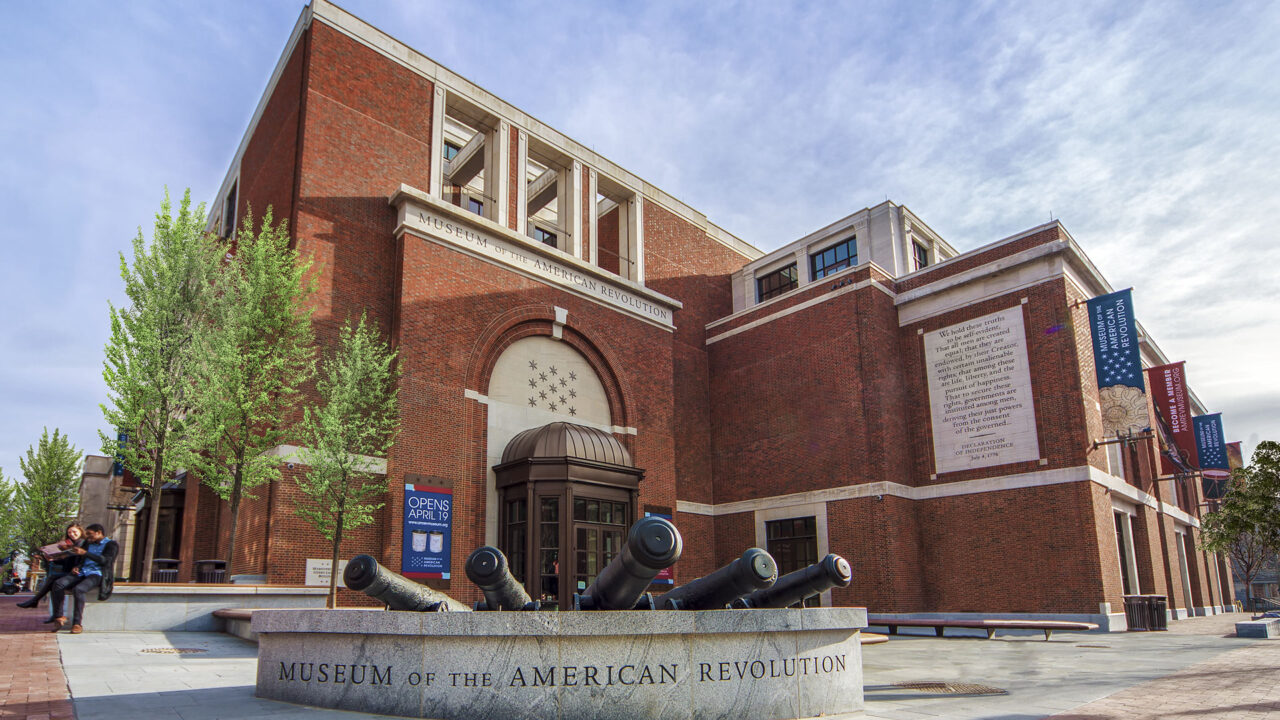
Museum of the American Revolution Travel Guide (2026)
The Museum of the American Revolution turns the founding era into a human story rather than a list of dates. Its galleries connect original objects, immersive environments, films, and personal accounts—from the first protests through independence and the unfinished struggle over liberty—making it one of Philadelphia’s strongest introductions to the American Revolution.
Experience Profile
PRIMARY EXPERIENCE
SECONDARY EXPERIENCES
Why It Is Worth Visiting
The museum is especially valuable after—or before—walking through Independence National Historical Park. It explains why the Revolution happened, how ordinary people experienced it, and why its promises remained contested. The presentation includes women, Native peoples, free and enslaved people of African descent, soldiers, loyalists, and revolutionaries, creating a broader story than a monument-only visit can provide.
DananaGo’s verdict: this is a map-level Philadelphia attraction and the city’s best single museum for understanding the Revolution as a complete story. Allow about two to three hours; history-focused visitors may want longer.
What to Experience
The Road to Independence
Begin with the political and social tensions that pushed thirteen colonies toward rebellion. Period objects, printed material, reconstructed spaces, and multimedia help distinguish the uncertain choices people faced from the tidy sequence often presented in textbooks.
The Revolutionary War
The central galleries follow the conflict through military campaigns, shifting loyalties, hardships, and the experiences of civilians and soldiers. Hands-on elements and immersive settings make the scale and risk of the war understandable for visitors who arrive without specialist knowledge.
Washington’s War Tent
The museum’s signature object is George Washington’s surviving headquarters tent. It is revealed through a dedicated theater presentation that explains its preservation and its role as the mobile center of the Continental Army’s command. Treat the presentation as an essential part of the visit and check the day’s program schedule after arrival.
A New Nation—and an Unfinished Revolution
The final galleries examine the creation of a new political order and the gap between revolutionary ideals and lived reality. This section gives the museum its depth: independence becomes the beginning of continuing arguments over citizenship, freedom, equality, and national identity rather than a simple ending.
Plan Your Visit
| Address | 101 South Third Street, Philadelphia, PA 19106 |
|---|---|
| Recommended time | 2–3 hours; allow 3–4 hours if you read exhibits closely |
| Regular hours | Daily, 9:30 a.m.–6:00 p.m.; closed on selected holidays and one annual maintenance date |
| Admission | Timed tickets are available online and at the museum. Adult, senior, student, military, youth, member, and access-program prices vary; children age 5 and under are free. |
| Best time | Arrive near opening on a weekday for quieter galleries and easier access to scheduled presentations |
| Getting there | Convenient from SEPTA’s Market–Frankford Line at 2nd or 5th Street, Center City bus routes, and the PATCO station at 8th and Market |
| Parking | The museum has no dedicated visitor lot; use a nearby public garage and check current directions before driving |
| Accessibility | The entrance and galleries are accessible; wheelchairs, elevators, sensory resources, audio description, and other accommodations are available |
Before visiting, confirm the museum’s current hours and admission, daily programs, directions and parking, and accessibility information. Ticket prices, holiday closures, presentations, and special exhibitions can change.
A Smart Two-and-a-Half-Hour Route
- Begin with the orientation film to establish the people, places, and timeline.
- Move through the Road to Independence galleries without skipping the reconstructed environments.
- Spend the largest share of your time in the war galleries and compare the perspectives of revolutionaries, loyalists, soldiers, and civilians.
- See the Washington’s War Tent presentation when it is offered; plan the surrounding galleries around its start time.
- Finish with the New Nation section and the continuing debate over liberty and citizenship.
- Use the final interactive and reflection spaces to connect the eighteenth-century story with later generations.
If you have only 90 minutes, prioritize the orientation film, the main chronological galleries, Washington’s War Tent, and the final section on the Revolution’s continuing legacy.
DananaGo Tips
- Check presentation times first: arrange your visit around Washington’s War Tent rather than discovering the schedule too late.
- Visit in historical sequence: the galleries are designed as a connected narrative, so entering midway weakens the experience.
- Pair it intelligently: combine the museum with Independence National Historical Park, but avoid rushing both into a short morning.
- Use the voices in the galleries: personal testimony and objects reveal more complexity than the headline events alone.
- Preview online: the official virtual tour helps families and history learners identify must-see sections before arrival.
Experience It Online
The museum’s official virtual tour is a strong cloud-travel experience in its own right. It combines 360-degree gallery panoramas, close views of selected objects, and guided audio so you can follow the exhibition remotely or preview the building before a physical visit.
Explore More of Philadelphia
Use the map below to discover more must-see attractions across Philadelphia and compare their locations with your current position.