
Chengdu Museum Travel Guide (2026)
Chengdu is famous for pandas, spicy hotpot, and a leisurely teahouse culture, but if you truly want to understand the soul of this 3,000-year-old city, start your journey at the Chengdu Museum. Sitting right on Tianfu Square, the geographic and symbolic heart of the city, this world-class museum is the keeper of Chengdu’s ancient Shu civilization, folk traditions, and vibrant urban story.
🎟️ Key Information at a Glance
Full Name: Chengdu Museum (成都博物馆)
Address: No. 1 Xiaohe Street, Qingyang District, Chengdu (west side of Tianfu Square)
Opening Hours:
Tuesday to Sunday: 9:00 AM – 5:00 PM (last entry 4:30 PM)
Extended hours on Friday & Saturday: until 8:30 PM (last entry 7:30 PM) Confirm on the official website or WeChat before your visit as schedules can shift.
Closed on Mondays (except public holidays)
Admission: Free! But you still need a ticket/reservation.
Reservation: You can book a free slot via the official WeChat mini-program (search “成都博物馆”). If you don’t use WeChat, take your passport to the on-site ticket counter; staff can issue a walk-in ticket, but during peak times it’s safer to book in advance — many hotels can help with this.
Recommended visit time: 2.5 – 4 hours
🚇 How to Get There
By Metro (easiest): Take Line 1 or Line 2 and get off at Tianfu Square Station. The museum has its own clearly marked exit — you will basically emerge right in front of the building. From there, you can’t miss its striking geometric facade.
By Taxi/Ride-hailing: Show the driver “成都博物馆, 小河街1号” and ask to be dropped off near the west side of Tianfu Square.
On foot: The museum is a pleasant 15–20 minute walk from the Chunxi Road shopping area, and about 10–15 minutes from People’s Park.
🏛️ Must-See Exhibits & Galleries
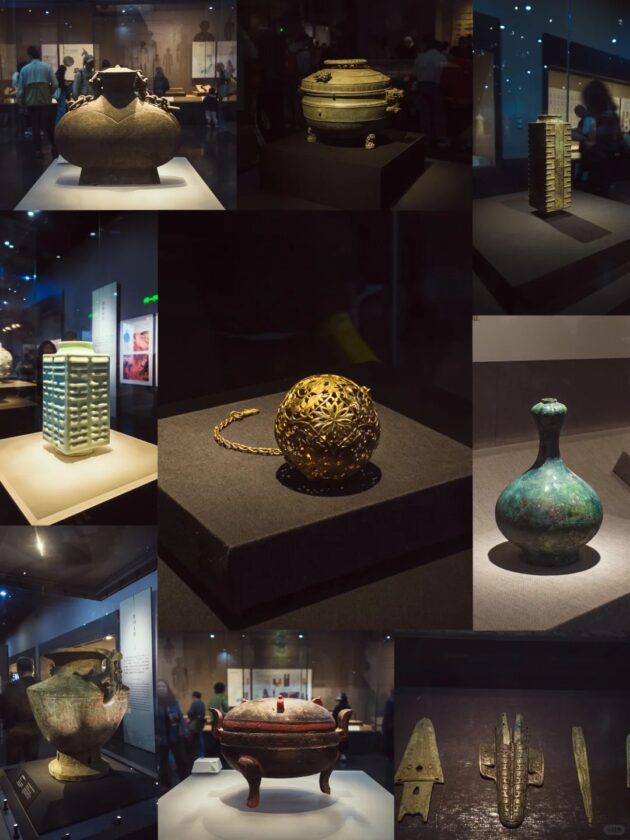
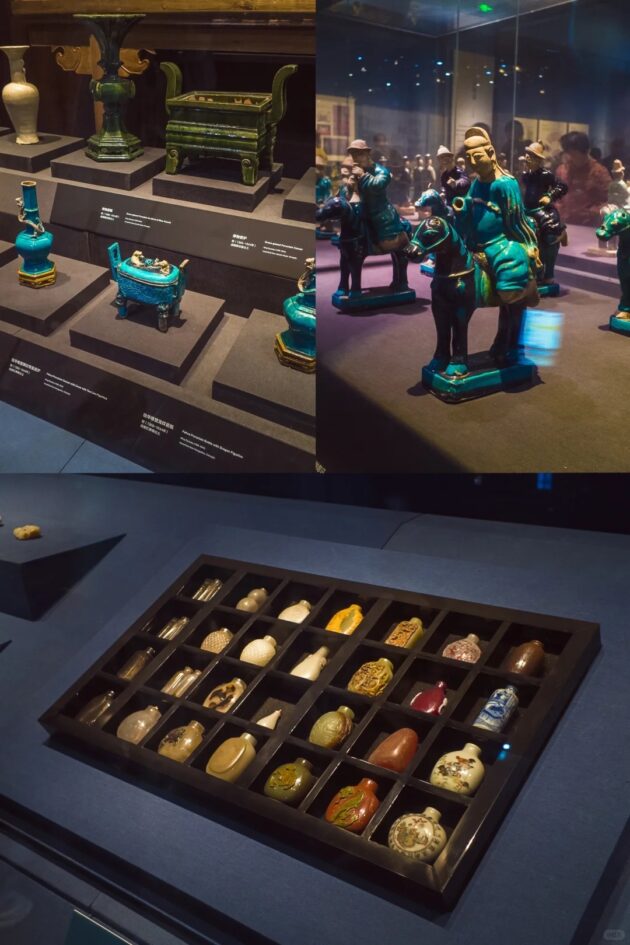
The permanent exhibition is titled “Flowers of Chengdu” (花重锦官城), and it’s spread across several floors. Don’t miss these treasures:
1. The Pre-Qin & Ancient Shu Galleries (2F–3F)
Look for the Stone Rhinoceros (石犀), a massive carved beast unearthed right in Tianfu Square. Weighing about 8.5 tons, it dates back over 2,000 years and likely served as a water-suppressing talisman. It’s the museum’s unofficial mascot and utterly captivating.
2. The Han Dynasty Marvels (3F)
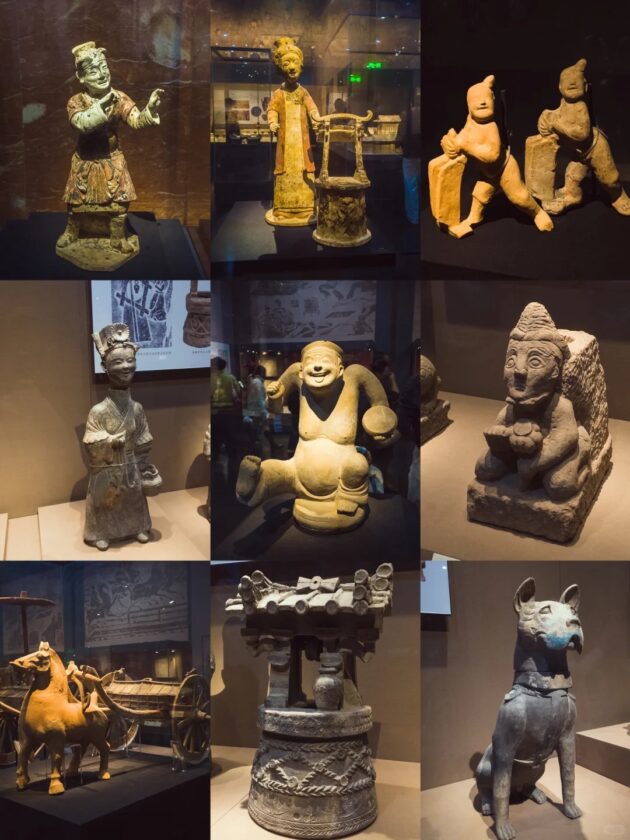
The Lacquered Figurine with Meridian Lines (经穴漆人) — a tiny painted figure from the Western Han Dynasty, covered in precise acupuncture points. This is one of the oldest existing human models showing the meridian system, offering a rare glimpse into ancient Chinese medicine.
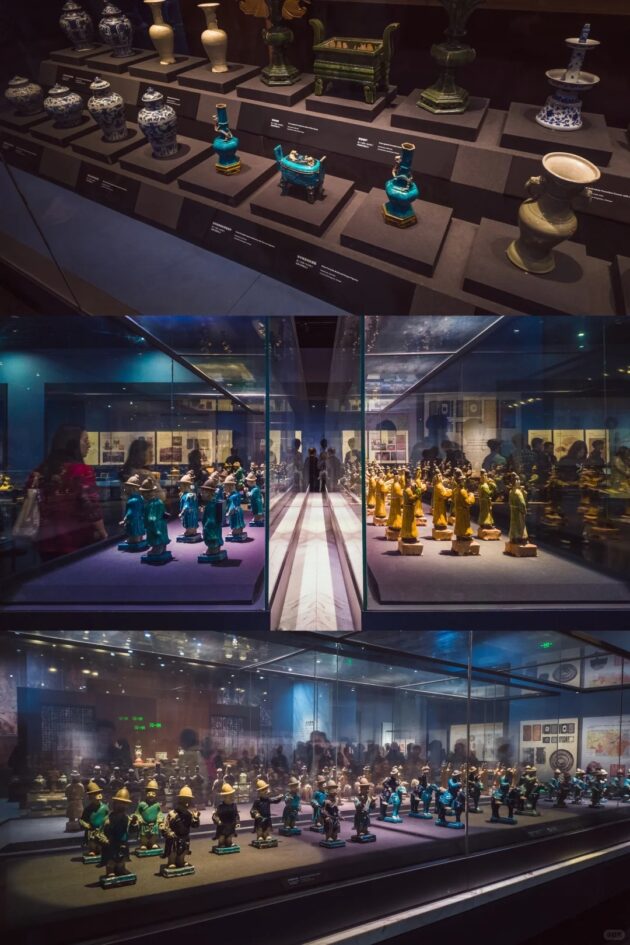
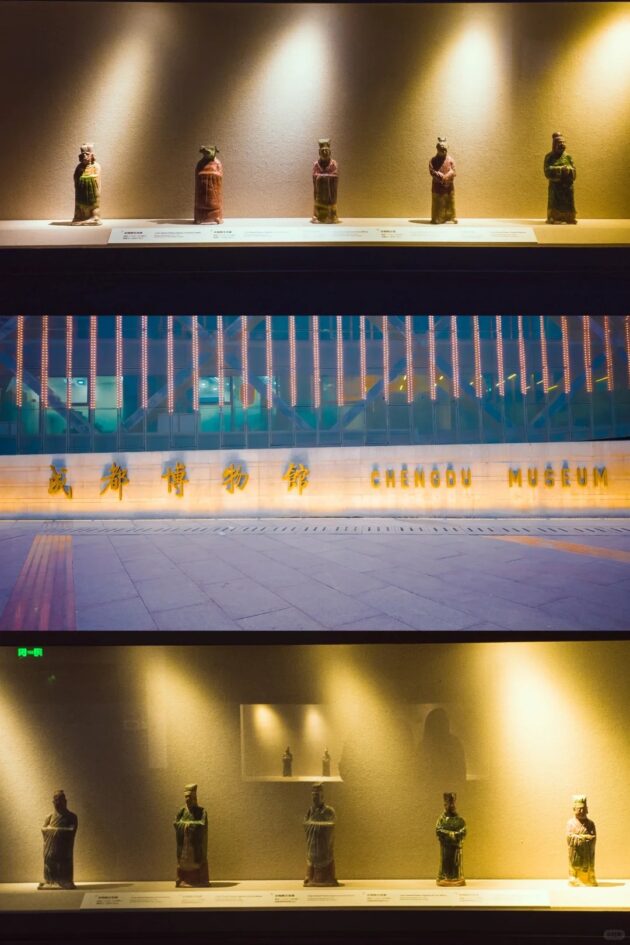
Vivid pottery figurines of storytellers and musicians that capture the lively street culture of 2,000 years ago.
3. Modern Chengdu & Folk Customs (4F)
This floor brings you into the city’s teahouses, streets, and kitchens. You’ll find beautifully recreated scenes of traditional Sichuan life, the history of Shu brocade, and intimate exhibits on the city’s culinary identity — ideal for understanding what makes “Chengdu taste” so special.
4. The Shadow Play and Puppet Gallery (5F)
One of the best collections of Chinese shadow puppets in the world. Even if you think you aren’t interested in puppetry, the sheer artistry — intricately carved leather figures glowing in vivid color — will win you over. The gallery is vast, contemplative, and far less crowded than the lower floors.
5. Temporary Exhibitions (1F & B1)
Chengdu Museum regularly hosts high-quality international exhibitions (such as treasures from the British Museum, Mughal jewelry, or European paintings). Check the official website or WeChat account to see what’s on during your visit.
💡 Insider Tips
Bring your passport — required for entry if you book with an international ID.
Audio guides are available for rent near the entrance, and some major exhibits have English labels. The official WeChat mini-program may also offer Chinese audio commentary.
No flash photography is allowed inside. Also, no tripods or selfie sticks for safety reasons.
Pack light — big bags need to go through security, and there’s limited locker space.
Water and snacks — you can bring a bottle of water, but eating is not allowed in the galleries. Tianfu Square’s underground shopping mall has plenty of cafes and food options right across the plaza.
Combine with night walking — if you take the Friday/Saturday late session, afterward you can walk toward Chunxi Road or the Anshun Bridge area for a romantic evening lit up along the Jin River.
🏙️ What to See Nearby
All of these are within walking distance:
Tianfu Square — step outside, look at the fountain and the giant Chairman Mao statue, and feel the city’s pulse.
Sichuan Science and Technology Museum — directly opposite, a giant domed building; great if traveling with kids.
People’s Park (Renmin Park) — a 15-minute walk west; go for a cup of tea at the historic Heming Teahouse and watch locals matchmaking or dancing.
Kuanzhai Alley (Wide & Narrow Alleys) — a short ride away; restored Qing Dynasty streets with trendy shops and folk performances.
Chunxi Road & Taikoo Li — 20-minute walk east; high-end shopping, street food, and the stunning Daci Temple nestled among modern architecture.
🍜 What to Eat in the Area
You’re in central Chengdu, so wonderful food is everywhere. A few quick ideas:
Tianfu Square underground food street: Find local chain branches serving Long Chaoshou (dragon wontons) and Zhong Dumplings (钟水饺) with sweet soy dressing — a perfect quick lunch.
Xiaomingtang (小名堂担担甜水面) near People’s Park: excellent sweet-water noodles and silky bean jelly noodles.
Street snacks: Grab a dan hong gao (蛋烘糕, eggy pancake) from a vendor for a warm, sweet-savory pick-me-up.
If you want a sit-down hotpot dinner after the museum, walk toward Chunxi Road — countless famous hotpot brands line the streets there.
✨ Final Words
The Chengdu Museum is far more than a rainy-day backup plan. It’s a beautiful, modern, and thoughtful introduction to the layers of civilization that shaped Sichuan’s capital — from ancient rituals to shadow theater to the fiery flavors that define its cuisine. Give it a generous slice of your itinerary, and you’ll leave with a much deeper appreciation of why Chengdu is called the “Land of Abundance.”
Enjoy every moment — and don’t forget to say hello to the stone rhinoceros. 🦏