
Sichuan Museum (四川博物院) Travel Guide (2026)
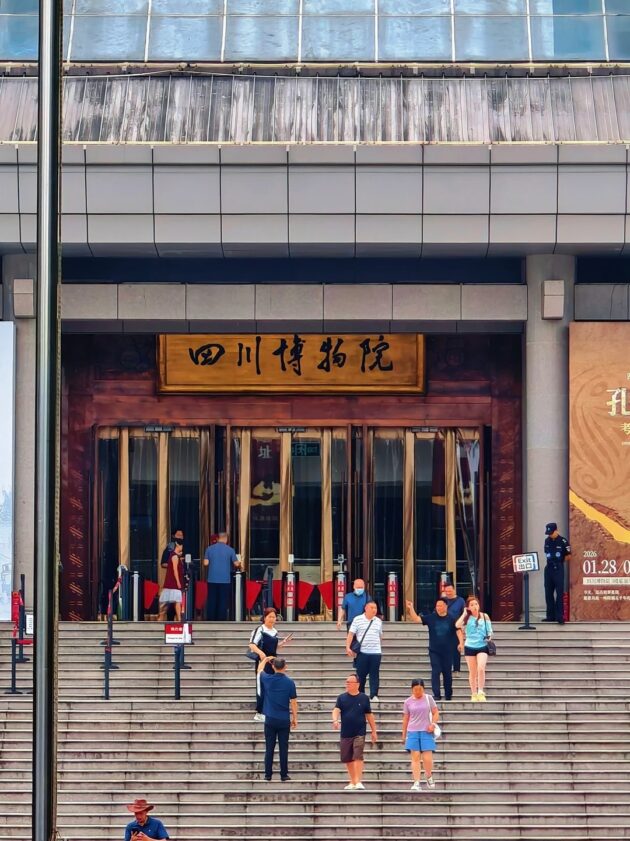
Often overshadowed by flashier attractions, the Sichuan Museum is a serene, deeply rewarding treasure house that tells the story of this province through its most exquisite objects. Located beside the poetic Huanhuaxi Stream and a stone’s throw from Du Fu’s Thatched Cottage, it is the largest comprehensive museum in southwest China, home to over 320,000 artifacts.
Its star power is quiet but immense: the finest collection of Zhang Daqian’s works anywhere, enigmatic ancient bronzes, joyful Han dynasty pottery figures, and a tapestry of Tibetan, Qiang and Yi ethnic cultures. Best of all, it is completely free.
Best Time to Visit
Visit on a weekday morning, arriving right at the 9:00 am opening. The galleries will be peaceful and you can linger undisturbed in front of the Zhang Daqian masterpieces. Weekends and public holidays bring busier crowds. Allow 2 to 3 hours for a fulfilling visit; art and history enthusiasts may want even longer. The museum is closed on Mondays (except public holidays).
Top Things to See and Do
The museum is organised into a series of permanent galleries, plus a revolving program of world-class temporary exhibitions. Follow this route for a logical, uplifting journey.
1. Zhang Daqian Art Gallery (张大千书画馆) – The Crown Jewel
This is what makes the Sichuan Museum globally significant. Zhang Daqian (1899–1983), one of the 20th century’s greatest Chinese painters, was a Sichuan native, and his family donated a huge cache of his works to this museum. You will see:
His meticulous early paintings and calligraphy.
Exuberant splashed-ink landscapes from his later years.
Most hauntingly, the exquisite Dunhuang mural copies – faithful, life-sized reproductions of Tang-dynasty Buddhist frescoes he painted while living in the Mogao Caves. The colour, line-work and devotion are breathtaking. This gallery alone justifies the trip.
2. Ba-Shu Bronze Gallery (巴蜀青铜馆) – Mysteries in Metal
Long before the Qin unification, Sichuan’s Ba and Shu states produced bronzes unlike any others in China. Look for:
Warring States bronze hu vessel with water-and-land battle scenes (水陆攻战纹铜壶): An astonishing, intricately engraved jar depicting warriors rowing, fighting, and celebrating – an ancient graphic novel in bronze.
Elephant-trunk-handled lei vessel (象首耳兽面纹铜罍): A magnificent ritual wine container with flared elephant-head handles and a fierce taotie face.
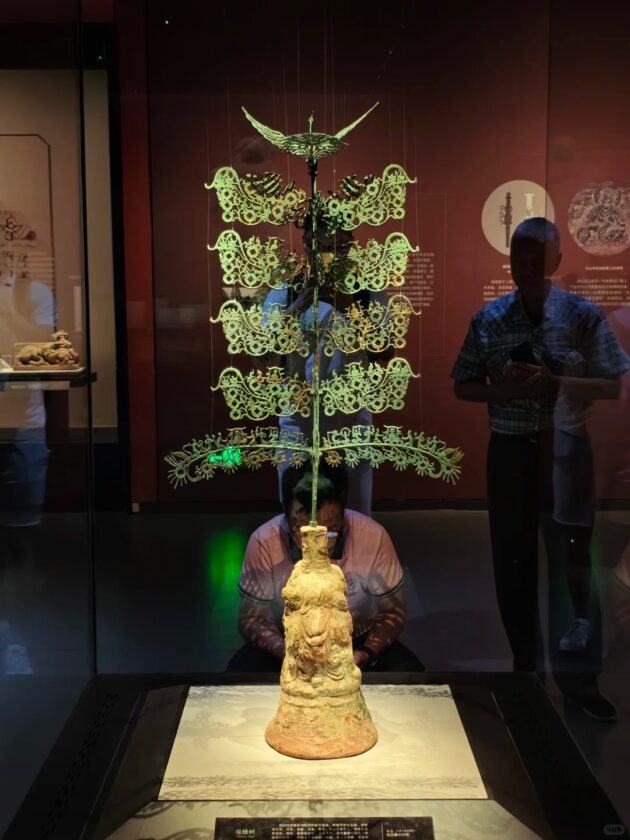
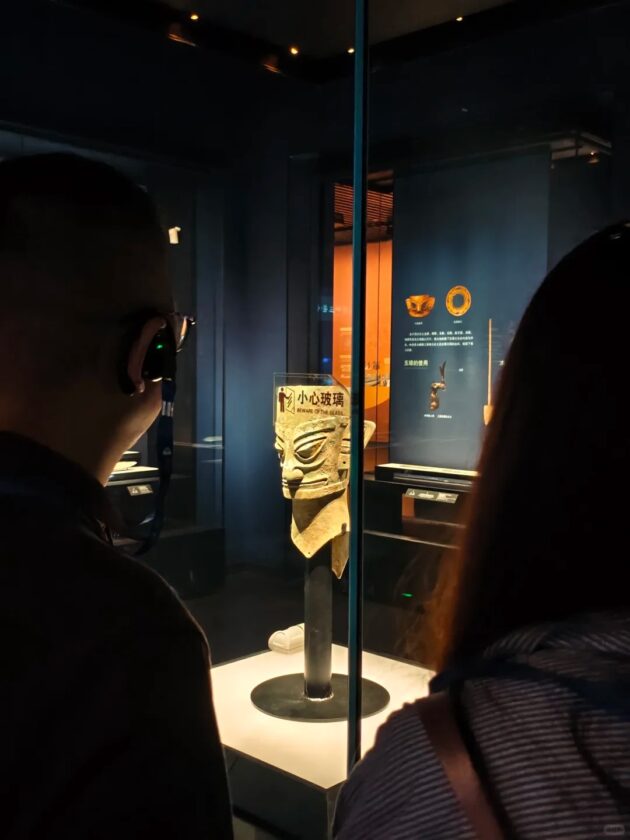
Weapons, dagger-axes with mysterious geometric motifs, and ritual objects that point to a rich spiritual world parallel to Sanxingdui and Jinsha.
3. Han Dynasty Pottery and Stone Art Gallery (汉代陶石艺术馆) – Life and Afterlife
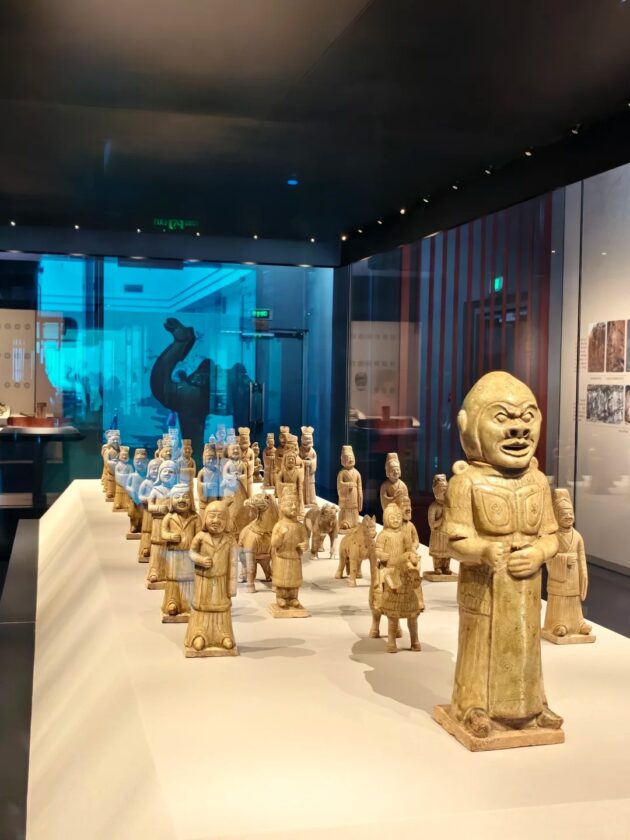
Sichuan has some of the best-preserved Han-dynasty tomb art in China. This gallery is a joyful, earthy contrast to the ritual bronzes. Highlights include:
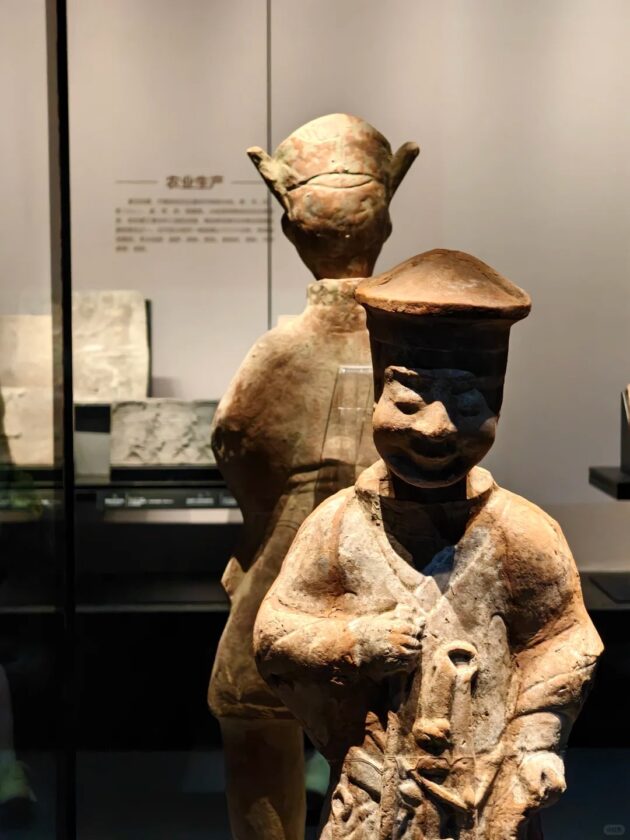
Pottery storyteller figurine (说唱俑): A beaming, bare-chested performer caught mid-riff, drum in hand, his entire body a wave of comic energy. It is one of the most beloved images of Han art.
Brick reliefs (画像砖): Scenes of salt-mining, harvesting, feasting, and horse-drawn carriages that bring the Sichuan of 2,000 years ago vividly to life.
Carved stone coffins and tomb doors decorated with dragons, phoenixes, and the Queen Mother of the West.
4. Ethnic Cultures of Sichuan Gallery (四川民族文物馆) – A World Apart
Sichuan is a multi-ethnic province, and this gallery is a celebration of its Tibetan, Qiang, Yi, and other minority peoples. You’ll find:
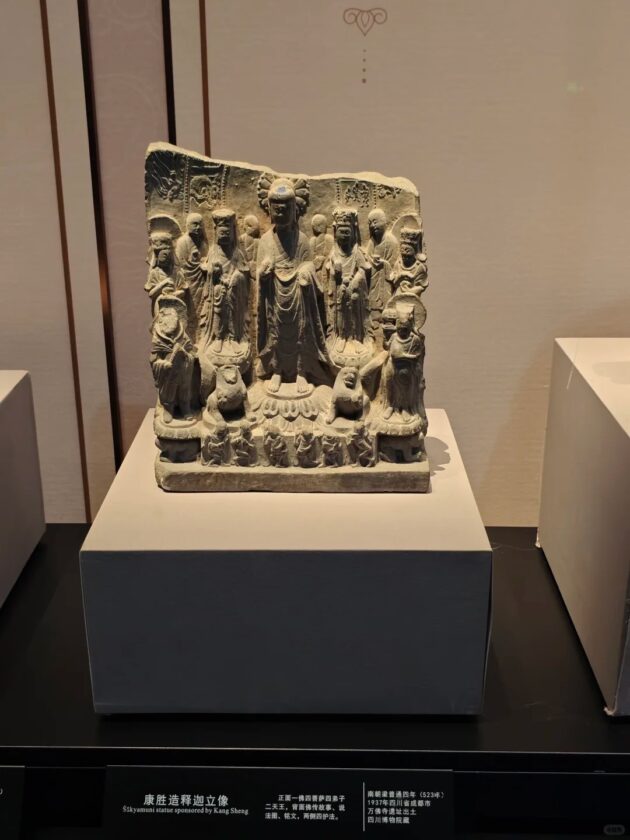
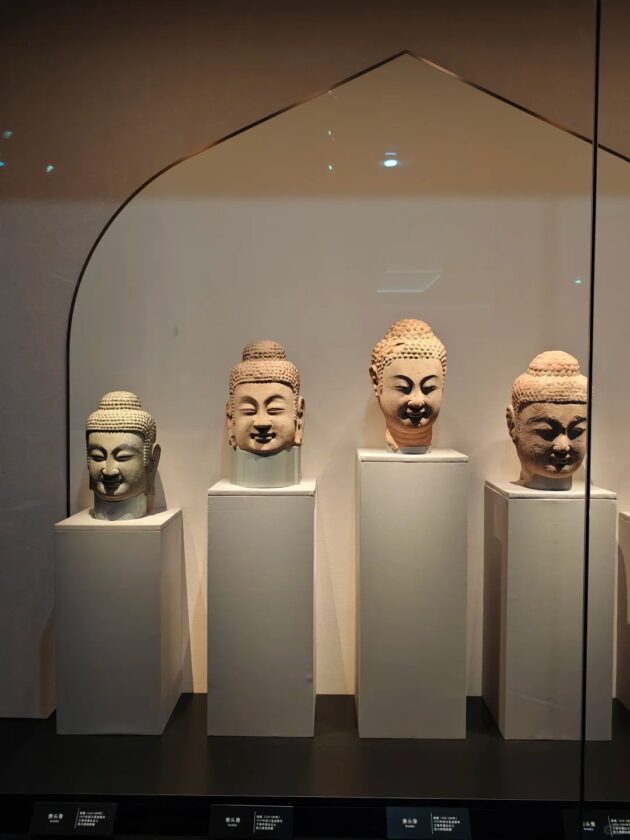
Gilded Tibetan Buddhist statues, thangkas, and ritual implements.
Elaborate Yi silver jewellery and lacquered leather armour.
Qiang embroidered costumes and stone-tower models from the high mountains of western Sichuan. The craftsmanship and cultural depth are captivating.
5. Ancient Ceramics Gallery (陶瓷馆)
A chronological survey from Neolithic painted pots to delicate Qing porcelain, including fine local Sichuan wares. The Song-dynasty green-glazed pieces and the understated elegance of Qionglai kiln ceramics are worth pausing for.
6. Arts and Crafts Gallery (工艺美术馆)
A jewel-box of textures: Sichuan brocade and Shu embroidery (recognised as a national intangible heritage), bamboo carving, lacquerware, jade, and gold and silver ornaments. The intricate Shu embroideries of birds and flowers shimmer under the gallery lights.
7. Temporary Exhibitions
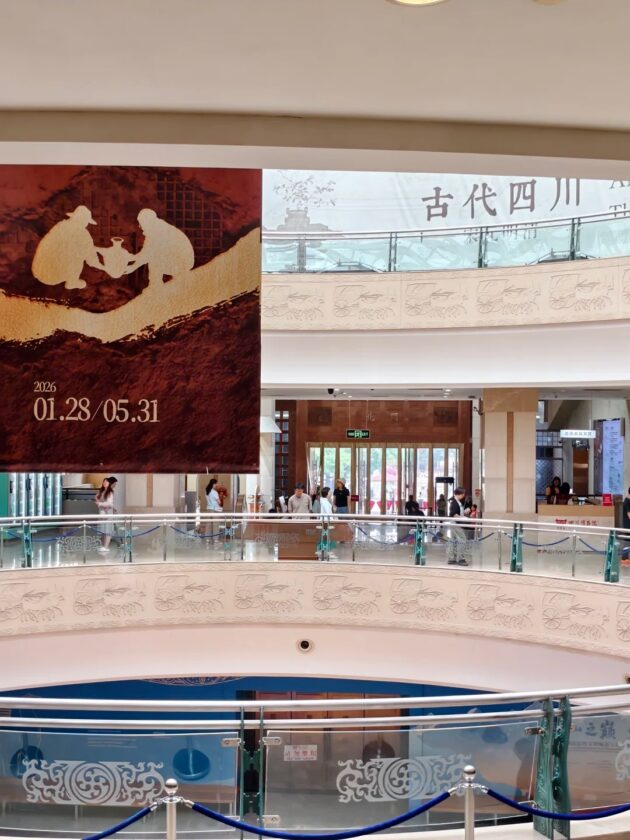
The museum frequently hosts excellent special exhibitions – ancient civilizations of Eurasia, silk road artefacts, calligraphy masterpieces, and more. Check the official WeChat account (四川博物院) or notice boards in the lobby upon arrival.
8. Museum Grounds and Atmosphere
The building is set in a traditional-style courtyard compound shaded by ancient trees. Between galleries, sit on a bench in the quiet inner garden, listen to birdsong, and absorb the calm. It feels a world away from the city’s hustle.
How to Get There
Metro: Take Line 5 to Qingyang Taoist Temple Station (青羊宫站), Exit B. Walk west along Qinghua Road for about 15 minutes, or take a 5-minute bike ride via shared bike. The museum is on your right just after you cross the Huanhua Stream.
Bus: Routes 19, 35, 47, 58, 82, 151, 165, 170, etc., stop near “Songxian Bridge” or “Du Fu’s Thatched Cottage North Gate”. The museum is a short walk from these stops.
Taxi/Ride-hailing: Show the driver “四川博物院” (Sichuan Bowuyuan) or the address “青羊区浣花南路251号”. From Chunxi Road it’s about 30 minutes and 25–40 RMB.
Tickets & Opening Hours
| Item | Details |
|---|---|
| Admission | Free |
| Hours | Tuesday – Sunday, 9:00 – 17:00 (last entry 16:00) |
| Closed | Mondays (except Chinese public holidays) |
| Booking | Required. Reserve your free ticket via the official WeChat mini-program “四川博物院”. You can book up to 7 days in advance. For foreign visitors, you can use your passport number to register. If you have difficulty with the app, the ticket counter may assist with a foreign passport, but an advance online booking is strongly recommended, especially on weekends. |
Tips for a Great Visit
Audio Guide: An English audio guide can be rented at the entrance (around 20–40 RMB with a deposit). It enriches every artifact with stories.
Free WeChat guide: The museum’s WeChat mini-program has multilingual audio explanations. Scan the QR codes on display panels and listen through your phone.
Photography: Allowed in most galleries, but no flash, no tripod. The Zhang Daqian gallery has low lighting for conservation – adjust your phone settings accordingly.
Baggage: Free lockers are available in the lobby. You can store coats and bags to walk through the galleries unburdened.
Coffee and Tea: There is a simple tea room and rest areas where you can buy hot drinks and light snacks. The museum shop sells tasteful art books, postcards, and replicas.
Accessibility: The museum is fully wheelchair accessible with ramps and elevators.
Pairing Your Visit with Nearby Gems
The Sichuan Museum is perfectly positioned for a cultured day in Chengdu’s most literary district:
Du Fu’s Thatched Cottage (杜甫草堂): An 8-minute walk across the stream. The reconstructed Tang-dynasty poet’s residence sits within a gorgeous classical garden. Visit in the morning and the museum in the afternoon, or vice versa.
Huanhuaxi Park (浣花溪公园): Flowing between the museum and the Thatched Cottage, this riverside park is a destination in itself – bamboo groves, stone bridges, and locals reciting poetry by the water.
Shu Embroidery Museum: A tiny, hidden gem about 10 minutes’ walk away, where you can watch master embroiderers at work.
Sichuan Museum vs. Chengdu Museum – Which One?
Travellers often ask which museum to choose. Here’s a quick guide:
Sichuan Museum (here): Choose this for art and deep culture – the Zhang Daqian collection, Han dynasty stone reliefs, and ethnic treasures. It’s more about the objects themselves and their aesthetic power.
Chengdu Museum (天府广场): Choose this for a story-driven journey through Chengdu’s history, from ancient prehistory to the teahouse era, with spectacular multimedia models and a brilliant floor of shadow puppets and folk customs. It’s right on Tianfu Square.
If time allows, both are excellent and complementary. If you must pick one, follow your heart: brushstrokes and bronzes, or a panoramic urban narrative.
Final Thoughts
The Sichuan Museum is a quiet, dignified place where you can stand inches from Zhang Daqian’s brushwork and the grin of a Han-dynasty comedian. It will add depth and stillness to any Chengdu trip – and it asks only for your curiosity in return.