

São Bento Train Station (Estação de São Bento) Travel Guide (2026)
São Bento Train Station is one of the most beautiful railway stations in the world and a must-visit landmark in Porto. While it remains a fully functional transport hub, its breathtaking interior—covered in over 20,000 hand-painted azulejo tiles—transforms it into a living museum of Portuguese history and art. Many visitors come just to admire the tiles, even if they’re not catching a train.
A Brief History
The station stands on the site of the former 16th-century Convent of São Bento de Avé-Maria (Saint Benedict of Ave Maria), which was largely destroyed by fire in 1783. After the dissolution of religious orders, the site was cleared for modern infrastructure.
Construction of the current station began around 1900–1904 under Portuguese architect José Marques da Silva, who drew inspiration from the French Beaux-Arts style. King Carlos I laid the first stone in 1900. The station was inaugurated on October 5, 1916.
The stunning tile panels by artist Jorge Colaço were installed between 1905 and 1916 (some sources note work continuing into the period), making them slightly older than the completed building in parts. The tiles were produced at the Sacavém factory and restored in 1978.
Architectural and Artistic Highlights
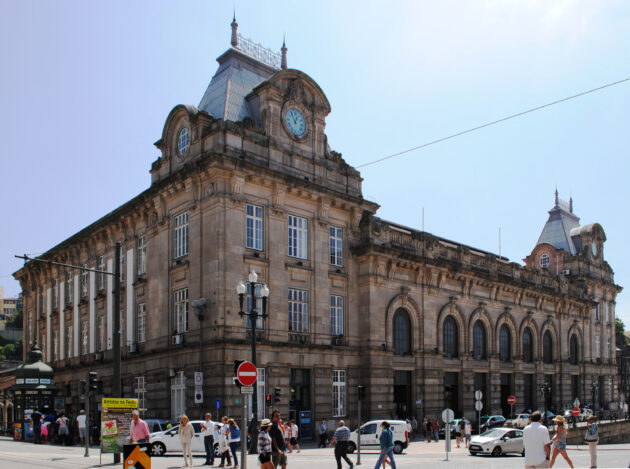
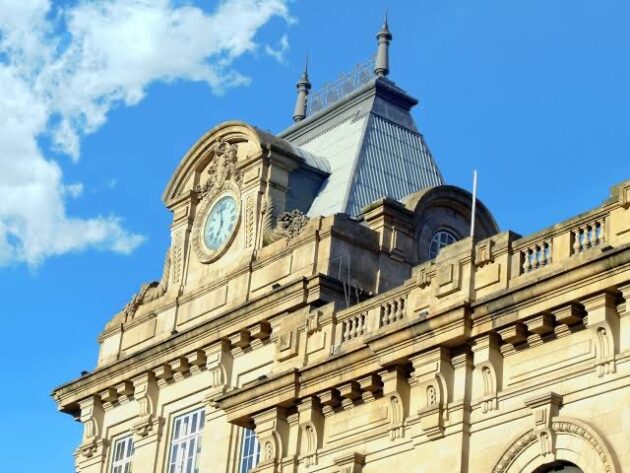
Exterior: A symmetrical, elegant granite U-shaped building with a restrained Beaux-Arts facade on Praça de Almeida Garrett. It gives little hint of the splendor inside.
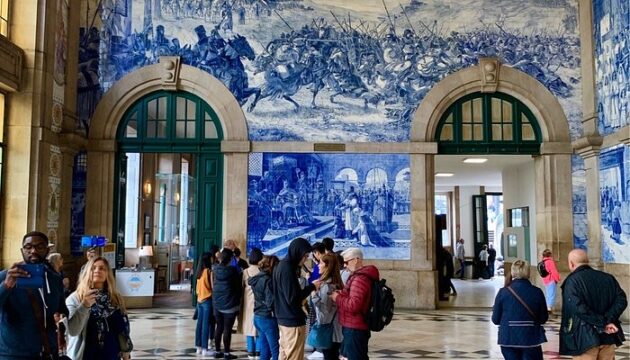
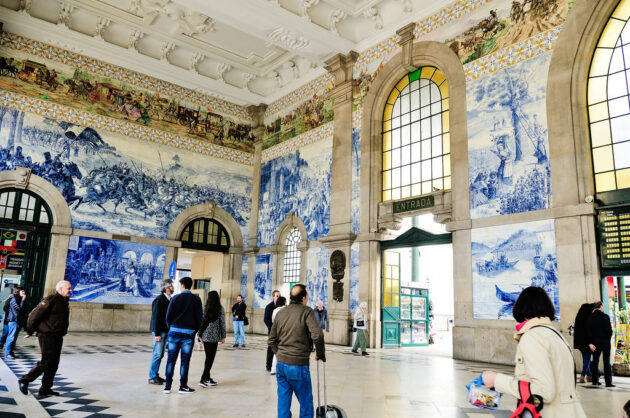
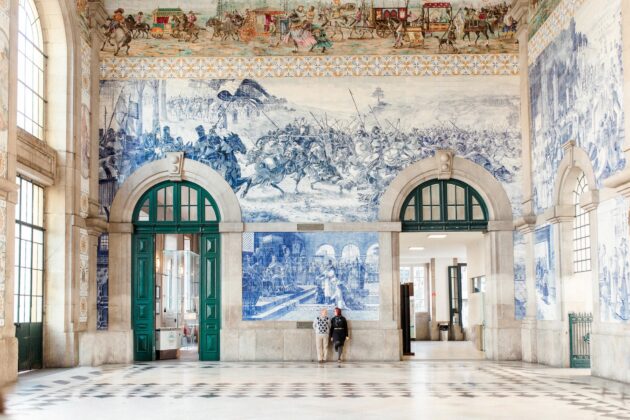
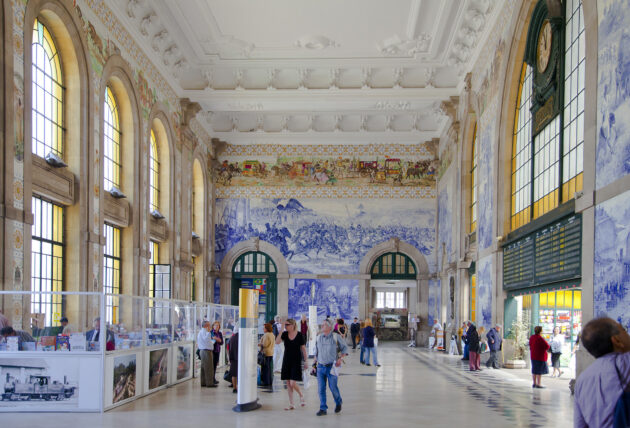
Main Vestibule (Atrium): The star attraction. Approximately 20,000–22,000 azulejo tiles cover about 551 square meters of walls. The dominant blue-and-white panels depict key moments in Portuguese history:
The Battle of Valdevez (1140).
The Conquest of Ceuta (1415), marking the start of the Age of Discoveries.
King João I entering Porto (related to the 1385 Battle of Aljubarrota and his marriage to Philippa of Lancaster in 1387).
Scenes of rural life in the Douro and Minho regions.
Additional colorful friezes show the evolution of transportation, everyday Portuguese life, traditional costumes, and more.
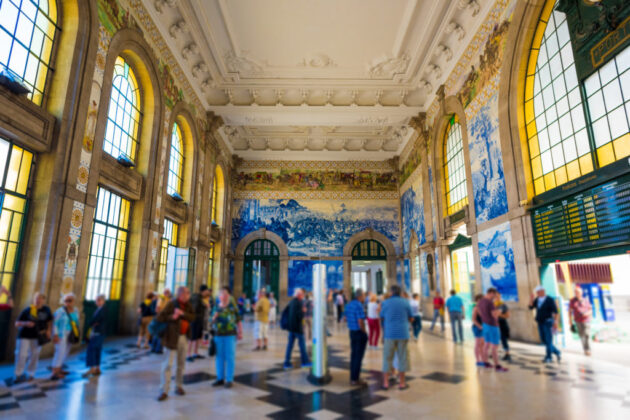
Look up for the ornate gilded ceiling, stained glass, and the grand scale of the hall. Stand at the far end for the best panoramic view.
The station blends functionality with art in a way that feels both historic and alive.
Practical Information for Visitors
Location: Praça de Almeida Garrett, in the heart of Porto’s UNESCO-listed historic center. It’s easily walkable from many major sights.
Opening Hours: The station and main hall are generally accessible daily from around 6:30 AM to 1:00 AM (or roughly 6:40 AM–8:35 PM for core operations, with variations). It’s a working station, so hours align with train schedules.
Entry: Free to enter the main hall and admire the tiles. No ticket needed unless traveling by train.
Best Time to Visit: Early morning (before 9–10 AM) or late afternoon for fewer crowds and better lighting. Avoid peak commuter times if possible. Natural light from windows enhances the tiles beautifully.
Photography: Allowed for personal use. Wide-angle lenses work well for capturing the full scale. Be respectful of passengers.
Facilities: Ticket counters, machines, information desks, cafés/kiosks, restrooms, and accessibility features (ramps, elevators). Left luggage options are available.
How to Get There
Metro: São Bento station on the Yellow Line (D). Very convenient.
From Porto Airport: Take the metro (E line to Trindade, then transfer to D line) or a taxi.
Walking: Close to Avenida dos Aliados, Porto Cathedral (Sé), Clérigos Tower, and Ribeira district.
Tram: Historic Line 22 passes nearby.
From Campanhã Station (main long-distance hub): Frequent free shuttle trains (included with long-distance tickets) take just a few minutes.
Nearby Attractions
Combine your visit with:
Porto Cathedral (Sé) and its terrace views.
Dom Luís I Bridge and the Ribeira riverside district.
Livraria Lello (famous bookstore).
Clérigos Tower for panoramic views.
Avenida dos Aliados for grand architecture and cafés.
The station also serves as a great starting point for day trips by regional train to the Douro Valley (scenic wine region), Braga, or Guimarães.
Tips for a Great Visit
Spend 20–60 minutes exploring the hall. It’s small enough for a quick stop but rewarding to linger.
Respect the space: Don’t block commuter flows during rush hours.
Consider a Porto Card for transport discounts if exploring more of the city.
For deeper context, look for free info panels or join a guided walking tour that includes the station.
Final Thoughts
São Bento is more than a transit point—it’s a masterpiece that captures Portugal’s soul in ceramic form. Whether arriving by train or making a dedicated stop, it’s one of Porto’s most memorable and photogenic experiences. Safe travels!