
Dujiangyan Scenic Area (都江堰) Travel Guide (2026): Chengdu’s Ancient Hydraulic Marvel
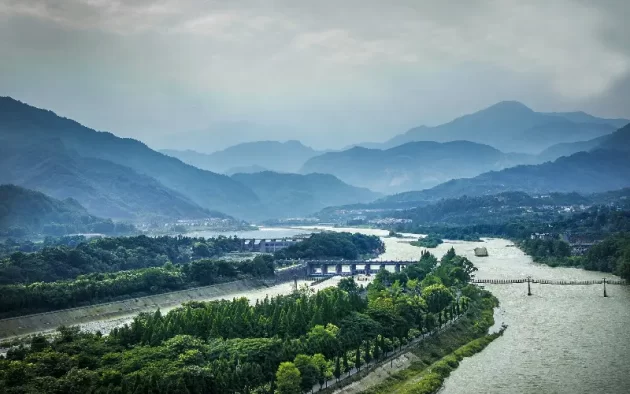
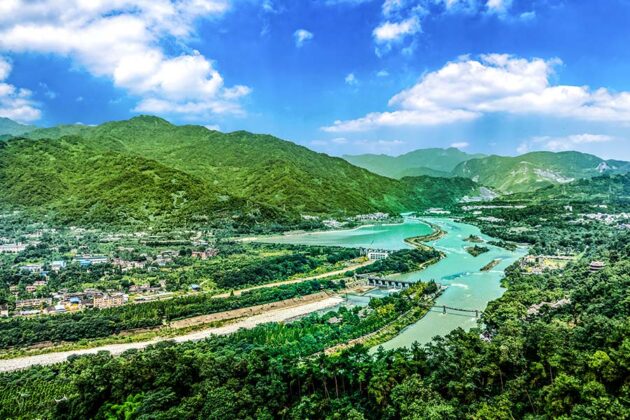
Dujiangyan (都江堰) is located in Dujiangyan City, about 50–60 kilometers northwest of Chengdu, Sichuan Province. It is one of the oldest and only large-scale hydraulic projects in the world characterized by dam-free water diversion.
Built around 256 BC during the Qin Dynasty by Li Bing, the Prefecture Chief of Shu County, and his son, this ancient irrigation system has been functioning continuously for over 2,274 years. It successfully transformed the Sichuan Basin into the “Land of Abundance”.
In 2000, Dujiangyan was inscribed as a UNESCO World Heritage Site alongside the nearby Mount Qingcheng. Remarkably, the system is still fully operational today, controlling floods and distributing water for agriculture without a single dam gate.
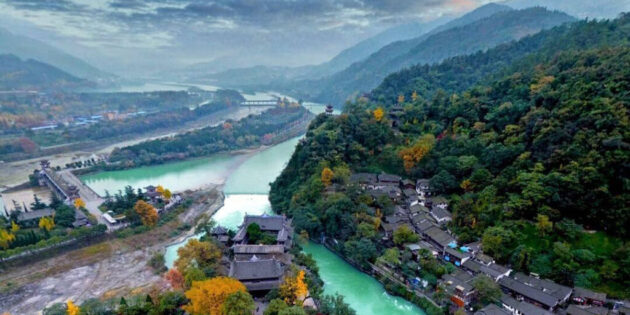
The scenic area seamlessly blends ancient engineering, natural beauty, and traditional Chinese architecture. The main sites include the core water conservancy project, Erwang Temple, Anlan Suspension Bridge, and Lidui Park.
Best Time to Visit
Dujiangyan has four distinct seasons and a pleasant climate. The best times to visit are:
Spring (March–May): Average temperatures between 10–20°C. The mountains are green, water flow is pleasant, and flowers are in bloom — perfect for hiking and outdoor exploration.
Autumn (September–November): Crisp weather with clear skies. The forests on nearby Mount Qingcheng turn colorful, making for great photography.
Summer (June–August): Dujiangyan is much cooler than downtown Chengdu, making it an ideal escape from the summer heat. July and August are lively with pleasant temperatures around 24°C. However, it can be more crowded.
Winter (December–February): Quieter with fewer tourists. If you’re lucky, you can see the ancient irrigation system covered in snow — a very peaceful atmosphere.
Insider tip: March–May and September–November offer the best weather and clearest skies. Avoid visiting during Chinese public holidays when queues at the entrance can be up to 2 hours.
How to Get There
High-Speed Train (Highly Recommended)
From Chengdu, take Metro Line 2 or Line 16 to Xipu Station (犀浦站). Then transfer to the intercity high-speed train to Lidui Park Station (离堆公园站) — do not choose Dujiangyan Station!
Travel time: About 25–30 minutes
Fare: Approximately 10 RMB
Tip: Buy your tickets in advance as trains sell out quickly. Allow at least 10 minutes for the transfer between the metro and the train.
Once you arrive at Lidui Park Station, Yangtianwo Square — home to the famous giant panda sculpture — is right outside the station. From there, it’s about a 10-minute walk to the scenic area entrance, or you can take a taxi (around 10 RMB) to Gate 6 (Qinyan Tower entrance).
Self-Driving
Navigate to “Dujiangyan Scenic Area”. The drive from Chengdu takes about 1 to 1.5 hours. Parking is available at lots No. 1 or No. 6 — some are free, while private lots charge around 20 RMB/day. Parking is limited during holidays, so arrive early.
Shuttle Bus
There are shuttle buses to the scenic area from Chunxi Road and Kuanzhai Alley in downtown Chengdu. Alternatively, take a coach from Chengdu to Dujiangyan for about 35 RMB.
Tickets & Opening Hours (Check Real-time Prices)
Entrance Tickets
Adult Ticket: 80 RMB/person (includes Dujiangyan main scenic area + Erwang Temple)
Student Ticket: 45 RMB with valid student ID
Discounts: Seniors over 60 get free admission; children aged 6–18 get half-price
Shanghai ID card holders: Exclusive on-site discounts available
Opening Hours
Summer (March 2 – October 31): 8:00 AM – 6:00 PM (tickets available until 5:30 PM)
Winter (November 1 – March 1): 8:00 AM – 5:30 PM
Peak season extension: Sometimes extended to 7:00 PM in peak season
Recommended visit duration: 3–5 hours
Additional Costs
Guided tour (shared): 40 RMB/person
Private guide (small group): 300 RMB/group
Sightseeing bus: Charges by section
Escalator to Yulei Pavilion: 20 RMB
Must-See Attractions
The Three Core Engineering Works
1. Yuzui (Fish Mouth Diversion Dam)
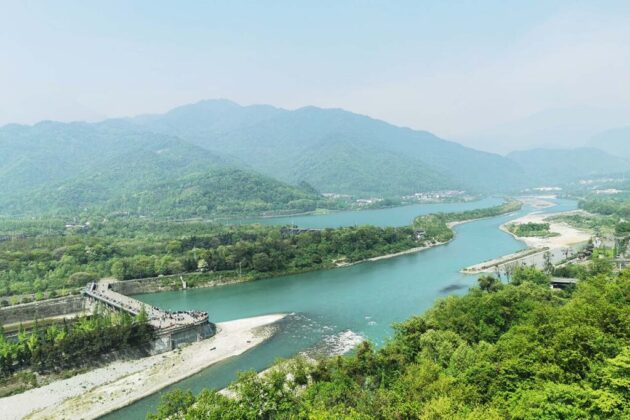
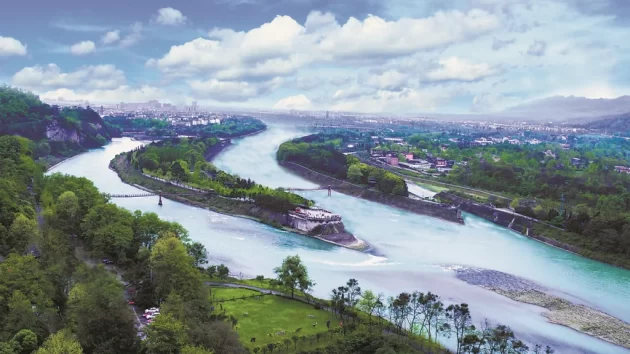
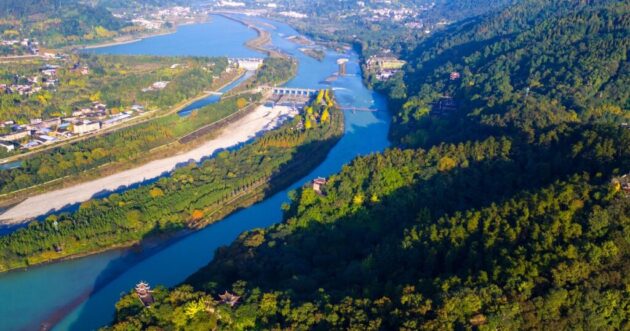
A fish-mouth-shaped dike in the river center that splits the Minjiang River into the Inner River (for irrigation) and Outer River (for flood discharge and sediment removal). During dry seasons, 60% of water flows into the Inner River; during floods, 60% flows into the Outer River — all automatically regulated by the terrain. This is the “brain” of the entire project. Standing on the Fish Mouth, you can feel the powerful rush of two water currents beneath your feet.
2. Feishayan (Flying Sand Weir)
A spillway that allows excess water from the Inner River to overflow into the Outer River during floods. It uses centrifugal force to automatically remove sediment without any human intervention — the most ingenious ancient automatic regulation device.
3. Baopingkou (Bottle-Neck Channel)
A man-made water intake carved through Yulei Mountain, about 20 meters wide. It controls the amount of water entering the irrigation area. The side “water gauge” records water level changes over 2,000 years.
Other Must-Visit Spots
Erwang Temple (二王庙)
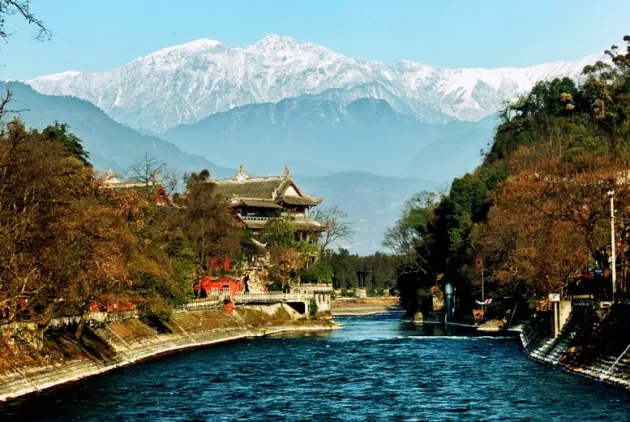
A temple dedicated to Li Bing and his son, built tiered along the mountain. Inside, the stone statue of Li Bing is a relic from the Eastern Han Dynasty — one of the earliest known round stone sculptures. From the temple front, you get a panoramic view of Dujiangyan. On the temple walls is the Water Control Classic: “Deeply dredge the shoal, build the weir low”.
Anlan Suspension Bridge (安澜索桥)
A thousand-year-old bamboo-rope suspension bridge spanning the Minjiang River. Walking on it, you’ll feel a slight sway with the river rushing below — every snapshot is a masterpiece.
Qinyan Tower (秦堰楼)
The best spot to overlook the entire Dujiangyan Scenic Area. From here, you can see the Fish Mouth, Feisha Weir, and Baopingkou all at once, capturing the full grandeur of the waterworks in one shot.
Fulongguan (伏龙观)
A temple dedicated to Li Bing. Climb up to overlook Baopingkou and Feishayan — a perfect spot for photos.
Lidui Park (离堆公园)
A lush and tranquil park at the exit of the scenic area, perfect for relaxing and taking photos.
Nanqiao Bridge (南桥)
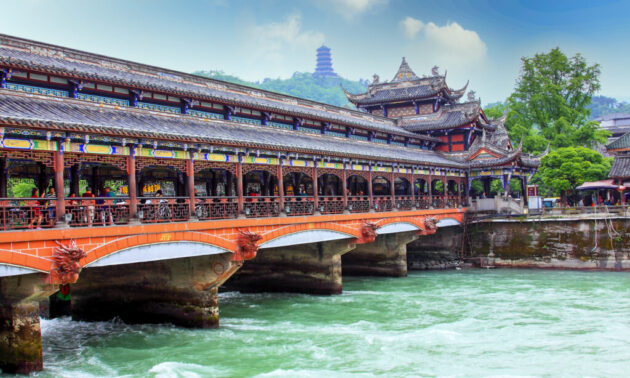
A beautifully painted covered bridge spanning the Inner River. Visit before sunset to enjoy the stunning interplay of lights and water scenery. The bridge is lined with shops and is the liveliest spot in Dujiangyan.
Yangtianwo Square Panda Sculpture
A massive panda sculpture lying on its side — a signature landmark of Dujiangyan. Fresh and healing during the day, and when lit up at night, the vibes are absolutely immaculate.
Guanxian Ancient City (灌县古城)
Stroll through bluestone paths, small bridges over flowing water, and wooden pavilions — every step is a picturesque scene full of nostalgic charm. The ancient city is open for free.
“Blue Tears” Night View
Under the night lights, the Minjiang River surface glows with a dreamy blue fluorescence — a breathtaking spectacle. In summer, you might be lucky enough to catch this phenomenon. No entry ticket is required — you can see it from Nanqiao Bridge and Tianfuyuan Covered Bridge.
Recommended Routes
Classic Panoramic Route (All Downhill, Not Tiring)
Start at Gate 6 (Qinyan Tower) → Erwang Temple → Anlan Suspension Bridge → Yuzui (Fish Mouth Weir) → Feishayan (Flying Sand Weir) → Baopingkou (Bottle-Neck Channel) → Lidui Park → Nanqiao Bridge
Why this route: Starting from the highest point (Qinyan Tower), you work your way down without any strenuous climbing
Time: About 4–5 hours including photo breaks
Tip: No backtracking — you exit at the south gate of Lidui Park
Easy & Relaxed Route (With Sightseeing Bus)
Lidui Park Station → Yangtianwo Square → Take a vehicle to Qinyan Tower → Follow the classic route
Combined Dujiangyan + Mount Qingcheng Two-Day Itinerary
The two scenic spots are about 15 km apart — about 25 minutes by taxi.
Day 1: Dujiangyan Scenic Area (morning) → Nanqiao night view → Guanxian Ancient City (evening)
Day 2: Full day at Mount Qingcheng (Front Mountain for Taoist culture or Back Mountain for hiking)
Photography-Focused Route
Qinyan Tower — panoramic shot of the entire water conservancy project
Anlan Suspension Bridge — swirling river, mountain silhouette, and cloudy skies
Fish Mouth — best photographed in the afternoon (front light)
Feisha Weir — side shot capturing splashing rapids
Erwang Temple entrance — layering ancient temple, forest, and distant river views
Nanqiao Bridge — bridge reflection in water at sunset
“Blue Tears” at night — bring a tripod for long exposures
Accommodation (Check Real-time Prices)
Near the Scenic Area
Xianzai Houshe Hotel (Dujiangyan Scenic Area): Fantastic choice with a convenient location
Baoping Hotel: Located in the ancient city core scenic area, close to mountains and rivers — right above the food street
Holiday Inn Express Dujiangyan Ancient City: Within a 15-minute walk of Dujiangyan Museum and the scenic area
Home2 Suites By Hilton Chengdu Dujiangyan: Adjacent to the economic development zone and close to major attractions
Near Mount Qingcheng (For Combined Trips)
Sixi Shanwai Inn: Ideal for travelers wanting to take in the sights and sounds of Dujiangyan
Qingcheng Mountain Secret Hot Spring Homestay: Forest hot spring resort, about 15 minutes from the highway exit
Rui Hong Hotel & Resort: Halfway up the mountain with beautiful scenery, outdoor hot spring pools, and hiking trails
Local Food
Must-Try Dishes
Ye’er Ba (叶儿粑): Leaf-wrapped rice cake — a local specialty
Zhong Duck (钟鸭子): Famous Dujiangyan duck dish
Douhua (豆花): Tofu pudding — a comforting local snack
Bingfen (冰粉): Handmade ice jelly — perfect for cooling down
Feichang Fen (肥肠粉): Fat intestine noodles
You Rabbit Head (尤兔头): A signature Dujiangyan specialty — a feast of numbing Sichuan spice
Liangfen (凉粉): Cold jelly noodles
Where to Eat
Guanxian Ancient City: Authentic local snacks everywhere — stroll and eat
Nanqiao Bridge area: Lively commercial streets with many restaurants
Within the scenic area: Limited options — bring your own snacks and water
Practical Tips
Start early: Crowds pick up in the afternoon, and popular spots require queuing. Arrive before 9 AM for fewer crowds and better lighting.
Book tickets in advance: Purchase through the official WeChat account “Qingchengshan Dujiangyan” — enter by scanning your ID card and skip the queue.
Choose the right train station: Take the train to Lidui Park Station (离堆公园站), not Dujiangyan Station.
Wear comfortable shoes: The walking routes inside the scenic area are quite long. Grippy, non-slip shoes are essential, especially on rainy days.
Bring rain gear: Sudden showers are common — pack an umbrella or raincoat.
Night photography: Bring a tripod for long exposures of the “Blue Tears” and Nanqiao Bridge.
Mosquito repellent: There are lots of mosquitoes and bugs in summer.
Avoid weekends and holidays: The scenic area attracts large crowds and can get very congested.
Safety first: When taking photos by the river, do not lean on the guardrails.
Drones: Large drones are prohibited in the park.
Return tickets: Buy your return train ticket ahead of time — trains heading back sell out fast. The last train back is around 9:55 PM.
Budget: A comfortable one-day trip costs approximately 150–250 RMB all-inclusive (transport 10–35 RMB + ticket 80 RMB + food 50–80 RMB + optional extras).
Final Thoughts
Whether you’re a history buff, engineering enthusiast, photography lover, or simply looking for a perfect day trip from Chengdu, Dujiangyan offers an unforgettable journey through 2,300 years of living history. As the locals say: “Worship the water at Dujiangyan, seek the Tao at Qingcheng Mountain”. Come and witness the ancient wisdom that still nourishes the “Land of Abundance” today.