

Huanglongxi Ancient Town (黄龙溪古镇) Travel Guide (2026)
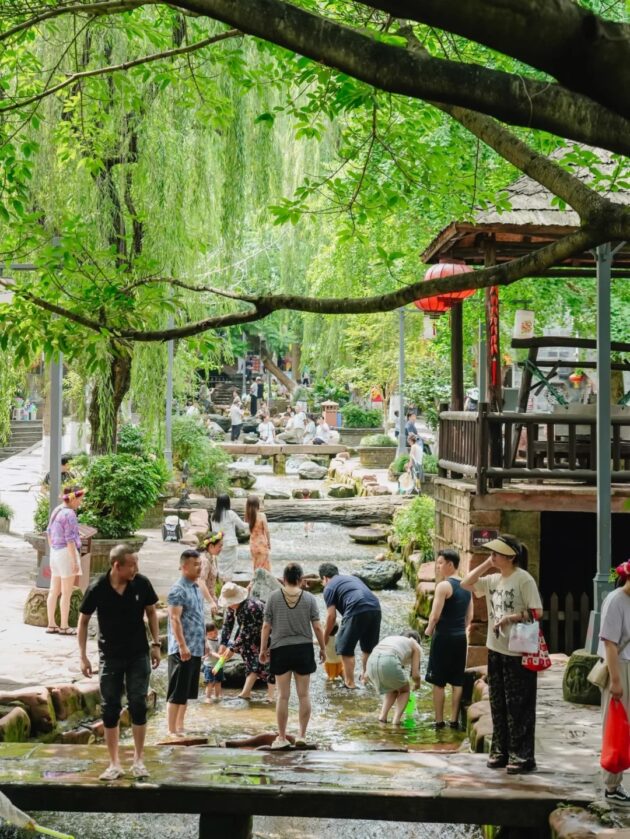
There is a moment in Huanglongxi when the heat of a Sichuan summer suddenly disappears – you’re ankle-deep in cool, rushing water, a water pistol battle raging around you, laughter echoing off stone walls carved by time. Then, just a few alleys away, absolute silence falls beneath a 1,000-year-old banyan tree leaning over a misty river.
Huanglongxi, “Yellow Dragon Stream,” is a 1,700-year-old water-town that serves up two very different faces: one a joyful, splash-filled playground, the other a deeply atmospheric network of Ming and Qing lanes, ancient temples, and riverside teahouses. It’s the most refreshing day trip from Chengdu.
Best Time to Visit
Summer (June–August): The liveliest season. The water channels flowing through the ancient streets become a giant, open-air water fight. Children and adults alike wade in with buckets and squirt guns. It’s pure, chaotic joy. Come on a hot weekday to beat the worst crowds.
Spring & Autumn: Milder and far more serene. Perfect for photography, quiet strolls, and savoring the river mist without the splashing mayhem.
Weekdays vs Weekends: Weekends and holidays transform the old street into a shoulder-to-shoulder carnival. For a more poetic, quiet Huanglongxi, arrive on a weekday morning by 9:30 am.
How to Get There
Metro + Bus (easiest): Take Chengdu Metro Line 5 south to the terminus, Huilong Station (回龙站). Exit from Exit B, cross the street and take bus S18 or S18K directly to Huanglongxi terminal – the ride is about 30–40 minutes. Total cost under 15 RMB.
Direct Coach: From Xinnanmen Bus Station (新南门车站) or Chadianzi Bus Station, there are occasional direct tourist coaches. Check the “Chengdu Tourism Big Data” WeChat mini-program for schedules.
Taxi/Ride-hailing: About 60–90 minutes from downtown, costing roughly 120–180 RMB. Show the driver “黄龙溪古镇”.
Admission: The ancient town itself is free. A few minor internal attractions (such as the “Three Counties Office”) may charge a nominal 5–10 RMB.
Top Things to See and Do
1. Play in the Water Streets – The Living Stream
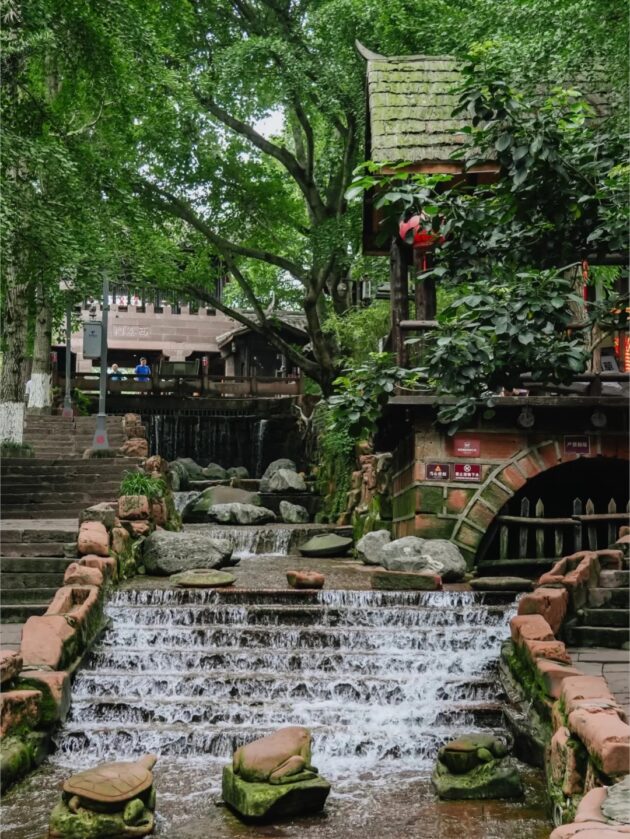
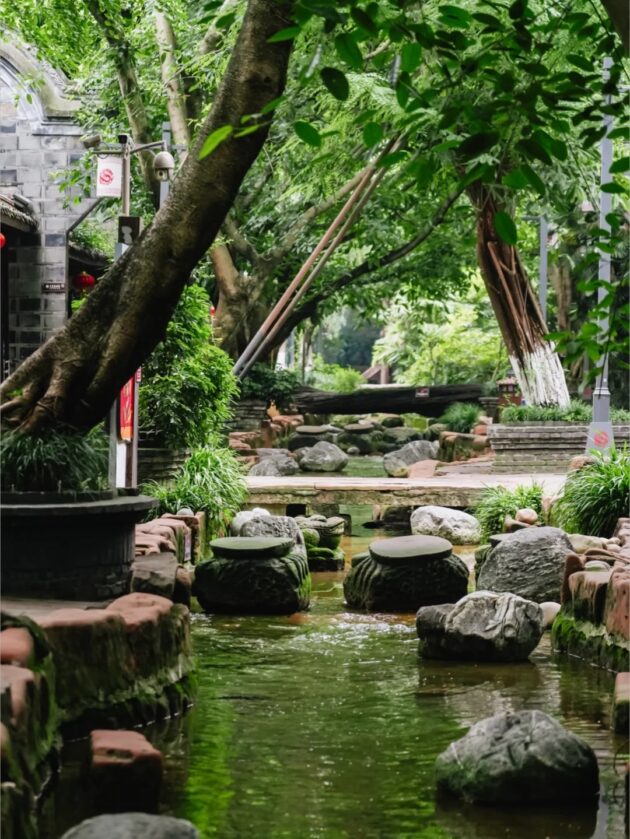
This is Huanglongxi’s superpower. A clear, shallow stream is channelled straight down the main alley and into Dragon Pond Plaza (龙潭广场). From late spring to early autumn, the water runs fast and clean. You’ll see toddlers stamping their feet, kids with water cannons, and teenagers tipping entire basins over each other’s heads. Stone stepping-stones cross the stream, and the shops sell colourful water toys. If you plan to join, wear quick-dry clothes or bring a change – you will get soaked, and you will laugh uncontrollably.
2. Stroll the Three Streets and their Ancient Architecture
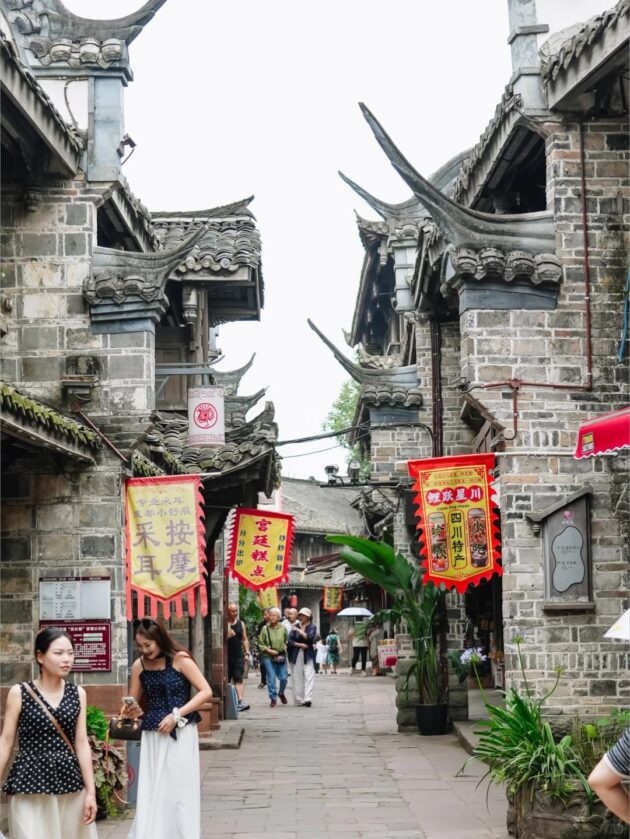
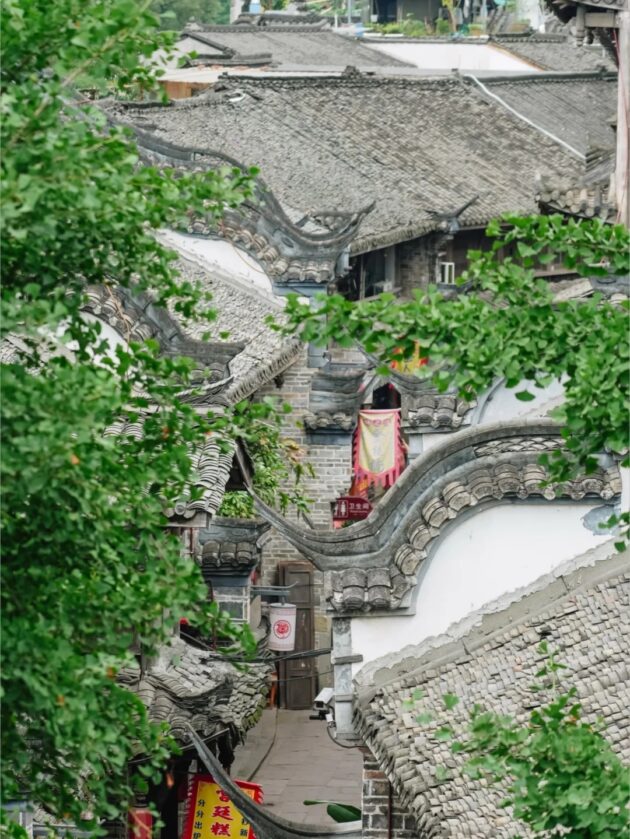
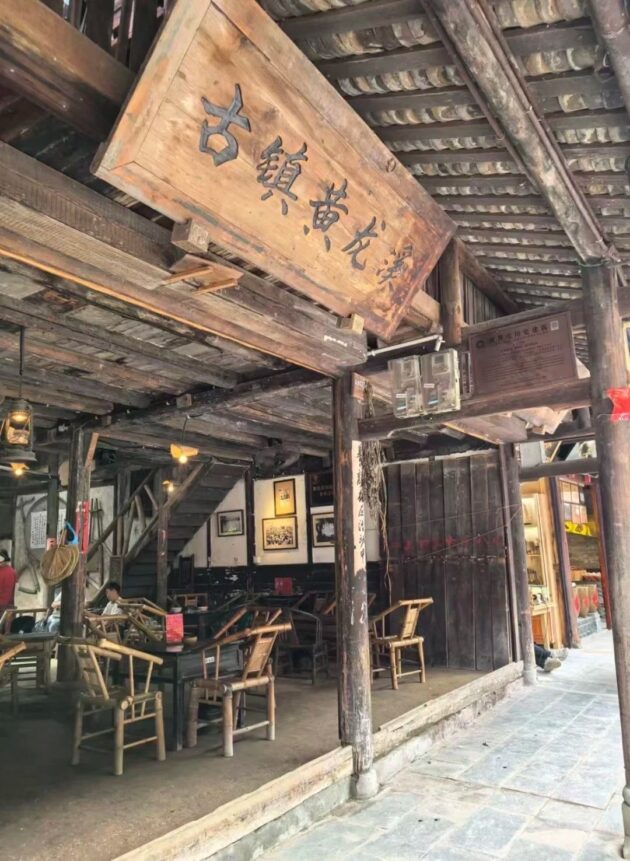
Once you dry off, dive into the deeper lanes. Huanglongxi’s old town consists of three main streets running parallel to the river – Zhenlong Street (正街), Fuxing Street (复兴街), and Linjiang Street (临江街) – all paved with worn flagstones and lined with wooden pavilions, black-tiled roofs, and carved lintels. Look up for elaborate eave decorations and the occasional cat sleeping on a windowsill.
3. Visit the Three Temples – One Block, Three Faiths
At the north end of Zhenlong Street, an extraordinary trio of temples stand shoulder to shoulder:
Gulong Temple (古龙寺): The oldest, dedicated to the Yellow Dragon. Its courtyard houses a towering 1,000-year-old banyan and a rare Ming-dynasty stage pavilion.
Zhenjiang Temple (镇江寺): Guarding the river, dedicated to the water god. It sits right at the river’s edge.
Chaoyin Temple (潮音寺): A serene Buddhist nunnery in the middle, smaller and quieter.
Seeing three temples (Buddhist, Daoist, and folk deities) aligned on a single street is a moving reminder of Huanglongxi’s deep, syncretic spirituality.
4. The Ancient Wharf – Where Chengdu Met the Yangtze
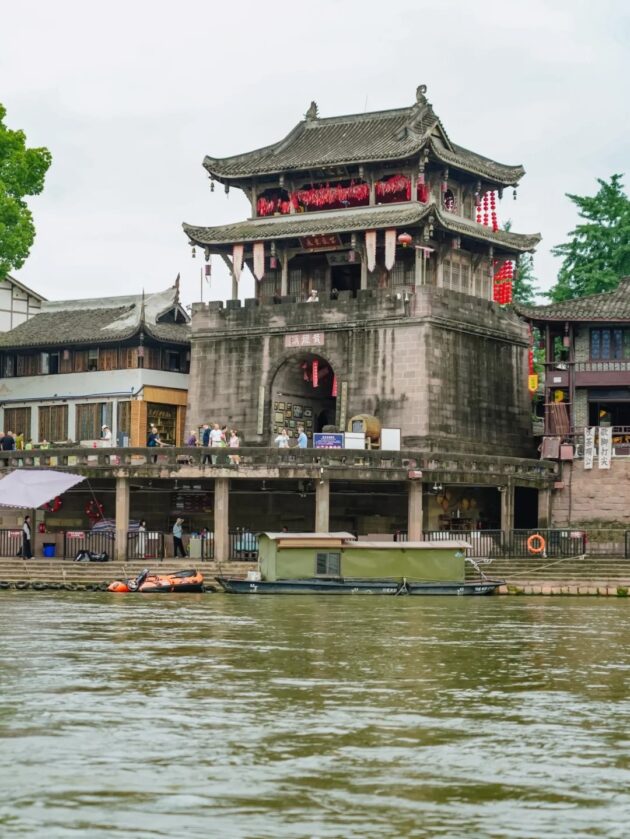
Walk to the waterfront below Zhenjiang Temple. This was once one of the busiest river ports in Sichuan, a vital link on the Fuhe River route into the Yangtze. Today, wooden fishing boats bob gently, and stone steps descend into the tea-coloured water. It’s a perfect spot for a riverside cup of tea, watching bamboo rafts drift by. You can still hire a small boat for a short river tour (around 30–50 RMB) to see the town from the water.
5. The Thousand-Year Banyans
Scattered through Huanglongxi are several ancient banyan trees, some over a millennium old, with aerial roots that form fantastic, curtain-like shapes. The most famous, outside Gulong Temple, has a trunk that takes four people to encircle and canopy that shades an entire square. They appear in classic Chinese films and bring a profound sense of permanence.
6. Three Counties Office (三县衙门)
A tiny, quirky gem from the Qing dynasty. Huanglongxi once sat at the junction of three counties (Huayang, Renshou, Pengshan), and this was the joint administrative office. Inside you’ll see old court records, wooden punishment boards, and a miniature replica of the old yamen. The entrance ticket is just a few yuan.
7. The Covered Bridge and Evening Glow
At the south end, a magnificent wind-and-rain covered bridge spans the river. Come here in the late afternoon to watch the sun turn the water gold, then stay as lanterns flicker on. From here, you can look back at the entire riverfront, a silhouette of temple roofs and banyan crowns that has hardly changed for centuries.
What to Eat and Drink
Huanglongxi’s food is a rustic, farmhouse-style Sichuan cuisine served right by the water. Must-tries include:
One-Noodle (一根面, Yigeng Mian): The town’s viral star. Watch through the open kitchen window as a noodle master dances while swirling a single, impossibly long noodle from a giant coil straight into a boiling pot. Served with spicy minced pork sauce or clear broth. The performance is as good as the taste.
Yellow Hotfish (黄辣丁, Huanglading): Tiny, golden river fish cooked in a fiery Sichuan pickled-chilli or bean-paste broth. Sweet, tender meat that slips off the bone. Served in clay pots along the riverbank restaurants.
Stone-Ground Tofu Pudding (石磨豆花): Silky, just-coagulated tofu served with a tray of dips – chili oil, Sichuan pepper, soy sauce, and scallions. The river water tofu here is said to be extra smooth.
Zhima Gao (芝麻糕): Black or white sesame cakes, ground fine with sugar and pressed into delicate squares. A classic local gift to take home.
Ding Ding Candy (丁丁糖): A malt-sugar candy that street vendors chisel off a huge block with a small hammer, making a “ding ding” sound.
For the best riverside experience, walk down to Linjiang Street, pick a restaurant with a patio over the water, order a pot of Huanglading and a bottle of ice-cold beer, and watch the river life float by.
Tips for a Perfect Day Trip
Wear water-friendly shoes: Sandals, crocs, or water shoes are ideal. The flagstones are slippery when wet, and you’ll want to paddle. Bring a pair of dry socks and maybe a second set of clothes in summer.
Bring water-fight supplies: You can buy water guns, plastic basins, and ponchos all over the town for cheap, but you can also bring your own.
Start early: Aim to arrive by 9:00–9:30 am. The water play starts by late morning, but early hours give you the empty lanes and misty river.
Combine with Happy田园: Just 10 minutes’ drive away is Huanglongxi Happy田园 (欢乐田园), a massive rural leisure park with sunflower fields, animal-petting areas, hot springs, and Instagram-famous glass bridges. It’s a great full-day combination for families.
Toilets and changing rooms: Public restrooms are clean and spread throughout the town. There are no official changing rooms, so small children often change behind a towel held by a parent – it’s part of the fun.
Stay for sunset: Many day-trippers leave by 4 pm. If you stay until the lanterns are lit, you’ll have the glowing covered bridge almost to yourself.
Why Huanglongxi is Special
Huanglongxi doesn’t just ask you to look at history – it invites you to wade right into it, to hear the shouts of joy bounce off Ming walls and see the same banyan shadows that shaded boatmen and merchants centuries ago. It’s messy, wet, tender, and deeply alive. On a hot Chengdu day, with your feet in the stream and the scent of sizzling chili in the air, there is simply nowhere else you’d rather be.