
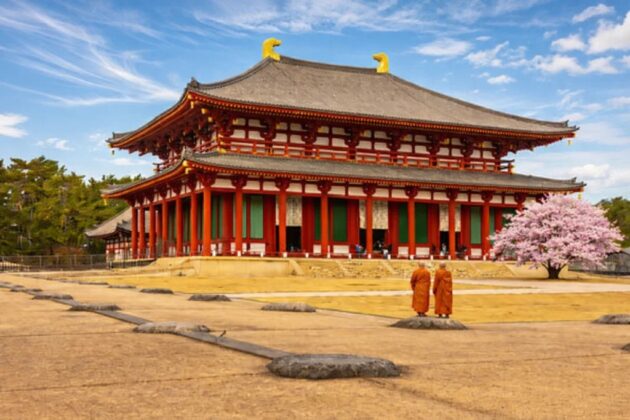
Kōfuku-ji Temple Travel Guide (2026)
Kōfuku-ji (興福寺, often written as Kofukuji) is one of Nara’s most iconic landmarks and a UNESCO World Heritage Site as part of the Historic Monuments of Ancient Nara. Founded in 669, this ancient Buddhist temple served as the family temple of the powerful Fujiwara clan. At its peak, it included over 150 buildings and played a major role in Japanese politics and religion during the Nara and Heian periods.
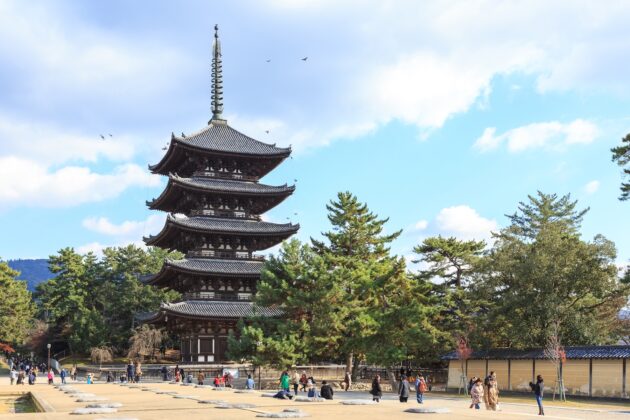
The temple’s striking five-story pagoda (50 meters tall, Japan’s second-tallest wooden pagoda) is a symbol of Nara and dominates the skyline. Though currently undergoing major repairs until around 2031 (meaning scaffolding may obscure full views), the temple grounds remain highly atmospheric and worth visiting.
How to Get There
From Kintetsu Nara Station: Just a 5-minute walk. This is the most convenient option.
From JR Nara Station: About a 15-20 minute walk east toward Nara Park. Follow the main road (Sanjō-dōri); the temple is on the way to major sights like Todaiji.
By Train from Major Cities: From Kyoto: 30–45 minutes via Kintetsu or JR lines. From Osaka: 30–50 minutes. Nara is an easy and popular day trip from both cities.
Address: 48 Noborioji-cho, Nara City, Nara Prefecture.
Opening Hours & Admission
Temple Grounds: Free and open 24 hours a day. Beautifully lit at night.
Indoor Attractions (National Treasure Museum, Eastern Golden Hall, Central Golden Hall): Generally 9:00 AM – 5:00 PM (last entry around 4:45 PM).
Fees (approximate; confirm on-site as they can change): National Treasure Museum (Kokuhōkan): Around ¥700–900 for adults. Eastern Golden Hall: ¥300–500. Central Golden Hall: ¥500. Combined tickets available (e.g., Museum + Eastern Hall for ~¥800–900; all three for around ¥1,600).
What to See
Five-Story Pagoda: The star attraction. First built in 730 and last rebuilt in 1426.
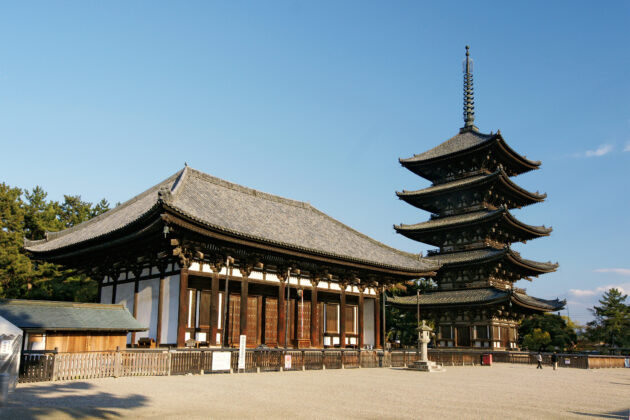
Eastern Golden Hall (Tōkondō): Features impressive Buddhist statues, including a Yakushi Nyorai (Medicine Buddha).
National Treasure Museum: Houses many of Japan’s finest Buddhist sculptures, including the famous Ashura statue (an eight-armed, three-faced deity). Highly recommended for art lovers.
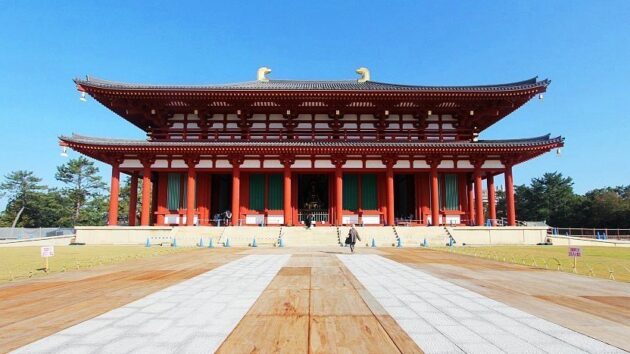
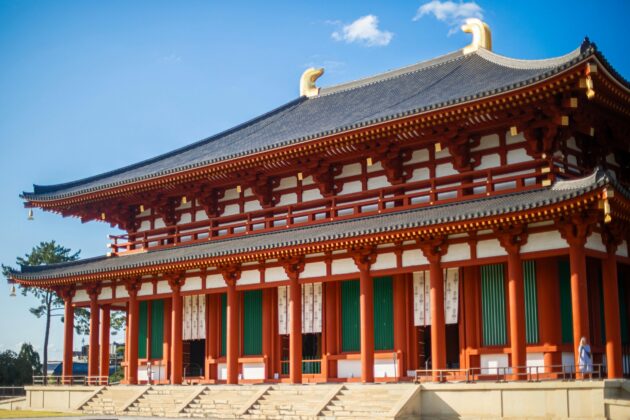
Central Golden Hall (Chūkondō): Recently renovated but may have limited or no access during certain periods.
Other Structures: Three-story pagoda, Northern and Southern Octagonal Halls, and various guardian statues.
Deer: Nara’s famous sacred deer roam freely around the temple grounds — a fun (and sometimes cheeky) addition to your visit.
Best Time to Visit
Spring (March–May): Cherry blossoms make the area magical.
Autumn (September–November): Vibrant fall foliage around the temple.
Early Morning or Late Afternoon: Fewer crowds and nicer light for photos. The grounds are accessible anytime, so visiting at night offers a peaceful, illuminated experience.
Avoid peak summer heat and humidity if possible, though the temple is manageable year-round.
Practical Tips
Wear comfortable shoes — you’ll do a lot of walking in Nara.
Respect temple etiquette: Be quiet in worship areas, avoid touching statues, and follow photography rules (some indoor areas restrict photos).
Deer interaction: Deer are cute but can be pushy. Buy deer crackers (shika senbei) but don’t overfeed or tease them.
Combine with nearby sights: Kōfuku-ji is perfectly located next to Nara Park. A logical route is Kōfuku-ji → Nara National Museum → Todaiji Temple (Great Buddha) → Kasuga Taisha Shrine.
Language: English signage and brochures are available, but a guide or audio app can add depth.
Restrooms and facilities: Available near the temple and throughout Nara Park.
Nearby Attractions
Nara Park & Deer — Feed and walk among hundreds of free-roaming deer.
Todaiji Temple — Home to the massive Great Buddha (Daibutsu).
Kasuga Taisha Shrine — Famous for its thousands of lanterns.
Nara National Museum — Excellent collection of Buddhist art.
Isuien Garden — Beautiful traditional Japanese garden (small fee).
Final Thoughts
Kōfuku-ji offers a perfect introduction to Nara’s rich history. Even with the pagoda under scaffolding, the temple grounds, statues, and serene atmosphere make it a must-visit. Plan at least 1–2 hours here, or longer if you enter the paid halls.
Enjoy your trip to this ancient capital! Nara’s blend of history, nature, and spirituality is unforgettable.