
Yakushi-ji Temple Travel Guide (2026)
Yakushi-ji (薬師寺) is one of Japan’s most historically significant Buddhist temples and a UNESCO World Heritage Site as part of the “Historic Monuments of Ancient Nara.” Located in the Nishinokyo area of western Nara, it is renowned for its elegant symmetry, ancient architecture, and exquisite Buddhist art, particularly the Yakushi Triad statues. It offers a more peaceful and contemplative experience compared to the bustling Nara Park area.
Brief History
Emperor Tenmu began construction of Yakushi-ji around 680 AD to pray for the recovery of his ailing wife, Empress Jito. It was later moved to its current location in Nara when the capital was established. Dedicated to Yakushi Nyorai (the Buddha of Healing and Medicine), it serves as the head temple of the Hosso sect of Japanese Buddhism. While many buildings were lost to fires and wars over the centuries and later reconstructed, the East Pagoda survives as a remarkable original structure and National Treasure.
Highlights and What to See
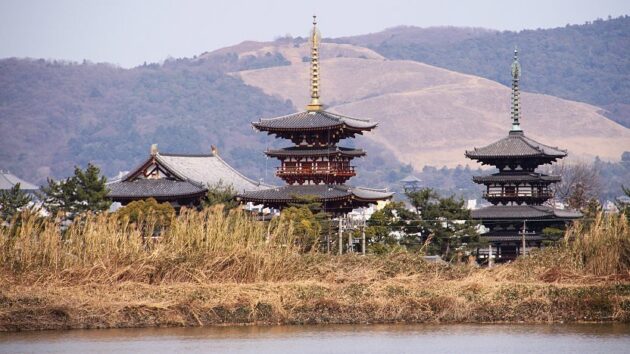
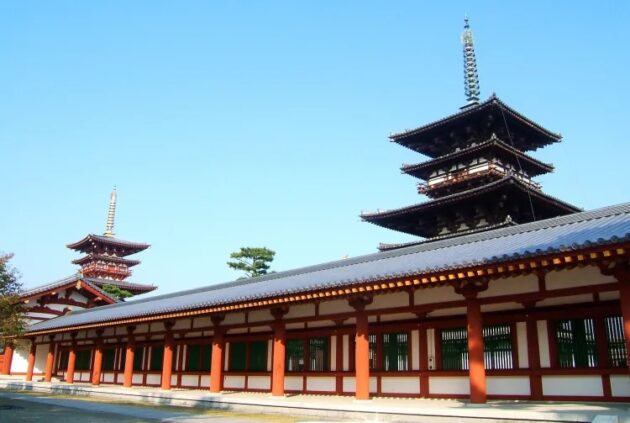
East Pagoda (National Treasure): The only surviving original building from the 8th century. Its graceful, three-story design with gently curved eaves is considered a masterpiece of early Japanese Buddhist architecture. (Note: It may occasionally undergo restoration work.)
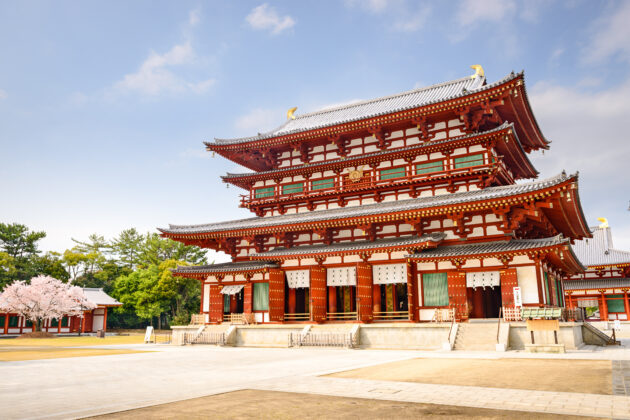
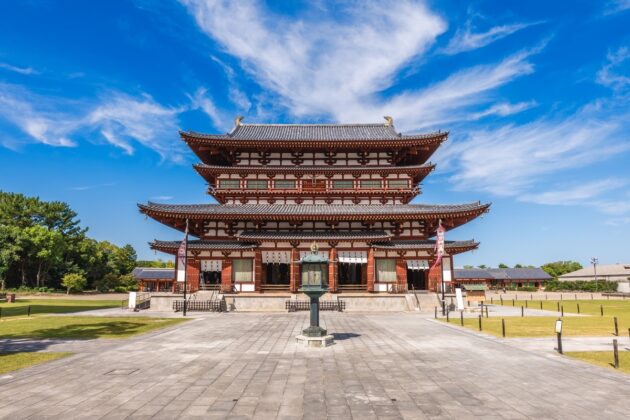
Kondo (Main Hall): Rebuilt in the 1970s, it houses the famous Yakushi Triad — bronze statues of Yakushi Nyorai flanked by the Bodhisattvas of the Sun and Moon. These are among the finest examples of Hakuho-period Buddhist sculpture.
Daikodo (Lecture Hall) and other halls: Feature additional statues and artworks.
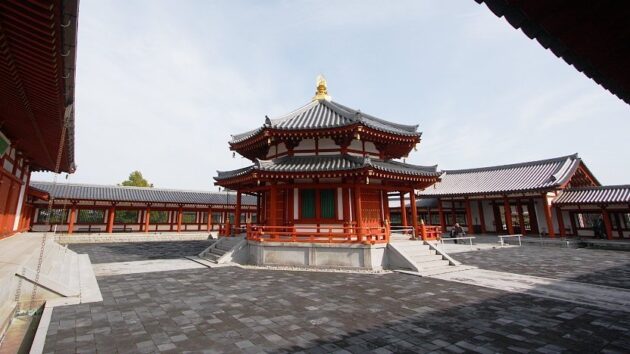
Genjo-sanzoin Garan (separate section): An octagonal hall with modern murals by artist Ikuo Hirayama depicting the Silk Road journey of the monk Xuanzang. Admission may be separate or bundled depending on the season.
Temple Grounds: The layout is strictly symmetrical, with two pagodas (East and West) flanking the central axis. The vermilion corridors and serene atmosphere make it photogenic, especially in spring (cherry blossoms) or autumn (fall colors).
The temple is relatively compact and can be explored thoroughly in 1–1.5 hours.
Opening Hours and Admission
Hours: 9:00 AM to 5:00 PM (last admission 4:30 PM). Open daily, no regular closures.
Admission: Approximately ¥1,000 for adults (main temple areas). Discounts for students and groups. A combined ticket including Genjo-sanzoin may cost around ¥1,100.
Cash is typically required for tickets.
How to Get There
Yakushi-ji is very convenient:
By Train (Recommended): Take the Kintetsu Nara Line to Yamato-Saidaiji Station, then transfer to the Kintetsu Kashihara Line and get off at Nishinokyo Station. The temple is right next to the station (about 1 minute walk). Total time from Kintetsu Nara Station: ~25 minutes, ~¥300.
By Bus: Buses 72, 78, or 98 from Kintetsu Nara Station (20 min) or JR Nara Station (15 min).
From Kyoto/Osaka: Easy day-trip access via Nara, then transfer.
Tip: Consider the Nara Park Nishinokyo 1-Day Bus Pass for unlimited rides if combining with nearby temples.
Nearby Attractions
Yakushi-ji pairs perfectly with a half-day western Nara itinerary:
Toshodaiji Temple (10–15 minute walk north): Another UNESCO site founded by the Chinese monk Ganjin. Known for its serene mossy grounds and ancient wooden architecture.
Further afield: Horyu-ji Temple (one of the oldest wooden structures in the world).
Practical Tips
Best Time to Visit: Spring (March–May) for cherry blossoms or autumn (October–November) for colorful foliage. Early mornings are quieter.
Dress and Etiquette: Modest clothing is recommended (cover shoulders and knees). Be respectful — no loud talking inside halls, and photography rules may apply to certain statues.
Facilities: Limited English signage, but major features have explanations. There are restrooms and small souvenir shops.
Weather: Much of the site is outdoors, so check forecasts and wear comfortable shoes.
Crowds: Far less crowded than Todaiji or Nara Park, making it ideal for those seeking tranquility.
Food: Limited options on-site. Bring snacks or eat in central Nara or near the station.
Final Thoughts
Yakushi-ji offers a profound glimpse into Japan’s ancient Buddhist heritage with its healing theme, architectural beauty, and artistic treasures. Combining it with Toshodaiji makes for a rewarding, less-touristy Nara experience.
Safe travels, and enjoy this serene corner of ancient Nara!