
Bulguksa Temple Travel Guide (2026)
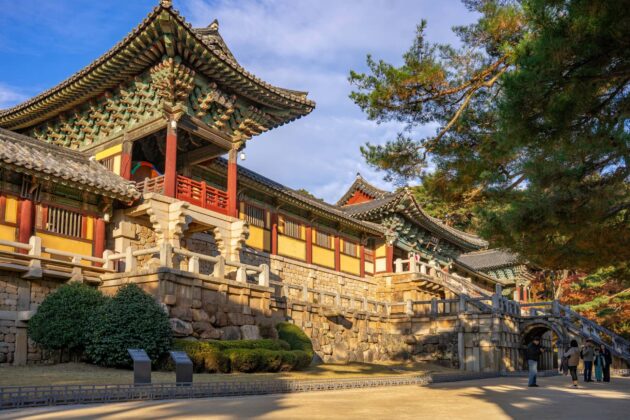
Bulguksa Temple (불국사, Temple of the Buddha Land) is one of South Korea’s most iconic Buddhist sites and a must-visit highlight of Gyeongju, often called the “museum without walls” for its wealth of Silla Kingdom heritage. Designated a UNESCO World Heritage Site in 1995 (together with nearby Seokguram Grotto), it exemplifies the pinnacle of Unified Silla architecture, art, and Buddhist culture from the 8th century.
A Brief History
A small temple existed on the site as early as 528 AD during King Beopheung’s reign. The grand complex as we know it was largely constructed in 751 AD under Prime Minister Kim Dae-seong (to honor his parents) and completed in 774. It suffered damage and destruction, notably during the Imjin War (1592–1598), but underwent major restorations, including extensive work in the 1969–1973 period. Many original Silla-era stone structures, such as the famous pagodas and bridges, survive.
What to See and Do
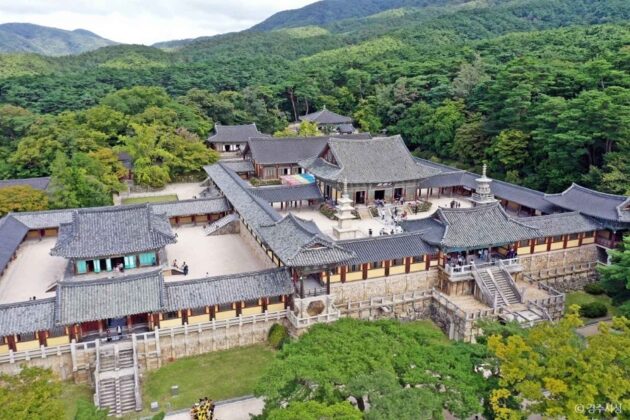
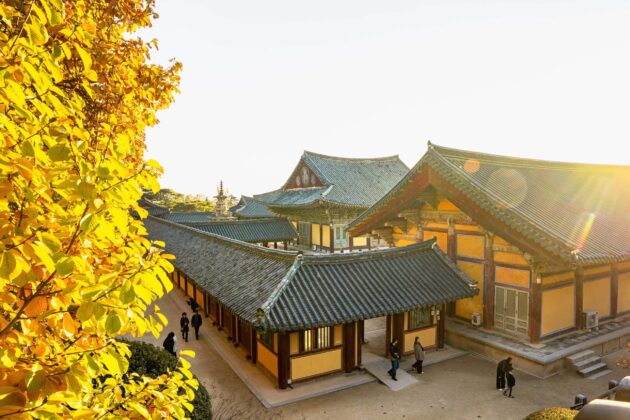
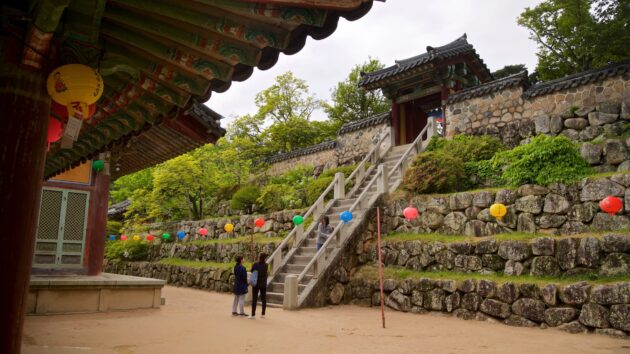
The temple complex is beautifully laid out on stone terraces representing the Buddhist Pure Land, with wooden halls, ornate dancheong (colorful paintwork), and serene gardens.
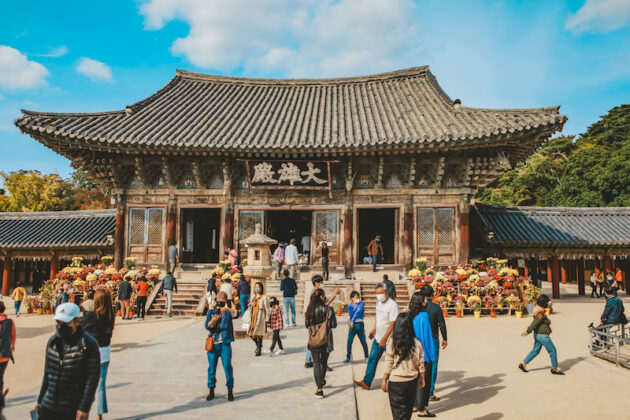
Iconic Stone Pagodas: In the main courtyard in front of Daeungjeon (Hall of Great Enlightenment) stand the twin National Treasures — Dabotap (Pagoda of Many Treasures, ornate and intricate) and Seokgatap (Sakyamuni Pagoda, simpler and elegant). Dabotap appears on the 10-won coin.
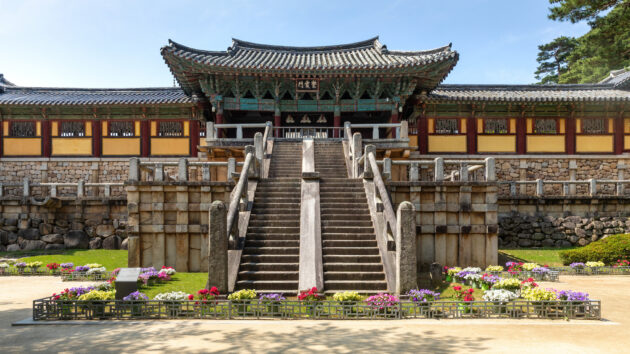
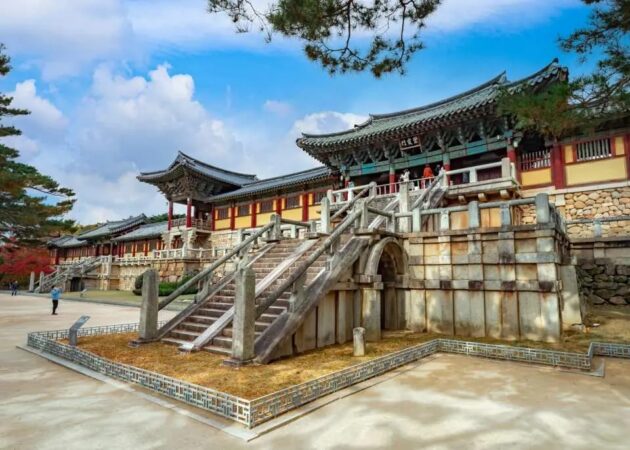
Bridges and Stairways: The Blue Cloud Bridge (Cheongungyo) and White Cloud Bridge (Baegungyo) form a symbolic staircase (34 steps for the stages of enlightenment) leading to Jahamun Gate. Nearby are other graceful bridges like Yeonhwagyo and Chilbogyo.
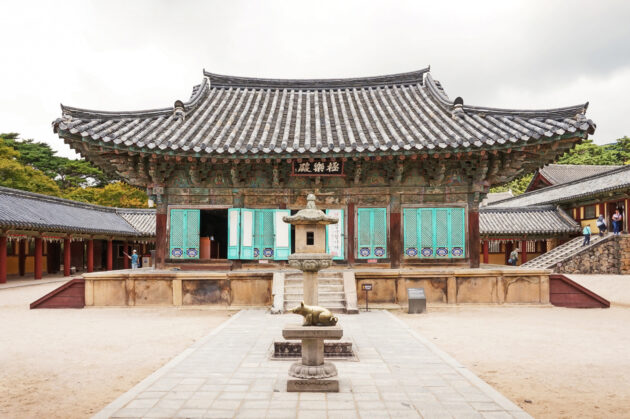
Main Halls: Explore Daeungjeon (housing a Sakyamuni Buddha), Birojeon (Vairocana Buddha), Geuknakjeon (Amitabha Buddha, Hall of Supreme Bliss), and others. Several house National Treasures, including gilt-bronze Buddha statues.
Atmosphere: Wander the terraces, admire lanterns and flowers (especially beautiful in spring with cherry blossoms), and soak in the peaceful vibe. It’s an active temple, so respect worshippers.
Recommended time: 1.5–3 hours. It’s spacious but walkable.
Pro tip: Rub the golden pig statue for good luck (a popular custom).
Practical Information
Opening Hours: Generally 9:00 AM – 6:00 PM (last exit around 7:00 PM). Open year-round; confirm on-site or via the official site for any seasonal adjustments.
Admission: Free (a welcome change in recent years). Parking is available and inexpensive.
Address: 385 Bulguk-ro, Jinhyeon-dong, Gyeongju-si, Gyeongsangbuk-do.
Website: bulguksa.or.kr (check for updates).
No pets allowed. Dress modestly and speak quietly in worship areas. Photography is generally permitted (avoid flash in halls and respect any restrictions).
How to Get There
Bulguksa is about 13 km southeast of central Gyeongju, on the slopes of Mt. Tohamsan.
From Gyeongju: Buses #10, #11, or others (like #700 series) from the city center, bus terminals, or KTX station. The ride takes 20–40 minutes depending on starting point. English announcements help.
Taxi/Rideshare: Convenient from Gyeongju (around 20–30 minutes).
From Seoul/Busan: Take KTX to Singyeongju or Gyeongju Station, then transfer to local bus or taxi. Many day tours combine Gyeongju sites.
Combine with Seokguram Grotto: Just a few km uphill (hike ~30–45 minutes or take bus #12 from the Bulguksa area, roughly hourly). The grotto features a magnificent 8th-century seated Buddha statue facing the sea—another UNESCO gem. Allow extra time.
Tips for Visitors
Best Time to Visit: Spring (cherry blossoms) or autumn (fall colors) for scenery. Early morning or weekdays for fewer crowds.
What to Bring: Comfortable walking shoes (some slopes and stairs), water, sunscreen/hat. Modest clothing for a temple.
Nearby: Cafes like Cafe Old City after your visit. Pair with other Gyeongju highlights like Donggung Palace & Wolji Pond, royal tombs (Daereungwon), or Anapji Pond.
Food: Try local Korean fare nearby—simple temple-area restaurants or head back to town for more options.
Accessibility: Some paths and stairs; the main areas are manageable but not fully flat.
Restoration Note: Occasional works may affect parts of the site; it remains open.
Final Thoughts
Bulguksa offers a perfect blend of history, architecture, spirituality, and natural beauty. Whether you’re a history buff, photography enthusiast, or seeker of tranquility, it’s an unforgettable stop in Korea’s ancient capital. Plan at least half a day here for a relaxed, enriching experience. Safe travels!